











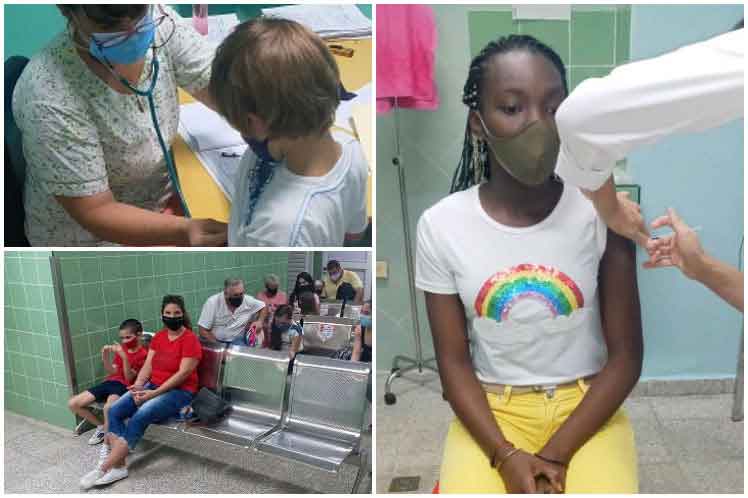
La Habana, El seguimiento a niños de tres a 11 años de edad vacunados con la primera dosis de Soberana 02 comenzó hoy en Cuba, donde después de las primeras 24 horas no se reportaron eventos adversos.
Así lo confirmó a Prensa Latina la doctora Meiby Vicente González, directora de Investigaciones Clínicas del Instituto Finlay de Vacunas (IFV), luego de que un equipo multidisciplinario examinara a los 25 primeros voluntarios de la segunda etapa de la fase I del ensayo clínico Soberana Pediatría.
'Los hemos visto tranquilos, jugando, con alegría, sin ninguna manifestación de eventos adversos. Los niños no mienten, los niños expresan realmente lo que sienten y no ocultan ninguna información', enfatizó Vicente González en el hospital pediátrico Juan Manuel Márquez de esta capital.
Lisset Leyva, madre de los Adrian (cuatro años) y Andrés (cinco años), residentes en el municipio Boyeros, manifestó alegría por la participación de sus hijos en el ensayo para evitar el contagio con la Covid-19.
'El principal objetivo de la casa es que ellos estén cuidados y considero que este es el primer paso para asegurar a todos los niños del país', expresó.
Asimismo, Isabela García Fernández (11 años) declaró estar orgullosa y agradecida de poder participar en el ensayo clínico y aseguró sentirse bien y protegida por la ciencia cubana, tras recibir la víspera la primera dosis del inmunógeno desarrollado por el IFV.
Por otra parte, la doctora Yumara Díaz Castro, especialista en evaluación clínica de medicamentos y biológicos de la entidad regulatoria Centro para el Control Estatal de Medicamentos, Equipos y Dispositivos Médicos (Cecmed), destacó la adherencia al protocolo en instalaciones donde se realiza el ensayo clínico Soberana Pediatría.
Díaz confirmó la ausencia de eventos adversos en los voluntarios, sólo manifestándose en los niños dolor en el lugar de la inyección, una reacción esperada por los investigadores.