The preliminary assessment of the damage caused by devastating Hurricane Melissa as it passed through eastern Cuba and the beginning of recovery efforts are the main focus in Cuba today.
CUBA ASSESSES ELECTRICAL GRID DAMAGE
Distribution Networks Bear the Brunt of the Impact
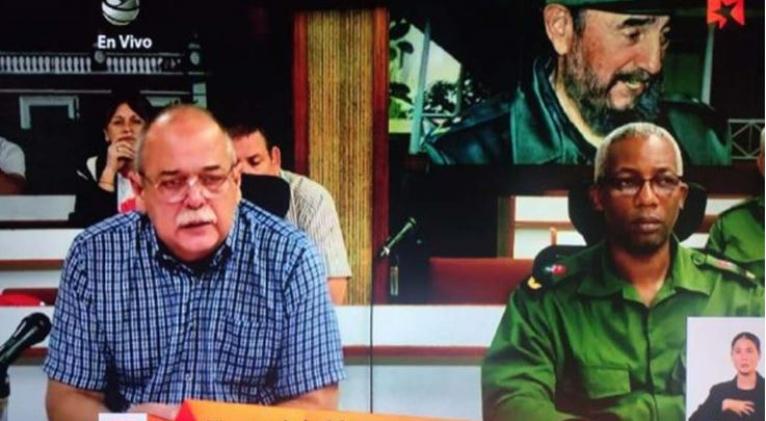
The Cuban Minister of Energy and Mines, Vicente de la O Levy, reported that the damage to the electrical system in the country's eastern provinces, following Hurricane Melissa, is primarily concentrated in distribution lines.
During a briefing before the National Defense Council, De la O Levy specified that a recovery plan is already underway, with work brigades deployed from Pinar del Río to Camagüey.
He highlighted that the mobilization of specialized personnel was immediate and emphasized the commitment of the eastern power workers themselves, many of whom were personally affected by the cyclone, and who have joined the rehabilitation efforts en masse.
The minister explained that the 2,415 emergency power generators now have fuel, and their availability at vital centers—including hospitals, pumping stations, and communication hubs—has increased to 84 percent.
He noted that the strategy of preemptively disconnecting power generation blocks ahead of the hurricane-force winds was successful, preventing more significant damage to the infrastructure in the western part of the country.
Recovery Efforts Focus on Systematic Restoration
De la O Levy detailed that Unit 3 of the Céspedes thermoelectric plant, which was out of service, has already been reincorporated into the system, which will alleviate strain on the western grid.
He specified that the immediate recovery plan focuses on three key actions: the inspection and “assessment” of power lines, addressing insulation compromised by moisture, and the progressive restoration of the power supply.
Of the 52 solar photovoltaic parks in the eastern region, only minor damage has been reported, such as the loss of four panels in Las Tunas, thanks to the preventive measures adopted.
The minister acknowledged that a full normalization of service will take several days, given the magnitude of the damage. However, he reiterated that the technical decision to shut down the system in the east was necessary to protect the power generation infrastructure for the rest of the country and to ensure a more stable recovery.
The priority, he affirmed, is to act in an organized manner to restore electricity as quickly as possible.
ETECSA UPDATES SITUATION IN EASTERN REGION
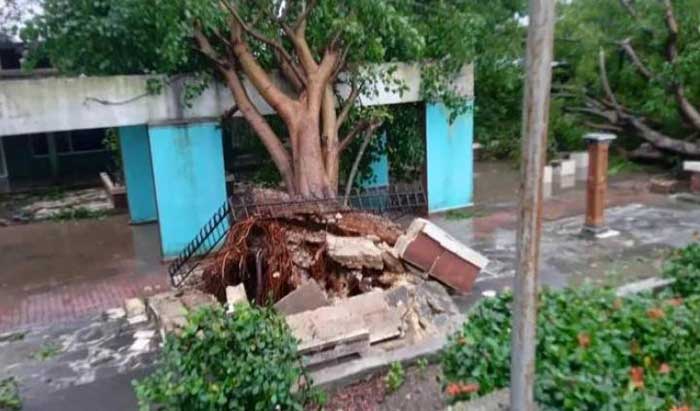 The eastern provinces of Cuba have reported disruptions to telecommunications services in the wake of Hurricane Melissa, according to the Cuban Telecommunications Company, Etecsa, in an updated statement from its official Facebook profile.
In Las Tunas, 25 percent of landline telephone service and 59 percent of radio base station sites were interrupted.
Holguín reported a loss of communication in the town of Birán, in the municipality of Cueto, due to a generator failure, in addition to 23 percent of landline service and 73 percent of radio base stations.
In Granma, cuts to the fiber optic network left the municipalities of Yara, Campechuela, Pilón, Niquero, Bartolomé Masó, and Media Luna without communication. In total, the province reported 49 percent of landlines and 88 percent of radio base stations out of service.
Santiago de Cuba reported interruptions in the municipalities of Segundo Frente, Tercer Frente, and Guamá, due to damage to the fiber optic infrastructure. There, 45 percent of landline service and 87 percent of radio base stations were affected.
In Guantánamo, the two fiber optic routes connecting the province were severed. An alternative radio link connection partially restored communications, although 45 percent of landline service and 85 percent of radio base stations remained affected.
The widespread lack of electrical power directly impacted the operation of a large portion of the technical hubs and radio base stations that support services in the eastern region.
Overflowing rivers and impassable roads hampered a complete assessment of the damage.
Etecsa crews have been dispatched to the eastern part of the country to support restoration efforts.
OPS DEPLOYS MEDICAL SUPPLIES TO CUBA
 The Pan American Health Organization (PAHO) has delivered 2.6 metric tons of medical supplies to Cuban health authorities to support the response in areas affected by Hurricane Melissa, PAHO reported on its website.
The phenomenon made landfall in the eastern part of the country early Wednesday as a Category 3 storm, with sustained winds of up to 205 kilometers per hour (approximately 127 mph).
Essential Supplies for Emergency Response
The shipment, which was dispatched from PAHO's Regional Strategic Reserve in Panama and arrived in the country on October 28, includes nine emergency kits containing medicines, medical and surgical supplies, sufficient to care for 5,000 people for three months.
Also included are chlorine tablets to purify nearly eight million liters of water, electrical equipment, medical backpacks, tents, and water storage tanks, among other priority supplies.
The cargo was mobilized under the anticipatory action mechanism of the United Nations' Central Emergency Response Fund (CERF), the source stated. The supplies will be destined for the most affected territories in eastern Cuba once overland communications are reestablished.
Focus on Sustaining Basic Health Services
“These medical supplies will help maintain basic health care, guarantee access to safe water, and reduce immediate health risks in the aftermath of Hurricane Melissa,” said Dr. Mario Cruz Peñate, PAHO/WHO Representative in Cuba.
“Timely cooperation and prior preparedness are essential to protect the health of the population in emergency situations like this one,” he added.
Ongoing Coordination and Further Support
From its Emergency Operations Center in Washington, D.C., and its office in Havana, PAHO continues to coordinate with Cuba's Ministry of Public Health and Civil Defense on damage assessment, reorganization of health services, and epidemiological control in the affected areas.
In parallel, PAHO is managing the emergency procurement of additional electrical generators (10–16 KVA), mosquito nets, and more chlorine tablets for a potential second shipment to Cuba.
All these efforts are aimed at reinforcing the health response and preventing outbreaks of vector-borne diseases, such as dengue and other arboviruses, and waterborne diseases, the risk of which increases after major weather events.
SAUDI ARABIA ANNOUNCES AID FOR POST-HURRICANE RECOVERY IN CUBA
 Manuel Marrero Cruz, a member of the Political Bureau of the Party and Prime Minister of the Republic, today sent greetings to the Cuban people who have faced the passage of Hurricane Melissa and announced significant displays of international solidarity to support the recovery of the affected eastern provinces.
During a meeting with His Royal Highness Mohammed bin Salman bin Abdulaziz Al Saud, Crown Prince and Prime Minister of the Kingdom of Saudi Arabia, an agreement was reached for the dispatch of substantial aid to contribute to the recovery from the damages caused by the hurricane, as reported by the Presidency's website.
In statements following the meeting, Marrero Cruz indicated that he shared two moments with the Saudi leader: one of great joy and another of sadness.
The first, for the resounding victory at the United Nations General Assembly, where 165 votes were achieved against the blockade; the second, when informing about the damages caused by Melissa in key sectors such as housing and agriculture.
The Cuban Head of Government also highlighted that the President of Colombia, Gustavo Petro, communicated that ships from his country will immediately depart to support Cuba with rice, electrical transformers, and other means for the recovery.
Marrero Cruz, who is participating in the 9th Future Investment Initiative Forum, assured that upon his return to the island, he will join the recovery efforts in the eastern provinces. He recognized the resilience of the Cuban people, noting that nearly 800,000 people were evacuated or relocated to preserve their lives.
Finally, the Prime Minister reiterated his confidence that "we are going to be with the people in this process of achieving a resounding victory in the recovery, not only by making things return to how they were before, but by thinking about making them better." (CubaSí)