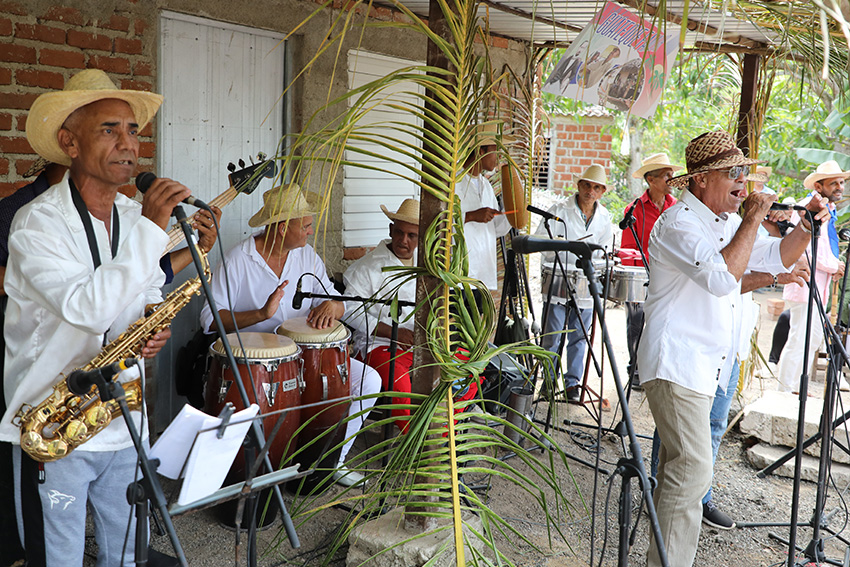
Mercedes Arias Visbal is over 70 years old, but that does not stop the majestic flow of her voice. Knowing that dreams have no age, she has approached the Tomasa Varona Cultural Center, the Raíces de San José project, and has even sung a few times on the provincial radio station. “She used to be a teacher, now she is on her way to becoming a soloist,” says Diosdado, her spouse and friend, proudly.
Antonio Reyes, for his part, dressed in the mariachi costume that his wife Nivia Ricardo made for him with so much love, has represented the Communications Union and the province in general at prestigious events such as the National Festival of Amateur Artists. There, in music, he has found new joys.
Like them, others weave their hopes into an unpublished poem, certain musical notes, a few brushstrokes, or dance steps... With their dreams in tow, they walk for miles, work odd hours, rehearse after a tiring day at work... This report is for all those dreamers who make up the Amateur Artists Movement (MAA in Spanish) in the province...
ON THE TABLE
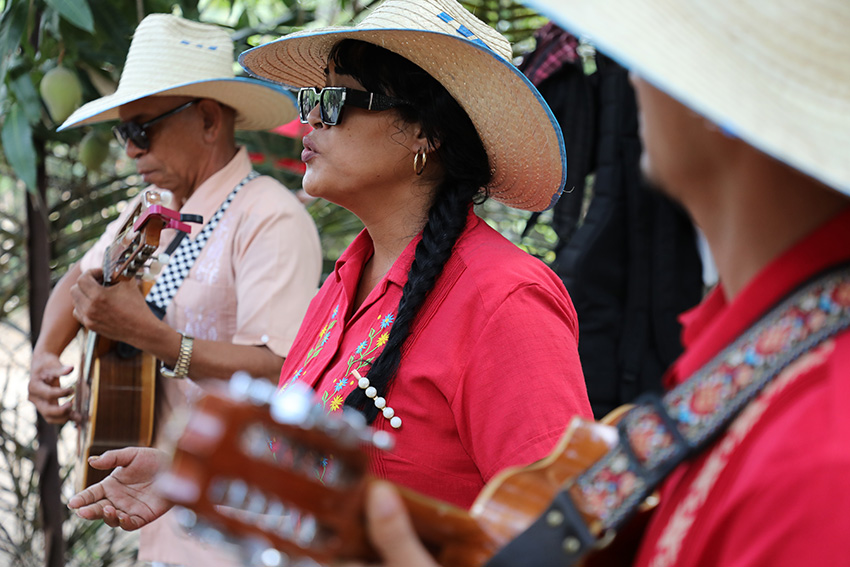
Before we dive into the “journey,” let's look at this figure: more than 90 percent of the province's cultural programming is supported by the MAA, which does not charge for it and, therefore, normally expects nothing in return for its efforts except applause. However, as commendable as this fact may be, it is time to shake things up and recognize, at all levels, that we do not pay enough attention to those who, day after day, “save” an event, an activity for an anniversary or a special occasion, so many things.
“We have 272 categorized artistic units, with 760 members, in different forms of expression. In addition, there are children's and youth artistic units that are not categorized, but also have a relevant role to play; here we are talking about 1,040 with 5,640 members,” says Anais Ray, head of the Provincial Center for Houses of Culture (CPCC in Spanish). She, now a respected professional, took her first steps as an amateur, a task linked to methodologists, art instructors, cultural promoters, and community leaders.
Like that director, many consider themselves worthy heirs to that past that would mark their genesis in art. That is why, despite shortages and other complexities, we must protect them, especially when there are municipalities such as Jobabo, Colombia, or “Amancio,” whose cultural programming is sustained practically by these creators. More than a dozen sources consulted (most of whom preferred to remain anonymous) agreed that they do not always receive the attention they deserve in different settings, ranging from basic issues such as receiving a glass of water to having their work respected in every sense of the word.
"The MAA is hugely important. Its members work out of love because they enjoy it, and usually after a day of school (if they are children or young people) or work (they come from different sectors). Furthermore, although it is one of the most heterogeneous movements that exists, it also suffers, because it performs with love, but does not charge for it," says Ernesto Guevara Fernández, Provincial Music Methodologist at the CPCC, with nine decades of experience in the sector.
In general, “we are not living up to their dedication. That is why the system of cultural centers is fighting to stimulate their work more so that local governments and other entities in society understand its importance,” he adds. We certainly owe a lot to these artisans. One need only appreciate the events to realize that Las Tunas is distinguished by “a luxury MAA,” as Anais affirms. And it is not exclusive to one artistic expression, because—although music currently stands out—the other expressions also have numerous talents.

UNRAVELLING REALITIES
If there is one vital hub in the lives of these protagonists, it is the cultural centers. The province has 14, but most are in poor structural condition. "That limits us. The ‘Tomasa Varona’ in the provincial capital, for example, is rated as fair; its main courtyard (where activities take place) is in danger of collapsing. And, although we insist on it, it is still not included in the budgets allocated for repairs. Likewise, the Enrique Peña cultural center in Puerto Padre and the one in San Manuel are in terrible condition," says Ray, who also asks local governments to look into the issue.
Although the last two calendars show a certain revival in terms of festivals, and even the national event has been revived, many remember with nostalgia the events held in the different unions back in the 1980s and 1990s, as well as the significant support they provided to their fans. “The MAA, especially among adults, used to have more groups, choirs, theater groups, and other associations that nurtured the professional world. From there came several creators who are now great figures in music, the visual arts, literature...,” says Taymara Portillo, senior specialist at the CPCC.
For this reason, it is important that all sectors identify artists in their communities and, within their means, contribute with better costumes, a timely snack after their performance, a diploma, or any other incentive. This is not just a matter of culture because there are talented people in all spheres of society, and if you think about it, they represent their workplace with dignity here and there.
Another issue that deserves reconsideration is related to the time allocated by art instructors in schools to develop creative and appreciation workshops. "These spaces are no longer part of the curriculum as they were before, and we need them. We are not only here to form artistic units, but we also promote appreciation processes. A child may like to sing and not be in tune, but we teach them about authors, compositions, and many other topics that increase their culture and sensitivity to art. Now instructors work within so-called complementary activities," says Taymara.
OF VOICES AND BELLS
Edilberto Agüero, known as Eddy Zabala, is one of the musketeers behind the Zabaleando project, a cultural event that transcends his neighborhood and “headquarters.” No one can fool him when it comes to these matters, both because of his experience accumulated over so many years of fighting for culture and because of his contribution to training so many amateurs through his community initiative.
"The first thing we have to respect is the schedule. It's not just about following a work plan; it's about doing things right. It happens that the fan arrives at the venue and there is no one there, and the same thing happens with professionals. How disappointing it is when you don't have an audience to listen to you. We're not talking about thousands of people, maybe just a few, but if they like what you do, that's enough. That's where the ‘cunning’ of knowing how to program comes in; you have to study venues and authors better. It's not about promoting them or taking them anywhere. There is no art more beautiful than that which is made for love," he emphasizes.
He has found that sometimes “in some places, not even the cultural promoter knows where they are going; there is no good service, no chair to sit on, not even water.” And he points out another element: “The embryo where musicians are formed is the MAA. There is the art school, which provides technical training, especially in classical music, but in popular music, the root of Cuban flavor is learned on the street, playing, working hard...”
Guillermo Castillo Vega, Provincial Literature Methodologist, confirms that "the whole of society benefits from the work of the MAA, but the attention given to it should be greater and better. And this is not only the responsibility of the cultural centers but of every organization and company that enjoys its art. We must treat it with dignity.“ He refers to how difficult it is for amateurs to get a book published, but ”they don't stop; they organize literary workshops, competitions, and other activities, which serve as a breeding ground for writers who go on to become professionals."
The call, says Ray, is for "organizations, unions, and decision-makers to reach out to them. Where the MAA is, the people are. Cultural centers need support. If we achieve that, we will be stronger and better able to defend the country's project."
OTHER COURSES
Anais, Taymara, Guillermo, Ernesto, and others are aware that, although they have built a sensitive and enthusiastic team, challenges remain. This issue involves subjectivities, such as other creators (already with a certain social recognition) undervaluing those who are just starting. However, quite a few soloists and amateur casts show a quality that makes us wonder if what mediates between this and that is just a document or evaluation.
In dance alone, Renacer de Lírica, La voz del silencio (also theater), Orígenes, Impacto, and many other groups have set the dance floor on fire with their performances. Paradoxically, except for the folk company Onilé and a few other brotherhoods, there are few exponents of this art form (from a professional standpoint).
Anais acknowledges the work of Zabaleando, especially “because our congas and comparsas cannot find spaces within the cultural program to develop. This is a legendary tradition that, in the absence of popular festivals and other options, is in danger of disappearing.” She also praises the work of groups that carry on traditions, such as Petit Dancé, and cultural promoters.
"We systematically follow the processes that take place in our cultural centers, which we advise on technical and methodological matters (administratively, this is the responsibility of the municipal cultural departments). This includes sociocultural projects, intangible cultural heritage, communication, and programming... Today, we prioritize science, innovation, and research based on these processes; we seek to better integrate ourselves into digital platforms; we protect our rural clubs; we train communicators... We need better-prepared people. The system of cultural centers is being improved, and training is vital to this," Ray emphasizes.

However, even the CPCC, the governing body of the MAA, faces certain obstacles. One of its biggest limitations was the poor condition of its headquarters; fortunately, it now has another one, located at 64 Maceo Street (formerly the Las Tunas Professional Academy of Plastic Arts), and although it is currently undergoing repairs, the news is encouraging. Let's hope that all the actions will come to fruition there... Although “as a methodological center, we have to go to the municipalities a lot to advise on processes and we don't have our transportation,” Taymara points out.
"The exodus has hit us hard. With so many art instructors leaving, professional artists who don't always have methodological tools are coming into the cultural centers, but they are making an effort. That is why we emphasize preparation," adds Portillo.
She acknowledges that cultural centers should also make more of an effort to create projects linked to local development programs, which often receive funding. "We must be more concerned in that regard. Sadly, there are issues related to the MAA that are related to material matters. The budget allocated to the CPCC by the Culture Support Unit, linked to the provincial directorate of the sector, in a province with a deficit such as this one, is still insufficient to cover all our needs. Sometimes people leave us due to a lack of resources. Some children come to cultural centers eager to learn to play the piano, and we don't have the instrument there, and there are other examples like this," she says.
Portillo also urges the creation of more institutional links, including with non-state forms of management. Finally, he echoes the collective sentiment and sums up: “We know that budgets are tight, but I think that—with the support of local governments—at least once a year it is possible to help with costumes for the most prominent dance group(s) in each municipality, or perhaps contribute with an instrument or other assistance. This must be intended by political and cultural leaders. We must motivate amateurs in some way.”
26 joins in this clamor; it is urgent to think about something together: if more than 90 percent of the province's cultural programming is supported by the MAA, what would happen if it were to disappoint even more...