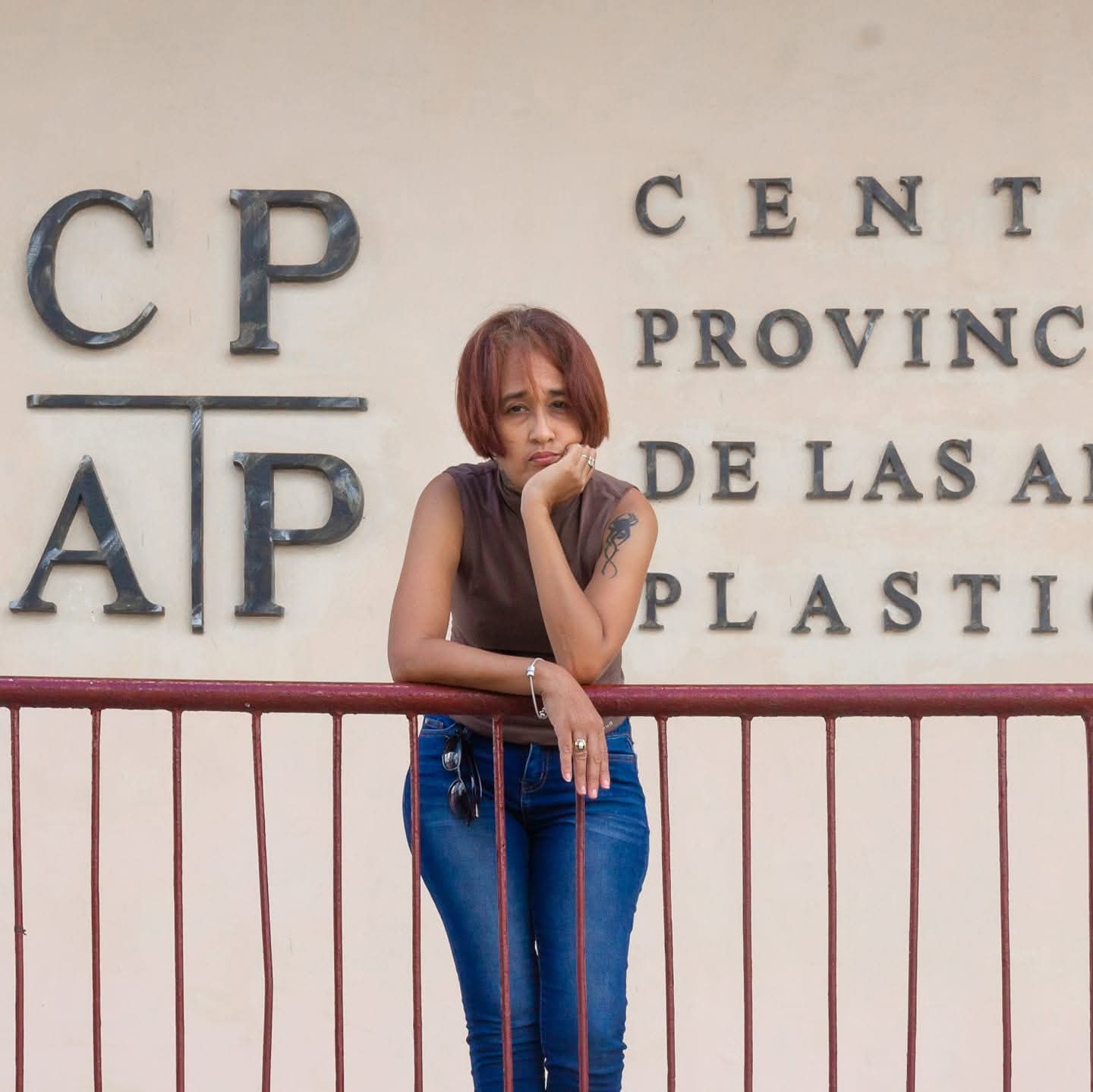
I have known Yamila Coma Vargas for many years; I am older than she is, but we both came of age in similar contexts and environments. I have seen Yamila’s work since she graduated from the Professional School of Fine Arts, and the mere presence of one of her pieces made her presence felt, even though she is a very discreet woman. In various exhibitions, Yamila Coma’s work swept the awards.
No merit that can be attributed to Yamila today has been handed to her on a silver platter; it has been carved out with a chisel, and in truth, I could say with a paintbrush, because her greatest body of work is pictorial.
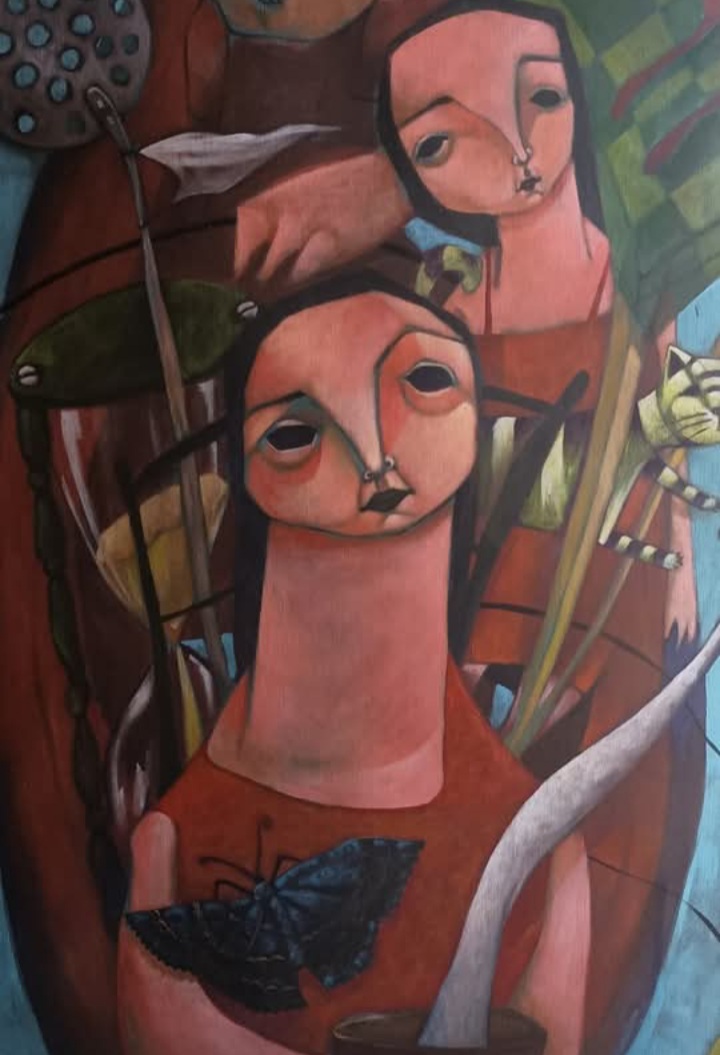 Something I never fail to emphasize in Yamila Coma’s aesthetic is her specialization in sculpture; that attachment to volume never leaves her, yet color dominates her work on the canvas.
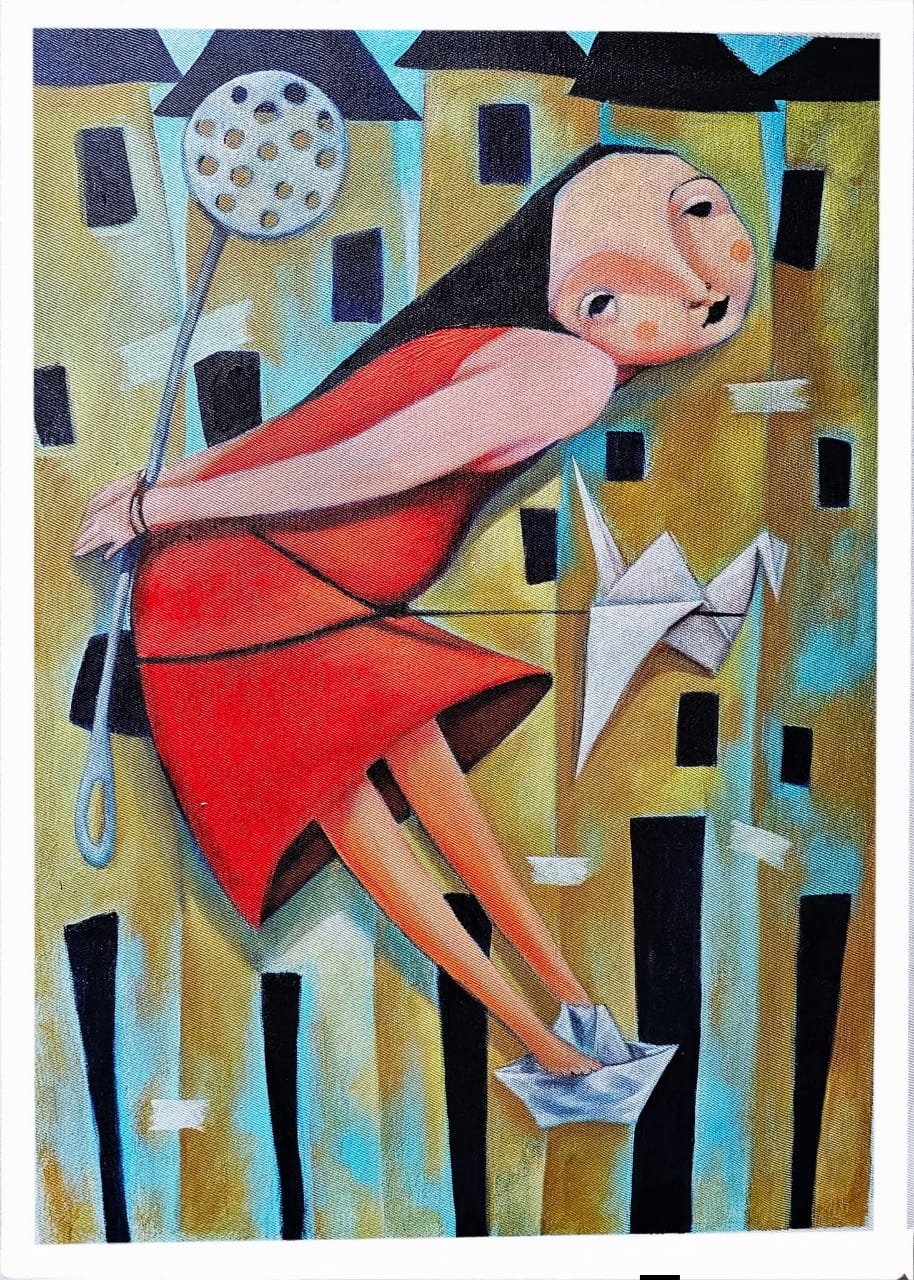
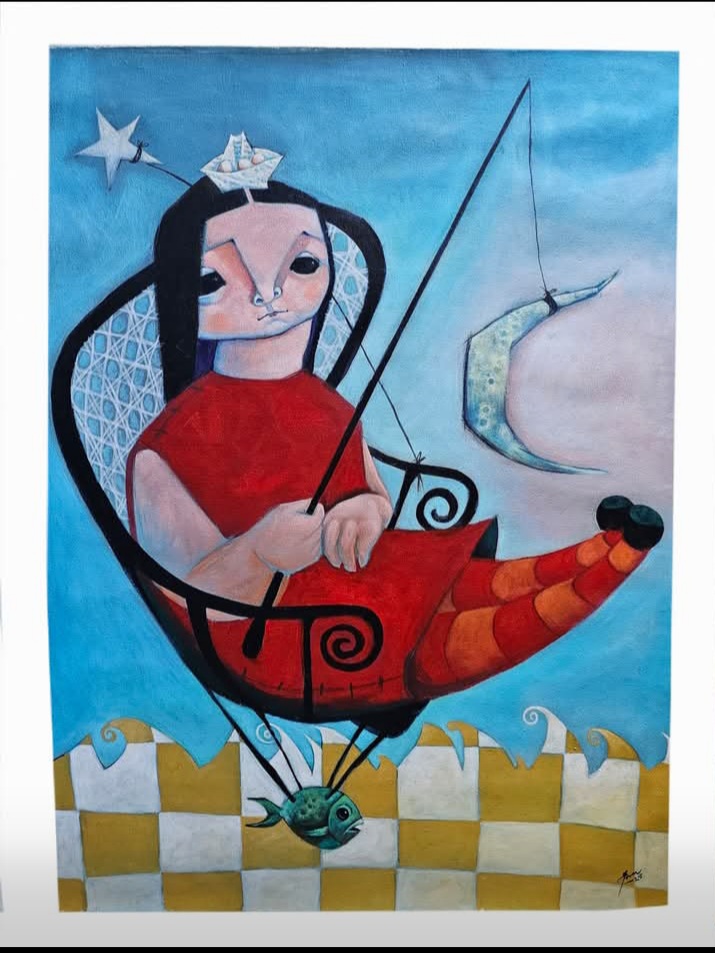
There is a recurring element in these works I am showing you here —perhaps in the artist’s entire body of work— the eyes. This element catches the eye, for example, of Dailin Carracedo, who is familiar with Yamila’s work. It is said that the eyes are the windows to the soul, and Yamila embraces this symbolism in such a way that it is impossible not to look into the characters’ eyes. Eyes are weapons of communication. With a single glance, we can declare love, expose a lie, or express bewilderment.
When I saw one of these works on social media, I told myself, there is emptiness in many souls.
Faced with these paintings, words are superfluous; a dilated pupil speaks of desire—longing rather than nostalgia. And the fundamental difference between these two terms is that nostalgia is the desire to live or experience something remembered as beautiful; longing is knowing that we may never regain what is lost—it is sorrow.
The eyes are the most honest emotional barometer, because, in the end, it doesn’t matter what the mouth says: the truth always seeps through the gaze, and it is in that void that we navigate when facing a painting by Yamila Coma.
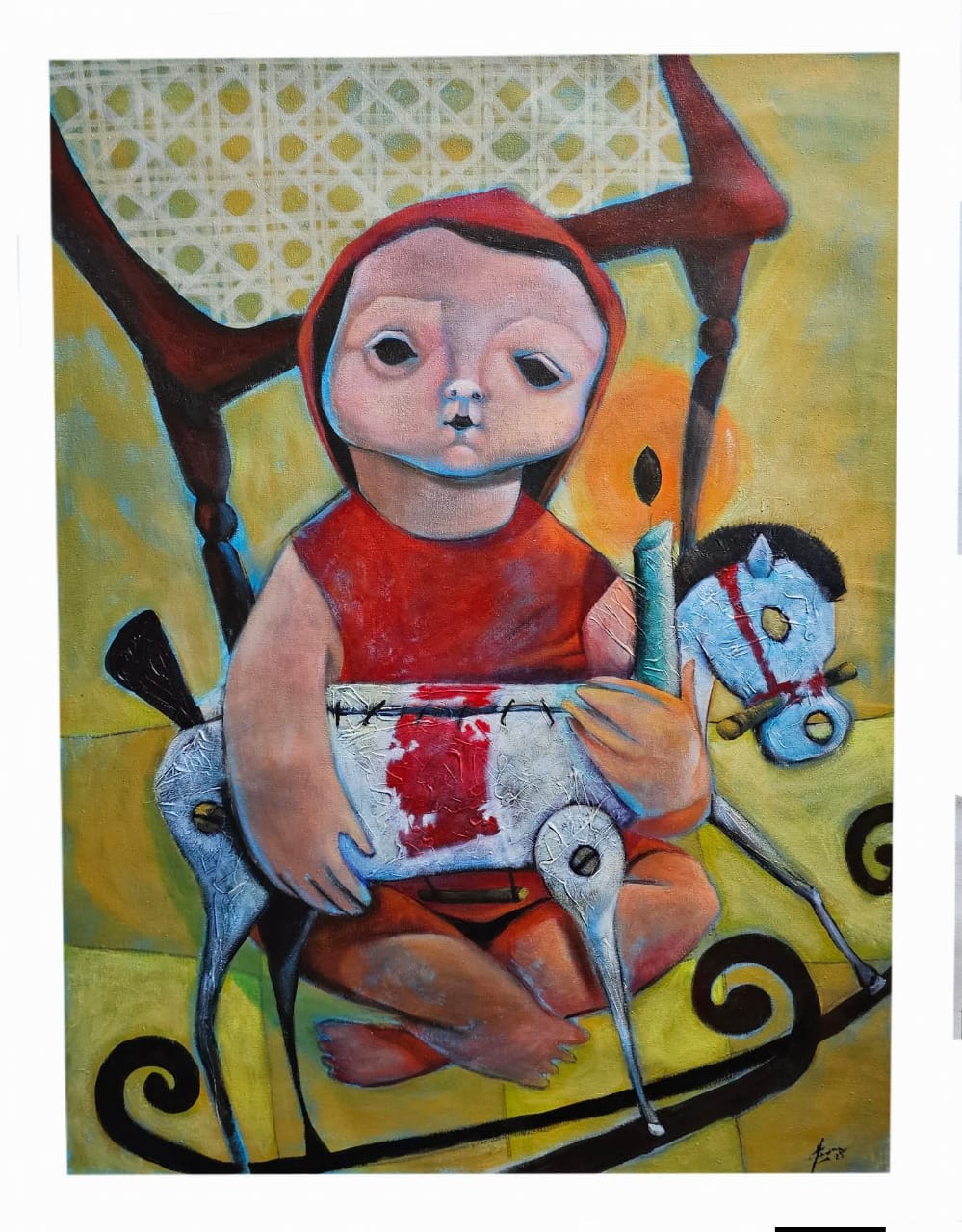 The eyes cradle the misfortune of women in the face of economic and social setbacks; they are the ones struck with particular harshness. In times of crisis, female unemployment and domestic precariousness rise, deepening the chasm of helplessness.
Art, especially in the work of Yamila Coma, carries a strong feminist discourse. It functions as a tool for denunciation and transformation. It brings to light what has been silenced, challenges patriarchal norms, and reclaims the female body as sacred territory.
From sculpture to painting, Yamila’s art challenges, deconstructs stereotypes, and narrates historical struggles, becoming an act of resistance and a unique form of memory.
Yamila Coma Vargas was born in Las Tunas in 1974 and has developed an artistic language of high symbolic value. She is an undisputed creator at the forefront of the contemporary avant-garde. She captures the complexity of being through figures that reflect on existence and the role of women.
Her work has crossed borders, being exhibited from Spain to Italy and Norway. Countless works form part of her creative universe, fusing the symbolic with the expressionist.
These pieces portray the fracture and serenity of the female figure who, from her own conflict, achieves a heart-wrenching honesty and strength amid a desolate landscape.