
The call to class rang out with the same force as always, but this time it had a different echo. It was not only the start of the academic year at the University of Las Tunas (ULT in Spanish), but also confirmation that, despite the economic tensions the country is going through, thousands of young people from Las Tunas once again filled the corridors, classrooms, and student residences with life.
The 2025-2026 school year opened with more than 5,100 students enrolled, a number that encompasses personal stories, collective dreams, and, above all, the sense of duty of a campus that enters this academic period with great historical and social motivations.
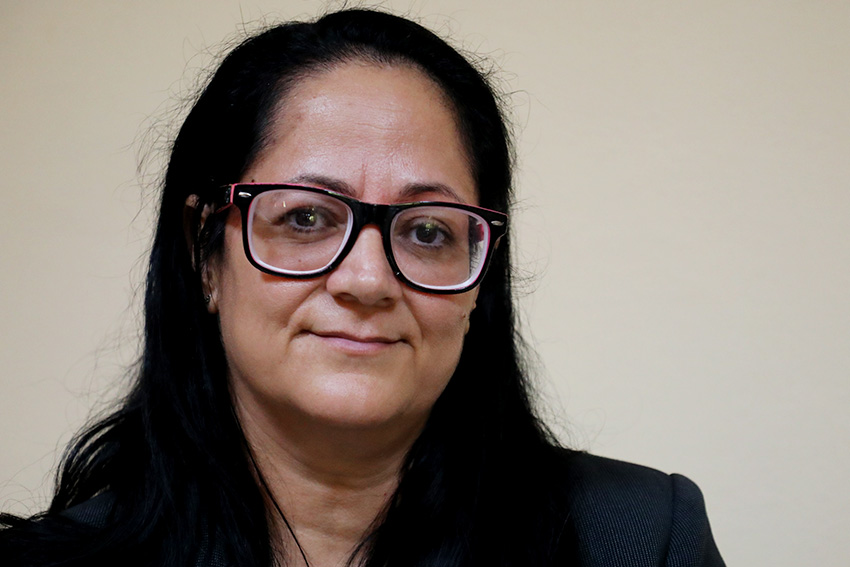 During a review of the enrollment figures in the first week of September, the rector, Yoenia Virgen Barbán Sarduy, explained that the total enrollment is distributed among 1,008 students in the daytime program, 3,993 in the part-time program, 28 in distance learning, and 94 in short-cycle courses. “Each figure represents a challenge for us as an institution, because educating in this context is a challenge that requires creativity and commitment.”
A FACULTY THAT IS REINVENTING ITSELF
The faculty statistics reflect both positives and negatives. The institution has 1,032 teaching positions, but 210 remain vacant. Faced with this difficulty, the center has resorted to multiple alternatives: 322 full-time professors, 399 part-time professors, 78 trained professors, and four retired professors who have been rehired to 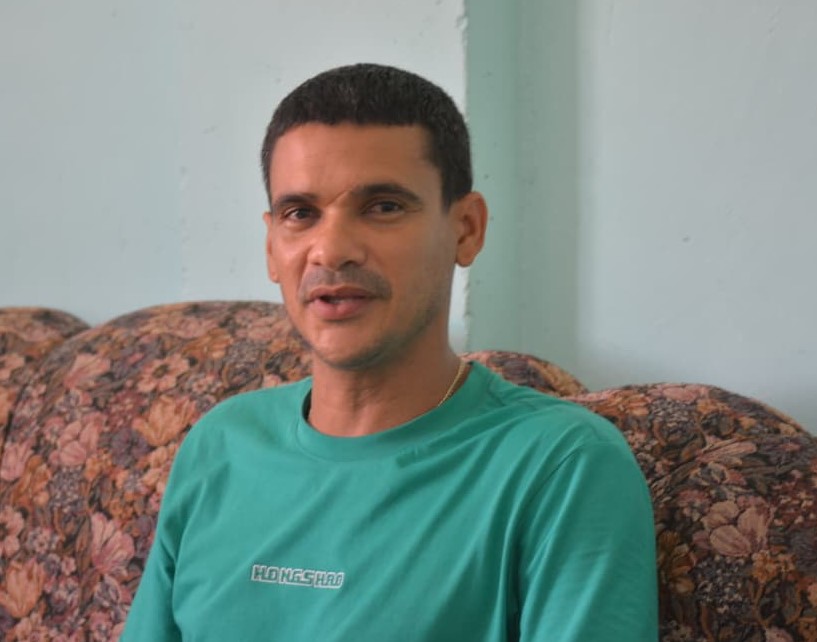 ensure that classes continue.
The group of part-time teachers includes employees from local companies and organizations, who not only share their knowledge but also turn their institutions into teaching units where students can do internships and, in many cases, find their first job.
In addition, the incorporation of student assistants and high-achieving students into the process has been strengthened. The Vice-Rector for Undergraduate Education and University Extension, Danis Figueredo Espinosa, sums it up with a very illustrative phrase: “The role of young people is multiplying, because they themselves are teaching, guiding, and reinforcing their peers.”
SPACES FOR LIVING AND LEARNING
The university is not just classrooms and blackboards; it is also a residence, a dining hall, transportation, services... It is a place where friendships are built and character is forged. Currently, the student residence houses 390 young people: 212 on the Pepito Tey campus and 178 on the Lenin campus. One of these facilities was recently repaired, with improvements to bunk beds, mattresses, and equipment.
“I have friends from other municipalities, and if they didn't have scholarships, it would be impossible for them to study here. Now they have better conditions and more comfortable spaces. It's not a luxury, but it means a lot to everyone,” says Lisander Rivero Manzano, a fourth-year student studying for a Bachelor's Degree in Art Education.
"During my stay at this center, I have had, like everyone else, ups and downs. Being here is a great experience, as I have greatly expanded my knowledge and become more sensitive to many people. At the moment, the University of Las Tunas offers us many opportunities to contribute to society, such as the Educating for Love task and outreach projects in which we can participate.

"If we talk about the meals, I must say that, obviously, they are not excellent, but they are the best that can be offered. We have adequate quality in the residences, well-lit classrooms, specialized laboratories, libraries, and Wi-Fi zones for easy Internet access... many guarantees that support our commitment," he says.
The voices of the newest students bring freshness to the scene. Rolando Antonio Rojas Riverón, a first-year student of Social Communication from the municipality of Báguanos, in Holguín, shares his first impressions.
"Although I've only been here a few weeks, I've noticed that they are very attentive to us. It's no secret how the country is doing, and despite that, when any problem arises—such as water or other needs—the administrators seek an immediate solution. That impressed me, because I've heard from friends at other universities where things are more complicated."
“I also feel very comfortable with my classmates. I couldn't ask for better people, and I've made many friends in a short time. When we need to clear our heads because the classes are intense, they organize recreational activities for us, which help us relax and return to our studies with more energy. I like my degree program, and I can say that these first few days have been quite good.”
SCIENCE AND DREAMS OF INNOVATION
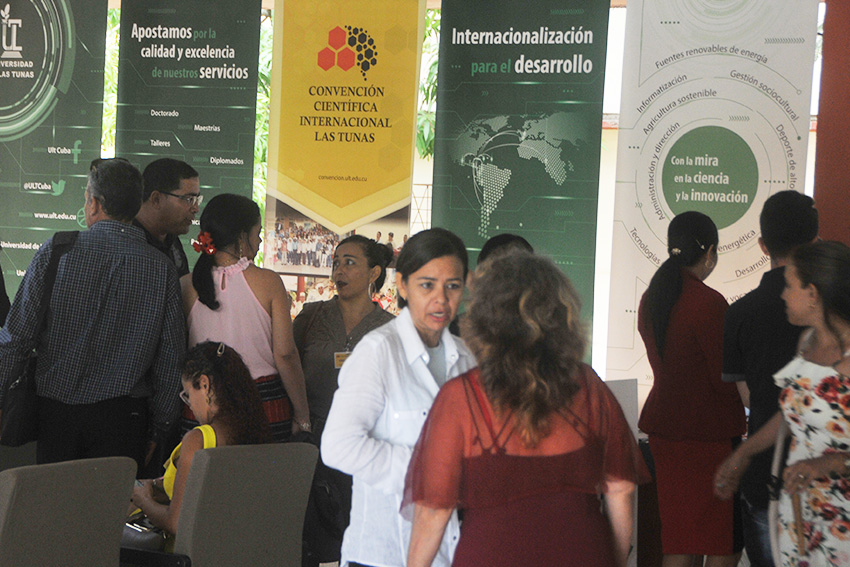
The ULT faces challenges in the scientific field. There are reports of a low number of indexed publications and national innovation awards, as well as insufficient software registrations. However, one fact marks a turning point: the first patent applied for by the institution is in the process of official approval.
“This is a momentous step for our faculty and for the province. For the first time, the University is entering the history of registered innovation,” emphasizes Barbán Sarduy, who is convinced that this result will pave the way for more visible and transformative scientific production.
At the postgraduate level, challenges remain in relation to thesis defense in strategic sectors and the training of master's and specialists. Internationalization also faces obstacles, with fewer projects and less external funding. However, there is a strong commitment to maintaining cooperation and integrating teachers and students into international academic networks.

INSPIRING ANNIVERSARIES
The new academic year is marked by anniversaries of enormous symbolic value. It commemorates the 80th anniversary of Fidel Castro's entry into the University of Havana, the 50th anniversary of the Ministry of Higher Education, and, as a major milestone, the 100th anniversary of the birth of Commander-in-Chief Fidel Castro Ruz on August 13, 2026.
Locally, the campus honors, among other motivations, the decade of the university integration process, the 20th anniversary of the Computer Engineering degree program, the 30th anniversary of the former Pepito Tey Higher Pedagogical Institute, and the 50th anniversary of a vital predecessor, the University Branch. In addition, the upcoming institutional reaccreditation in December will be celebrated.
These events, in the words of Reynaldo Velázquez Zaldívar, Deputy Minister of Higher Education, should become a driving force for commitment and opportunities to reaffirm the university's mission as a center of science, education, and social transformation.
SOCIAL VOCATION AND HOPES
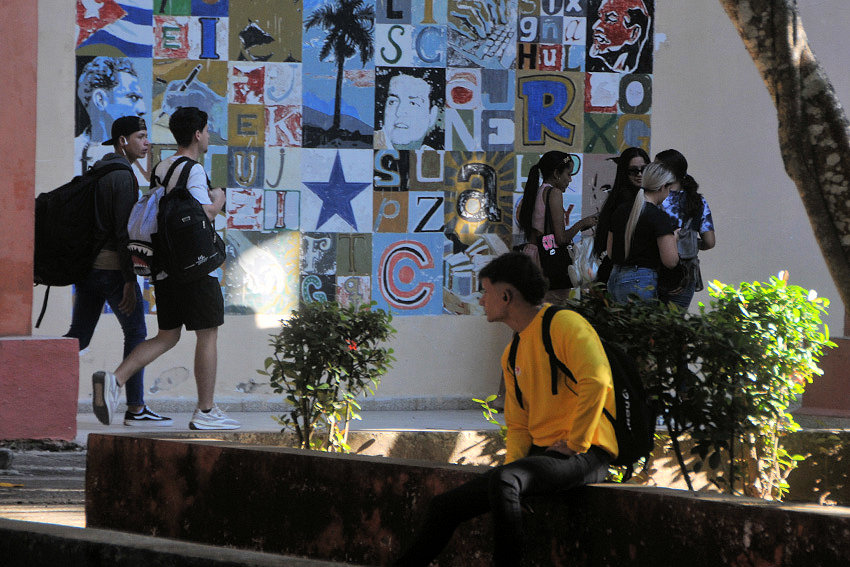
The ULT maintains strong ties with society through outreach projects and impactful work in neighborhoods. This month, the university community will lead the discussion of the draft Labor Code bill in eight assemblies, which will take place between September 22 and 26.
“We feel part of the country's decisions, and the fact that we are being consulted on the Labor Code shows that our voice counts,” says Lisander Rivero.
The road ahead, over the many days to come, will not be easy. There are shortages of technological resources, transportation limitations, teaching vacancies, and an economic context that conditions every step. However, the University is beginning this academic year with renewed strength: a faculty that is reinventing itself and a student body aware that their education is vital for the future of Cuba.
“We have faith that this academic year will be better than the last,” said Vice-Rector Figueredo Espinosa, convinced that the ULT will be able to weather the storms and, at the same time, contribute to science, education, and commitment to the nation.
In the hallways, the conversations of those who have just arrived mingle with the serenity of those who are about to graduate. In each classroom, there is hope that, beyond the challenges, the University is and will continue to be the place where the dreams of the province and the country are born.