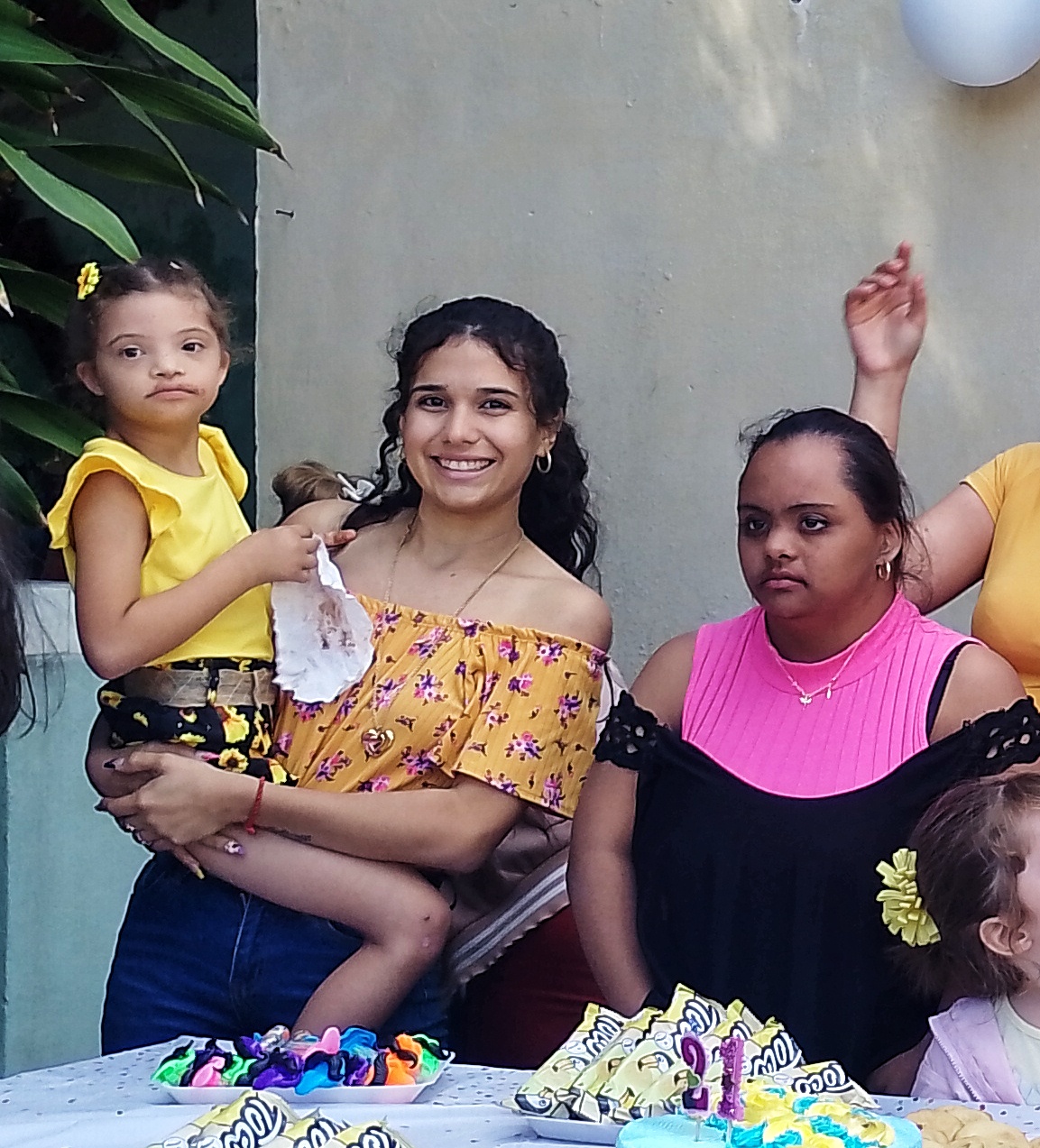
The project did not arise from a campaign or an institutional call for proposals. It emerged from their daily work. Adianes Batista Heredia, a speech therapist at the Diagnostic and Guidance Center (CDO in Spanish) in Las Tunas, explains that Chromosome of Love began when they started working directly with children with Down syndrome and their families.
“The CDO is the institution responsible for assessing and diagnosing children with special educational needs,” she explains. From that experience, she says, they began to feel the need to create something more personal. “This project stems from our love for these children, but also from what we observed when we began working with them in practice.”
She speaks without exaggeration. She explains that the project focuses not only on professional care but also on supporting families. “They need the support of specialists, but also the support of their family and the community,” she affirms. That is why she insists that the work cannot stop at diagnosis alone. “The most important thing is to build on the children’s potential.”
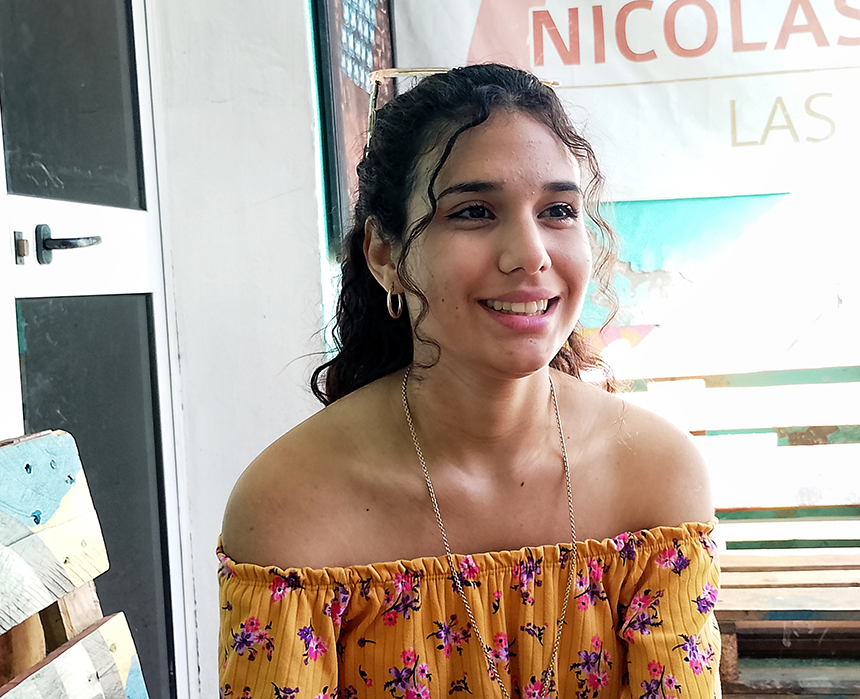 She repeats that idea several times during the interview. “We don’t work based on what they lack, but on what they can achieve,” he notes. As he explains, that is the central goal of Chromosome of Love: to ensure that children can fully integrate into society. “We want them to be included as children, then as young people, and later as adults.”
When he talks about World Down Syndrome Day, he takes a practical approach. “It’s not just about wearing yellow or blue, or putting on different socks,” he says. “What matters is building a more inclusive future for them.” And he adds: “Diversity isn’t an exception; it’s part of being human.”
Throughout the conversation, she constantly returns to the role of the family. “No matter how hard the specialist tries, if the family isn’t by our side, the results aren’t the same,” she explains. She says that often the most significant progress happens at home. “We provide stimulation plans to families, and when the family follows them, the children make much faster progress.”
Currently, she notes, they work with 15 children, and the project continues to grow. “We’re inviting all families with children with Down syndrome under the age of 16 to reach out to us,” she says. She explains that they have a Facebook group called Chromosome of Love and also WhatsApp groups where they share guidance and materials. “Through these platforms, we provide them with tools and guide them on how to work with their children.”
They also hold monthly workshops where both the children and their families participate. “We don’t just work with the children,” she clarifies. “We work with the families and also provide guidance to educational institutions, because inclusion doesn’t depend on just one person.”
When asked how long she’s been working at the CDO, she answers simply. “I started in January 2025,” she says. She says her connection to Down syndrome began even earlier, when she wrote her thesis on the subject. “I’ve been very interested in it since then, but it wasn’t until we started working directly with the children that I truly understood the need that existed.”
She clearly remembers the first child she worked with. “The first child was Alexander. At first, he didn’t interact much; he was very shy.” She pauses briefly and adds, “When he managed to give us a kiss, that was a very powerful moment for us.” She explains that these are small steps, but very significant ones. “When you see that the family is following the stimulation plan and the child starts to make progress, that’s the most rewarding part.”
She also mentions Liz, a girl who joined the project after her mother read an article in the newspaper 26. “She was three years old when she arrived,” she recalls. “She’s a very affectionate girl, and her family has been very consistent in working with her.”
Toward the end, she returns to the idea she considers essential. “Defending these children’s rights is not just symbolic. It means they can participate, make decisions, and build their own life plans.” And she adds: “The goal is for their presence in school and in society to be a reality.”