Aidanys became truly concerned when she arrived home and saw her daughter dehydrated, unable even to open her eyes. She immediately took her to the emergency room. She had been suffering from a high fever, vomiting, diarrhea, and, in the last few hours, abdominal pain for a week. She suspected that it was dengue, but she never imagined that the girl would develop complications.
Days later, her husband experienced a fever that threatened to penetrate deep into his bones. He was sweating cold, shivering, and in the midst of power outages lasting almost 20 hours that were plaguing Puerto Padre and much of Cuba. Aidanys was afraid.
She realized how difficult it was to find medicines to lower the fever and foods that help protect platelets. She went through some very hard weeks, even though she was not bitten by a mosquito.
...
Elaine opens the doors to 26 in the midst of her convalescence. As soon as the headache started and she felt hot, she imagined she had dengue. “Here, you're always predisposed.” She is almost certain that she was infected at work, as the premises are located near the beach and the mosquitoes strike with such ferocity that they leave not a drop of blood in the air.
Joint pain and loss of appetite were the most alarming symptoms, although now, behind the microphone, she shifts around as if her bones still feel heavy. She admits that she did not go to the doctor and that the intense heat prevented her from using a mosquito net, even though her elderly mother is waiting for her in the other room.
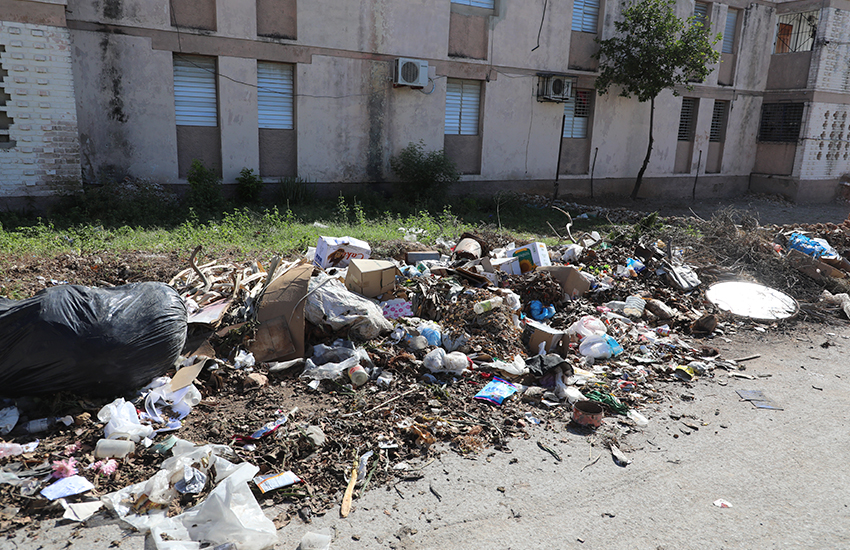
Like Aidanys and Elaine, many other voices in the municipality of Puerto Padre associate the prevalence of the Aedes aegypti mosquito with poor hygiene, micro-dumps, streets stained by sewage, leaks... The truth is that for more than a year, this territory has been experiencing a situation that requires more hands working together.
RESEARCH AND SURVEYS
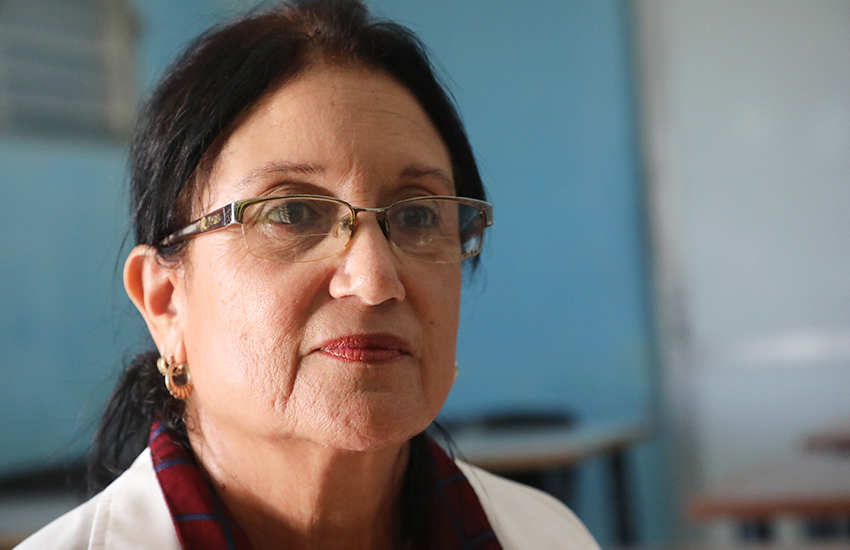
Dr. Vivian Rivas Gómez, deputy director of the Center for Hygiene, Epidemiology, and Microbiology in Villa Azul, explains that in May 2024, one of the health areas was declared to be in transmission, as it was during the seasonal months of environmental complexities, when arboviruses usually increase.
“It started in the Romárico Oro polyclinic area, which of the three local areas has the largest population, territorial extension, and greatest epidemiological complexity. Then the others joined in, and the Ministry of Public Health declared Puerto Padre to be in dengue transmission and issued a series of guidelines that we have been following.”
“For a municipality to be considered in this category, it must have more than one health area affected by a high infestation rate and contribute a significant number of reagents. In other words, the vector has been detected in different blocks and sometimes several diagnoses of the transmitting vector converge in more than one.”
Dr. Rivas Gómez emphasizes that during 2025, they have achieved certain stability in reactivity diagnoses, although the detection of outbreaks has been their weakest link. "We have noticed some progress because no more than one reactive patient has remained for more than 21 days, the surveillance period for an infested community.
“In the current calendar, we have observed that in the ‘Romárico Oro’ area, what has manifested itself is a wide dispersion of reactivity, which may be a response to hidden morbidity, with patients not going to the doctor and, therefore, not enough diagnoses being made.”
“It should also be clarified that the mosquito has a range of about 300 meters, people often travel to their workplaces, and arbovirus disease spreads naturally.”
DEBTS ON THE TABLE
With a frown on her face and objectivity on the table, alongside various reports and databases, the director admits that, although there has been a notable deployment of healthcare personnel, they have not managed to put an end to the problem, in which citizen responsibility is vital to achieving epidemiological stability.
"We have not managed to eliminate the transmission condition because we still have gaps related to the most significant component in the transmission of arboviruses, which, in my opinion, is the environment. It is not that it is decisive, but it is very influential.
"Most of the outbreaks have been detected in domestic water reservoirs, that is, they are not in the environment; but the unsanitary environment undermines the effectiveness of the adulticide treatments we have carried out in the affected blocks and the blocking of cases.
"There is a lack of systematic solid waste collection, resources to repair drinking water leaks...; however, what is essential is for the population to take responsibility, to cover their water tanks, to understand that self-care is vital to preserving health. Without a doubt, I believe that we have also been affected by the low perception of risk among the population.
“At the same time, we urge them to seek health services, to protect themselves, and to emphasize the elderly and those with chronic diseases. The interweaving of community factors is essential for this municipality, which is characterized by concerned citizens, to put an end to this situation.”
"We have not been sitting idly by, far from it. We are following a well-designed response plan and maintaining the Municipal Task Force, which meets once a week. We are out on the streets and in the neighborhoods, talking with residents, their leaders, and a group of decision-makers to minimize transmission."
"We have undergone constant checks and inspections, and we have the advice and support of the Provincial Directorate of Hygiene and Epidemiology. We have not been alone, and the population should know that surveillance kits have been available to make timely diagnoses."
“From a distance, people judge and complain because they are not fumigating, but the commitment has to be multisectoral, especially in this season when the probability of rain increases and the vector spreads. We have taken on this stage as a challenge from which we will emerge stronger.”
LIGHTS AND SHADOWS
Puerto Padre has more than 91,000 inhabitants. The epidemiological study has shown that more than 60 percent of the outbreaks are found in low tanks, water reservoirs, and abandoned containers in yards.
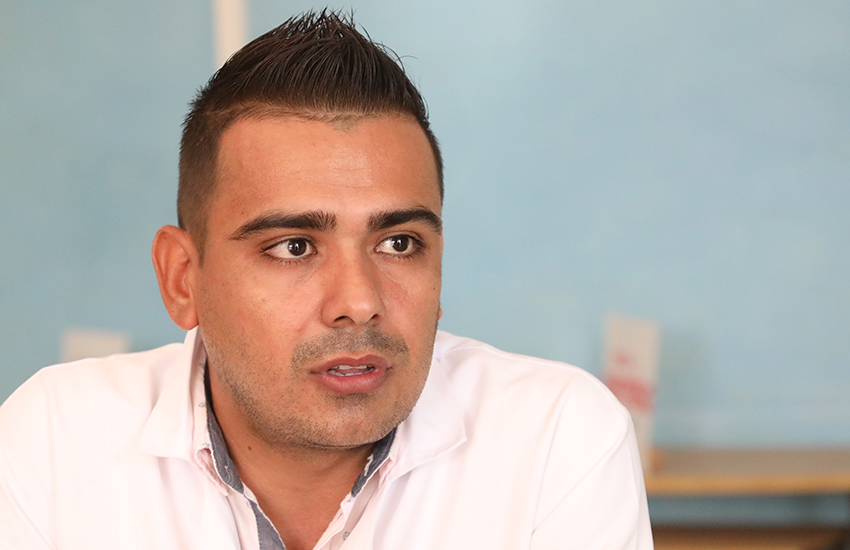
Family medicine specialist Luis Manuel Figueredo, director of the Romárico Oro Health Department, assures 26 that they are currently dealing with 11 recurring blocks, although none can be considered transmissible because the three essential components—focality, reactivity, and fever cases—do not sustain it over time.
“Every day we analyze the issue with all the factors involved and the support of the main municipal authorities. The greatest strength in the equation is the formal and informal leaders of the community. They come and provide us with timely information about sick families who do not go to the doctor, elderly people living alone...; they are vital in this process.”
“We have noticed that the age group over 50 has had the highest number of reported cases, and some with comorbidities have had to be referred to the Ernesto Guevara Hospital, although serious complications have not prevailed throughout the transmission phase.”
“We are concerned about the decline in risk perception. We know that Puerto Padre residents are well informed and aware of the warning signs of the disease, but they often do not seek medical attention, or do so too late, which has led to complications.”
COMPLEX SCENARIOS AND TIMES
Yanara Navarro Arias, a psychology graduate and senior health promotion specialist, shares the spaces and strategies implemented in the Villazulino territory to ensure that the population practices effective self-care.
With an eye on the inner workings of her homeland, she assures us that today the inhabitants have pressing needs and that her actions are aimed at meeting them. "Their concern is to store the scarce water they can get, not to avoid the vectors that may be in the tanks, for example.
“We are focused on raising risk awareness. We have the necessary personnel who have the tools to reach the communities. So, we have to insist on a systematic approach, on real health education, because this can make a difference. And we have to be clear, arboviruses are dangerous.”
In their analysis of the period evaluated, health authorities report that there have been patients who have developed alarming symptoms, to the point of compromising their lives, as aggressive serotypes are circulating. All the more reason not to wait at home....
In Puerto Padre, the long period of transmission continues to challenge a more robust multisectoral strategy for epidemiological stability. Along with screening and check-ups, objective resources are needed, greater involvement of organizations with an impact on the community and, above all, a push to reduce micro-dumps, sewage, and leaks, where mosquitoes also breed.
The beauty and uniqueness of the “Villa,” with an emphasis on the health of its people, deserve no less.