The experience had not yet affected her enough, and standing in front of the little boy, so far from Cuba, she felt herself freeze that morning. The small body barely moved. He was just under two years old. A polyparasitism had compromised his entire organism, and he did not respond to her stethoscope.
Dr. Esther had arrived in Haiti in 1999. It was the second medical mission she had undertaken in that reality so different from that of her Puerto Padre. The poverty of the community that welcomed her opened the doors wide to multiple cases, and when the family entered and placed the little boy on the table, she felt she needed otherworldly help to bring him back to life.
The team mobilized immediately, applying all known maneuvers, resuscitating him a second time, but he did not breathe. Esther let out a muffled cry that could be heard throughout the emergency room and out in the hallways. She did not know how to stop.
When the infant's mother approached, the doctor began to tremble. She couldn't look her in the face and didn't know how to break the news. The interpreter whispered a few words that took her a century to understand. The woman was asking her not to cry; she had other children at home.
...
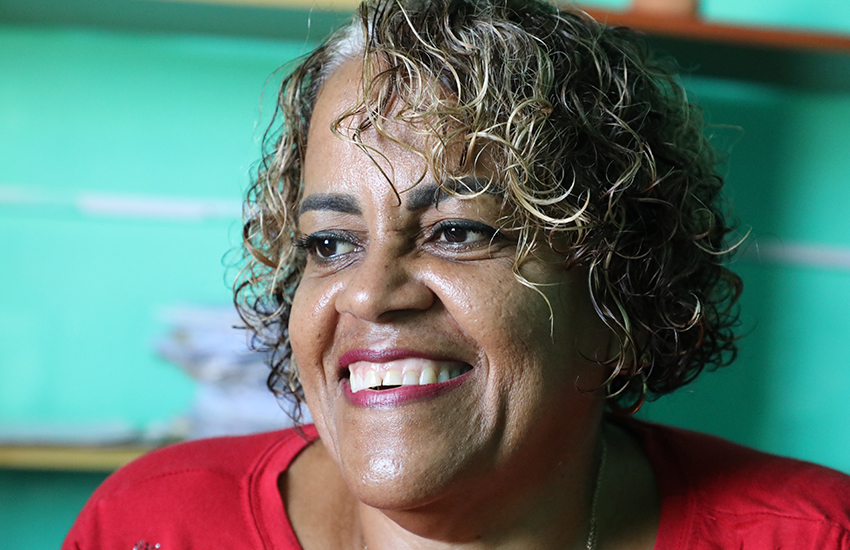
Dr. Esther Bárbara Gutiérrez has made her mark in the field of pediatrics. She confesses that she was born into a family of doctors, her mother a pediatrician and her father a gynecologist, so her vocation blossomed as a legacy, but she always knew that her future would be linked to the fate of children, no matter how difficult that might be.
“At one point, my mother warned me about the sacrifices involved in the profession I wanted to choose, the commitment, the lack of free time... weekends. She gave me the advice of Aesculapius. I listened to her with respect. I already knew the debts that doctors incur with their families, but it was an irreversible decision.”
She arrived from Santiago de Cuba when she was very young and settled with the same certainty in Puerto Padre. The salty breeze baptized her beginnings, and when she entered the former Zoilo Marinello Faculty of Medical Sciences, part of the University of Camagüey, she knew that she would also pursue her career in the coastal municipality.
"From my third year of studies, I came to Puerto Padre. It was a teaching unit as part of a health system strategy that seeks early involvement in the profession. I remember that when I graduated, even though I knew I only wanted to be a pediatrician, life led me down other paths."
At that time, the country called for the training of comprehensive general practitioners (MGI in Spanish). I had the opportunity to start that specialty, which I am grateful for today, because it taught me a lot and gave me extra sensitivity towards families and their peculiarities. I had many achievements as a family doctor.
"I started not liking it, but it turned out to be one of the best chapters of my life. In 1994, my first job was at the Salto del Polvorín cooperative; I was the first doctor to arrive there. And we achieved some very nice things."
"The community was declared a Friend of Mothers and Children at the provincial level, a successful vaccination campaign was carried out, and the indicators were positive... In short, that day-to-day work earned me the status of National Vanguard, and the affection of the people was the best reward."
But nothing distracted her from following the path of her true calling. She arrived at the Reimundo Castro pediatric hospital in Puerto Padre, full of aspirations. There she began a career that she says has marked her life.
"Children are the most sensitive part of the family, and their discomfort overshadows family dynamics; everyone takes on their role. It is difficult to diagnose them because the little ones don't talk, so you have to interview the adults; therefore, it requires twice the precision and dedication."
"You never forget your patients. Those who get sick, and you can help, as well as those you can't. I learned to interact with family members, which is very difficult but vital. The people of Puerto Padre are known for being very concerned about their children; at the slightest fever, they are already at the hospital."
“I have had many complex cases, patients in convulsive status, meningoencephalitis, which require quick and precise action; it takes many years of work. My advice to parents is never to be complacent and to see a doctor early on when they feel that their child is not behaving normally. Minutes can save lives.”
Esther currently works as a research methodologist at the municipality's Medical Sciences Branch. She is an assistant professor, holds a master's degree in Comprehensive Child Care, and continues her work as a pediatrician, with the bonds of a vocation that she has taken upon herself to foster.
"You have to come to medicine out of love; there can be no other bridges. It is a profession that overwhelms you, that steals time away from your children and your husband, that demands a lot from you. But it more than repays the sacrifice when you know that a child's health is in your hands, that their well-being has been entrusted to you."
“We live in such complex times, with so many shortages... You arrive at the emergency room with a thousand worries, things you need, conflicts, fatigue, but you have to split yourself in two and leave your personal burdens outside. On the other side of the desk, wearing a white coat, there is an inviolable ethical principle: the patient is the most important thing.”