In October, when the city prepares to turn pink in remembrance and resistance, the “Wings for Hope” project turns fear into companionship and illness into an act of communion, celebrating Breast Cancer Awareness Month 2025.
The project was born in 2006 in Las Tunas as a promise put into practice, bringing together medicine and art so that those facing breast cancer do not walk alone. Today, the voice of its founder, María Victoria Justo Celorrio, known as “Mariví,” guides us through the gestures and activities that have sustained women and families for years.
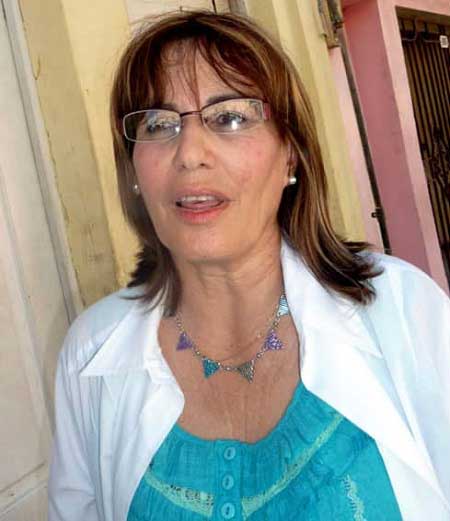 "I founded Alas por la Esperanza (Wings for Hope) with the certainty that the community and culture could accompany the treatment of breast cancer. Our first activity was at the Women's Guidance Center, where we held workshops and meetings that allowed patients to share experiences and feel supported. We then continued at the Casa de la Música and other venues around the city, always looking for places where people could experience the disease from another perspective, with activities that brought life and expression."
"I was always accompanied by doctors and artists who contributed their time and talent. We held fashion shows where patients modeled and showed that beauty persists after surgery, we put on performances at the Tunas cinema with guest musicians, we organized art galleries and Cuban tables where everyone brought a dish and shared food and conversation. These actions were not just events; they were rituals of reconstruction where women regained their identity and self-esteem."
One of the chapters that Mariví remembers most fondly is the work in the chemotherapy rooms, where snacks, music, and cultural activities are enough to make the waiting hours more bearable.
"We went many times and found that a little company, a song, or a frank conversation can make the day easier. Recently, for various reasons, we have been going less often. But afternoons in the chemo room remain a powerful reminder of what the project achieved by transforming pain into moments of humanity."
"There are patients who have been involved in the project for years and have changed their way of thinking and living. Some lost their mothers and continue to participate; others have found a support network in Alas por la Esperanza. We have visited patients in their homes, celebrated birthdays, exchanged gifts, and organized activities where the main objective is to build networks. The consistency of our support shows that recovery is not only clinical, but also social and emotional."
Mariví says that in January of this year, she retired from her profession, although she proudly notes that her heart remains attached to her work. "I graduated in 1987, and since 1990, I have worked in the breast program as a radiologist, so it was natural to take on the responsibility of founding and sustaining the project here in Las Tunas. I would not have wanted to retire yet, but the project continues to move forward, and that comforts me. I remain involved as much as possible, and I am happy to see that there are others at the national level, in Havana and other provinces, who are also doing similar work."
WE RECOMMEND
Breast Cancer Awareness Month 200250025
#EveryStoryIsUnique
At the institutional level, the project has had the support of the Center for Hygiene, Public Health, and local polyclinics.“We participate in morning meetings at workplaces to talk about the project and send images to Havana to show what we do. I have a million photos of the project that capture stories and faces that speak for themselves about the impact of our activities.”
"I want to send a clear message to women: from the age of 30, it is essential to perform a self-examination once a month and have an annual check-up. If they detect anything abnormal, they should go to their local doctor at their polyclinic or to the breast clinic at the Ernesto Guevara General Hospital, where there are oncologists who treat those who need it. Some specific professionals provide care, who participate in the evaluation and in ordering tests, such as mammograms, which are requested when the oncologist considers it necessary and coordinated with the hospital's radiologists."
Early detection saves lives because it allows for treatments with a greater chance of success. At the same time, I reiterate that social accompaniment, culture, and mutual support complement medical treatment by strengthening morale, reducing isolation, and sustaining hope.
“We have held parades, concerts, family gatherings, and many small events that have meant a lot to those who participated. As the social situation has worsened somewhat, some activities have become more difficult for us, but by the grace of God, we always manage to do something. The community's adaptability and solidarity have been key to continuing to function, albeit less regularly.”
"The stories that move me the most are those of women who, after surgery and treatment, regained a purpose in life and became health promoters within their families. These women are living proof that cancer does not define everything and that, with support and resources, a new narrative can be built. I recommend that new professionals and volunteers show respect, perseverance, and organization, that they value the confidentiality and dignity of each patient, and that they understand that accompaniment is both hospital support and a human act."
"I feel proud of what we have done and grateful for the helping hands that accompanied us. I learned that medicine needs culture to heal wounds that cannot be seen on an X-ray. I learned that the community has enormous resources of solidarity and that the simplest activities, a snack or a song, can make a difference. My wish is that Alas por la Esperanza continues to be a meeting place, where every gesture contributes to the quality of life of people affected by breast cancer."
María Victoria Justo Celorrio, Mariví, speaks from the experience and passion of someone who created a project that combines health and culture. Her words are an invitation to early detection, community support, and keeping alive the spaces that transform fear into action and shared care.