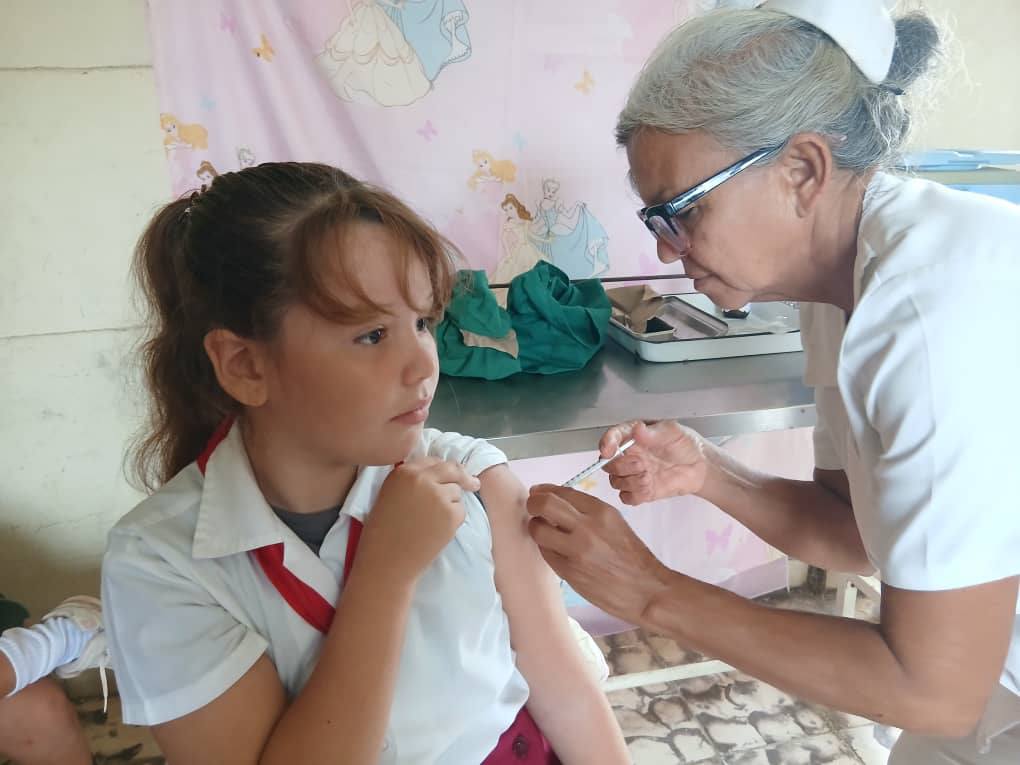
More than 2,700 girls over the age of 9 are being immunized in Las Tunas against human papillomavirus (HPV) as part of the national vaccination program, which represents an important step forward in the long-term prevention of cervical cancer.
Las Tunas, Cuba.- Yahilín Nápoles Novella, head of the province's Vaccination Program, explained to 26 that the bivalent Cecolin immunogen protects against serotypes 16 and 18 of the virus and is administered in a single dose.
“This vaccine is introduced into the school program in the fourth grade and will be extended to all girls aged 9 and over,” Nápoles Novella emphasized. It will also be given in special schools to girls of the required age, regardless of their grade level, as well as to those with disabling conditions who do not attend school.
He also explained that special arrangements are being made for HIV-positive girls, who will receive two doses, one at their respective schools and the other six months later at certified health centers in their areas.
“We have more than 400 schools designated to carry out HPV immunization and 22 certified vaccination centers throughout the country. We have had a fruitful period of preparation and promotion for this moment, and the support of the education sector has been key,” she added.
In the country, the inoculation process began on October 27 and will continue until December 27, with January as a recovery month. “But due to weather conditions, the eastern part of the island is behind schedule. We will have a recovery period in the health areas for those who, at the time of vaccination, had not yet reached the age of 9 or had some illness.”
Nápoles Novella noted that the drug is administered to girls who have not yet become sexually active, because studies have demonstrated the effectiveness of bivalent Cecolin in patients who have not previously been infected with HPV.
She clarified that the vaccine has been available since 2006, with good results in clinical trials and widespread acceptance around the world. Once it was certified by the Center for State Control of Medicines, Equipment, and Medical Devices (CECMED, in Spanish), it was introduced in the country as a strategy to reduce the burden of disease through early immunization, protecting the female population before exposure to the virus.