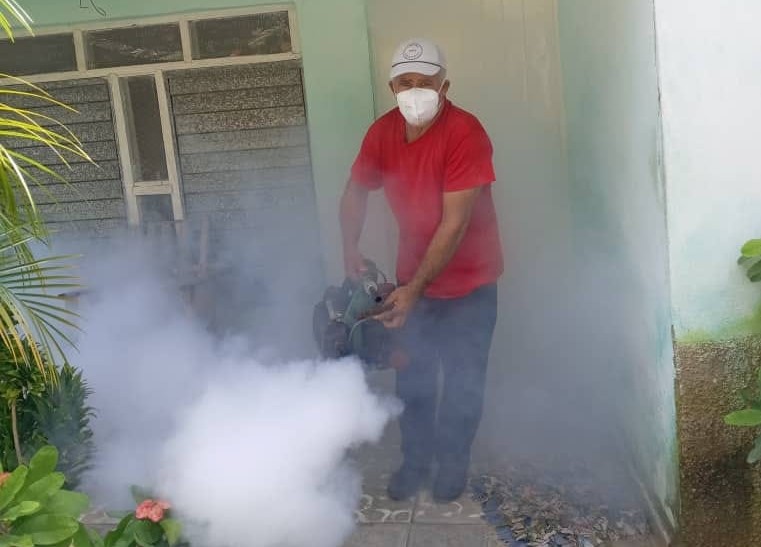
Due to the complex epidemiological situation, adulticide treatment (fumigation) began this week in Las Tunas in areas with the highest incidence, as part of a health intervention strategy implemented throughout the territory aimed at curbing diseases caused by arboviruses.
Las Tunas, Cuba.– In a working meeting, Osbel Lorenzo Rodríguez, First Secretary of the Cuban Communist Party in the province, urged health authorities to ensure high-quality adulticide treatment and, at the same time, conduct thorough home inspections to contain the current outbreak.
He also demanded an intersectoral approach to epidemiological stability, which includes more effective solid waste collection, as well as greater citizen responsibility for maintaining hygiene.
Lorenzo Rodríguez advocated for effective surveillance through active case finding that reflects the reality of the Las Tunas inhabitants, who do not always seek care at health institutions. He also urged differentiated attention for vulnerable individuals both within the community and in social institutions.
INSIDE COMMUNITIES
Dr. Yaumara Acosta García, acting Health Director General, confirmed to 26 that the territory is indeed facing a complex epidemiological situation, marked by the incidence of several viruses, especially those transmitted by the Aedes aegypti mosquito.
“The circulation of chikungunya has been confirmed in the province, coinciding with dengue and an increase in febrile syndromes over the last 21 days. This has led to a reorganization of the healthcare system in all areas and hospitals, and has required the implementation of a public health intervention strategy,” she pointed out.
“Over the next two weeks, we will be combating the vector, focusing primarily on the municipalities of Puerto Padre and Las Tunas, which present the greatest complexity with suspected cases of arbovirus.”
She also detailed that adulticide treatment will continue in order, starting in Majibacoa, Jobabo, and “Amancio,” until the entire province is covered.
“As part of the strategy, we will reinforce our efforts to address foci and fumigate the affected areas,” she emphasized. The community outreach program will begin with interventions in the health area of the Gustavo Aldereguía Polyclinic and gradually expand to others, in addition to offering home treatment in high-risk locations.
"We will also be conducting health promotion activities in every city block so that the population is fully aware of the warning signs and symptoms of dengue and chikungunya, which are viruses that overlap but have distinct manifestations."
The doctor warned that dengue remains the most serious viral disease among arboviruses. Therefore, she urged people to visit health facilities to report their condition and receive appropriate and timely management, so that, based on their symptoms, it can be determined whether home or hospitalization is necessary.
She emphasized the importance of protecting vulnerable individuals, including children under one year of age, pregnant women, adults over 60, and patients with chronic illnesses.