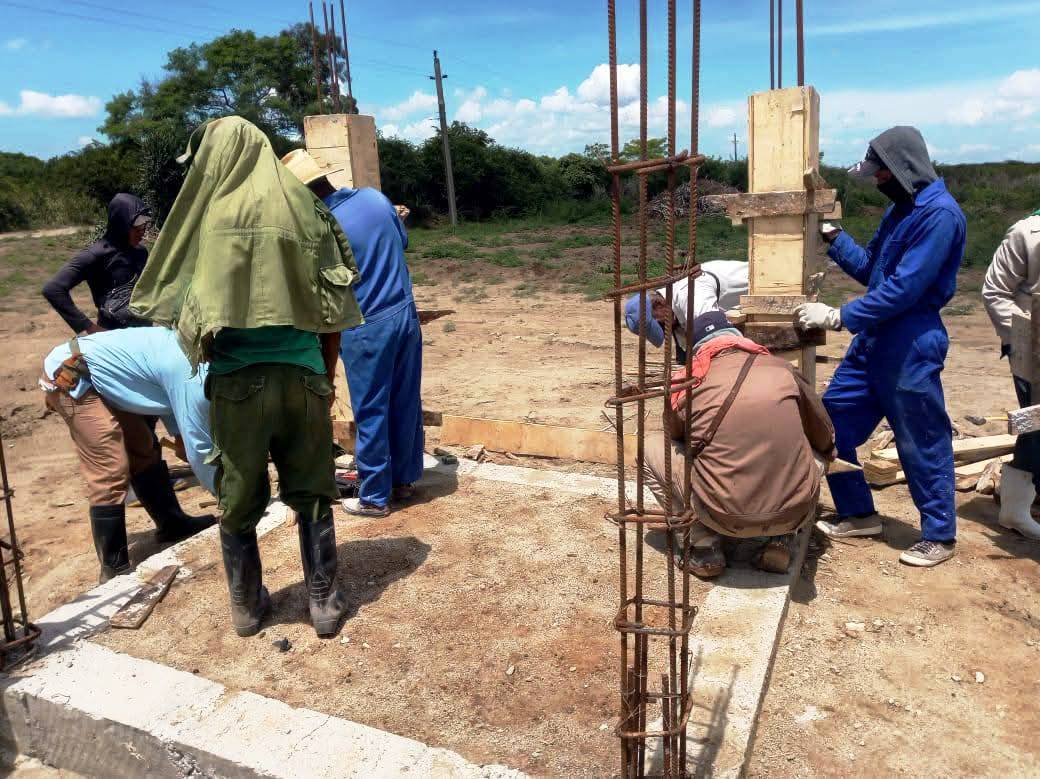
Despite the inconvenience of rain hindering progress, work is proceeding at a good pace and at an accelerated rate on the 220 kV substation photovoltaic solar park (PSFV in Spanish), which is being built in areas adjacent to the electrical substation with which it shares its name, on the Las Tunas-Manatí highway.
Las Tunas, Cuba.- Omilton Rodríguez Rivas, director of investments for the Provincial Electric Company, says that this PSFV is part of the 19 development programs being implemented by the entity this year, with a total budget of over three billion pesos.
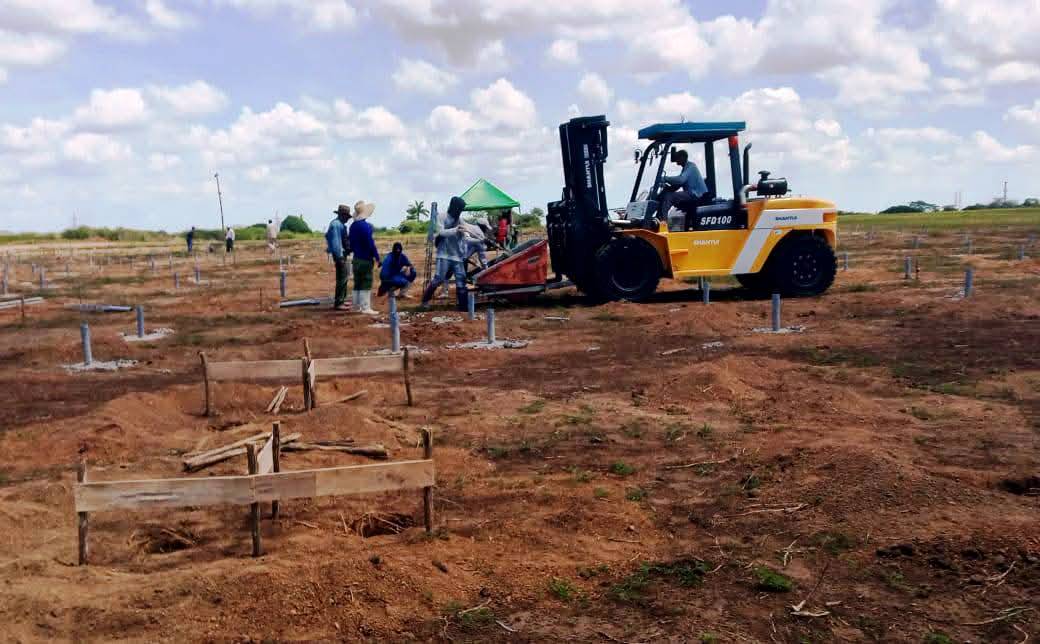 In July, earthworks began on the 32 hectares—which will accommodate the seven plots—where marabou weed had previously reigned supreme. Today, freed from the invasive plant, they are the scene of the battle being waged by Cuba and its revolutionary state to reverse the current contingency and move forward in changing its energy matrix with the use of renewable and clean sources.
The temporary facilities and the refurbishment of the reception area and location of the 125 containers with the technological equipment that is already arriving have been completed, symbolizing the priority attention that the government is giving to this strategic task for the country's economic development and social welfare.
“These days we are working intensively on the civil works that make up the cistern, the pit, the three guard posts for surveillance...,” say Rodríguez Rivas and Manuel Antonio Alomá Magariño, who are in charge of the project's execution for the Provincial Electric Company, the entity directly responsible for the investment.
They confirm that they are simultaneously promoting construction work on the prefabricated structures of the inverters and the casting of the pillars, although the rains of recent days are hampering the work and testing the energies of the workers of the Construction and Assembly Company (Conalza Las Tunas in Spanish), the main contractor for this important project.
Representatives of the companies Proyectos de la Unión Eléctrica (INEL in Spanish), from Holguín; Nacional de Equipos del Ministerio de la Construcción (Cubiza in Spanish); and Nacional de Investigaciones Aplicadas (ENIA in Spanish), the latter responsible for topographical studies, technical assistance, and monitoring the quality of the elements used in the assembly, are also joining forces.
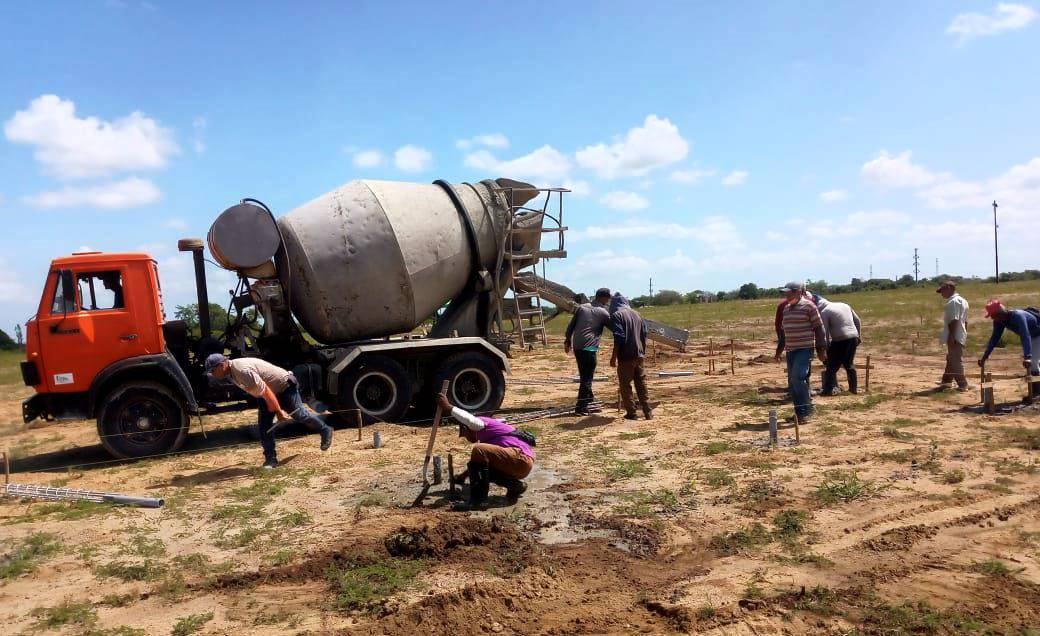 Rodríguez Rivas explains that the “220 KV Substation” project is designed to generate 21.8 MW, similar in potential to the recently inaugurated “New Line,” but with differences in the assembly, because “the pillars (base of the tables that support the panels) are cast and not driven, a method imposed by the conditions of the terrain and which involves much more effort and resources.”
He comments that it is necessary to cast 16,638 pillars to support 1,638 tables on which 42,588 solar panels will be located, and confirms that they have all the projects and resources necessary to sustain the construction work and care for the workers who carry out daily feats, aware of the importance of the work.
The province has five photovoltaic solar parks in operation that contribute 32.8 MW. Currently, the La Veguita (Las Tunas, 21.8 MW), Blanca Rosa (Majibacoa, 5 MW), and Punta Brava ("Amancio") photovoltaic solar parks, also with 5 MW, are under construction.