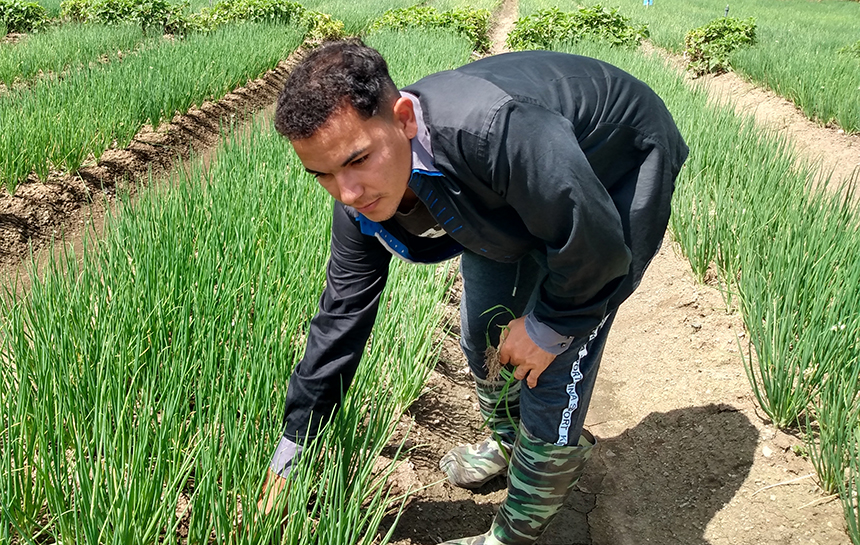
At the Las Brígidas organic farm in the city of Las Tunas, the years have brought valuable lessons to young Kendry Luis González Padrón, who manages this productive setting through a usufruct, always intending to have crops at different stages of growth.
Las Tunas, Cuba.- He has a group of workers who are not afraid of the midday sun or the supposed rest that corresponds to weekends, and he also takes advantage of the knowledge of his wife, who previously trained as a mid-level technician in agronomy.
Thanks to all of them, he has made progress in planting vegetables, fresh herbs, and other crops, which has led to him soon being recognized as a national reference point for the urban, suburban, and family farming movement.
"It's a small area, barely one hectare in size. But when used well, it yields more. That's what we do, because we only leave the necessary spaces empty, and in the case of the 128 beds, we harvest, prepare the soil, and replant quickly.
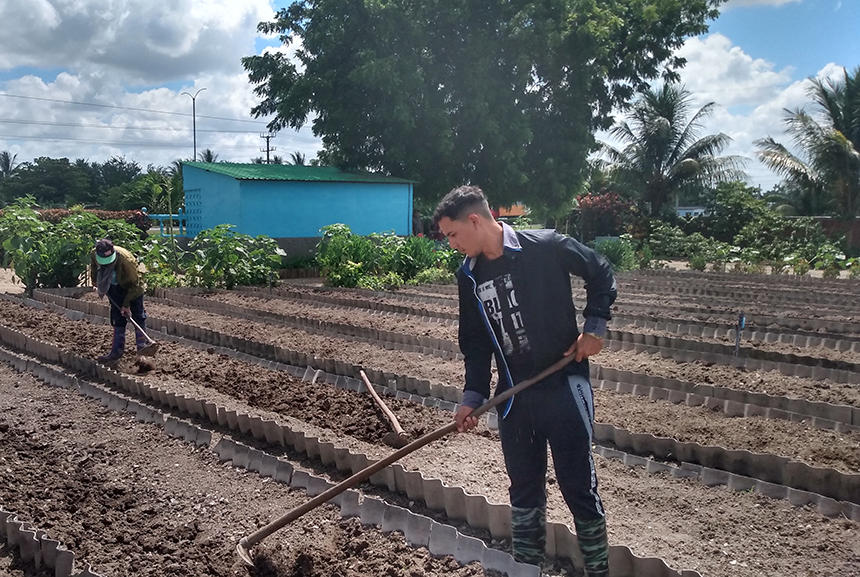
"These days we only have three crops: chives, salad beans, and leeks. We just harvested many cucumbers. And we are already preparing to plant more cucumbers, radishes, and other species with the seeds we have available."
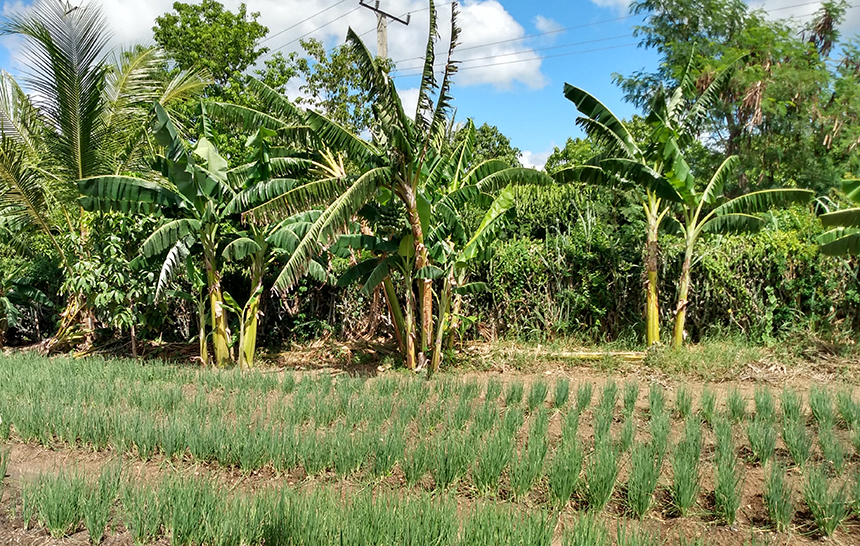
The unit also has plantains and fruit, guava, nutritious sago, coconut, avocado, cilantro, and sunflowers, among other varieties. And, as something new in entities of this type, a few months ago, we started raising rabbits to obtain animal protein.
"It's a new experience that presents us with challenges, but we're moving forward and learning. We have a worker who takes care of them directly and ensures their hygiene and food. In any case, we produce part of what they consume every day here.
“They eat sweet potatoes that we grow, guava, mango, sunflower, cucumber, and crop residues. We have sold them at the agricultural fair and to workers; we also sell them at our point of sale and consume them at home, as a family.”
Kendry is very young and has little free time because he takes advantage of every minute to tend to the organopónico, both in watering the crops and in dealing with harmful insect pests, always using colored traps and natural products.
He is also happily preparing for two events that will define his life. In September, he will go with his wife to a classroom at the University of Las Tunas to train as agricultural engineers, and a few months later, together, they will welcome a baby who, perhaps, in time, will also be interested in food production.