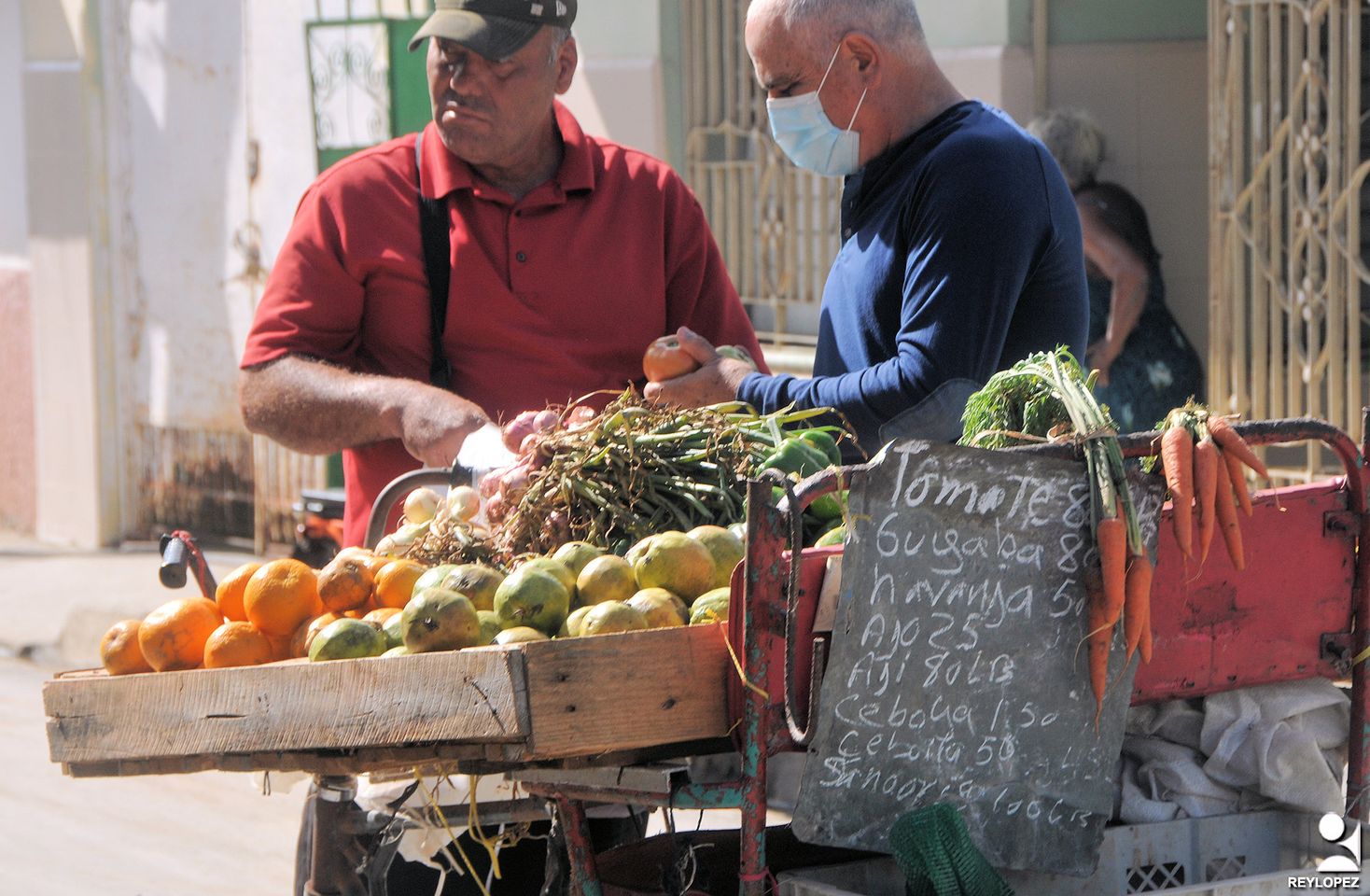
The latest Consumer Price Index (CPI) report compiled by the National Office of Statistics and Information (ONEI in Spanish) confirmed a sustained upward trend in the prices paid by families in this eastern Cuban province. Compared to data released by the same source for the same month in 2024, overall inflation rose by 20.7 percent.
Las Tunas, Cuba.- The measurement, which is carried out monthly on a basket of 298 items representing more than 90 percent of Cuban household spending, shows that inflationary pressure was particularly strong on necessities. Two-thirds of the establishments visited for the survey belong to the non-state sector.
Analysis of the data disaggregated by ONEI confirms that inflation not only remained steady but accelerated for essential products. The beverages and tobacco category recorded an implicit increase of 50.3 percent, while dairy products and eggs rose 42 percent. Meat, specifically pork, rose by 22.8 percent, the highest rate reported compared to other more populous provinces such as Havana or Santiago de Cuba, but also compared to others with approximately the same number of inhabitants, such as Cienfuegos or Ciego de Ávila.
From September 2024 to September 2025, root vegetables and grains also showed considerable increases, above 17 percent, exceeding the recent historical average. Only fruits showed a slight decrease of 1.8 percent, and vegetables showed a moderate increase of 6.8 percent.
Although overall inflation here was slightly below the average for the provinces mentioned, Las Tunas left behind its historical position of moderate prices. CPI data show that, in several basic items, prices in the Balcón del Oriente Cubano were equal to or higher than those in other eastern territories.
This behavior reflects that the easternmost provinces of the archipelago do not necessarily have lower inflation than those located in the west. However, the incidence varies according to the product category.
Despite a government strategy to increase local food production and reduce imports in these areas, families in Las Tunas still face a continuous increase in the cost of basic food items, with additional pressure on those in high demand, such as proteins and processed foods, which deepens the challenge for the domestic economy.