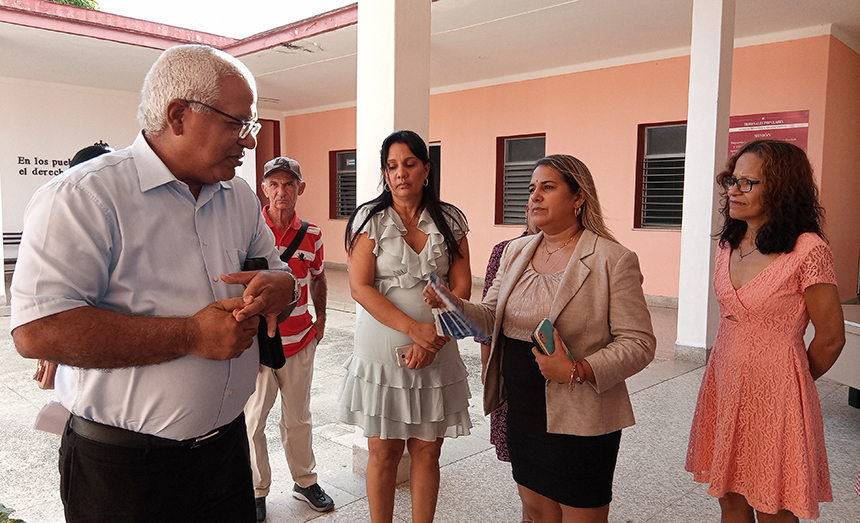
The President of Cuba’s Supreme People’s Court (TSP), Oscar Silvera Martínez, conducted an intensive working visit to the judicial body’s headquarters in Las Tunas to assess its operations and the fulfillment of the sector's key performance indicators.
Las Tunas, Cuba.- The visit began with a direct exchange with youngsters enrolled in the intermediate-level technical program in Judicial Law. Addressing them, Silvera Martínez emphasized continuous professional development as a cornerstone of legal practice. "Complete your studies, focus on pursuing higher education, and always strive to do things well. Cultivate and grow the habit of both study and work," he advised the students.
Subsequently, the TSP President toured various areas at the institution, where he spoke with staff and students from the University of Las Tunas’ Law degree program. He addressed core issues regarding the modernization of the judicial system, highlighting the importance of digital transformation, the improvement of the work environment, and the essential need to maintain respect toward those who visit the Court.
"Having students at our facilities is a strength, and it is truly an honor for us to have you here today. We want you to feel that we welcome you with joy. This is a wonderful institution. We operate based on respect —both toward those who come here for services and toward our own staff. Thank you for being here," said Silvera Martínez, who also underscored the value of experienced personnel and the positive impact that salary increases have had on workers in the sector.
During the visit, discussions focused on the importance of retaining a qualified workforce and filling vacant positions —a persistent challenge for the province. The visit also included meetings with the Governing Council, department heads, and Court judges. The visit concluded at the Municipal Court in the capital of Las Tunas, where the TSP President also engaged with the staff.
During the meeting, Elvia Laritza Cruz Hernández, president of the Las Tunas institution, presented a detailed analysis of the primary outcomes of judicial activity from January to September 2026, as well as projections and strategies for the remainder of the year.
The session served to conduct a comprehensive assessment of the court’s operations, addressing key areas such as human resources management, digital transformation, and other matters of institutional interest, all intended to ensure a more effective and accessible justice system for the people.