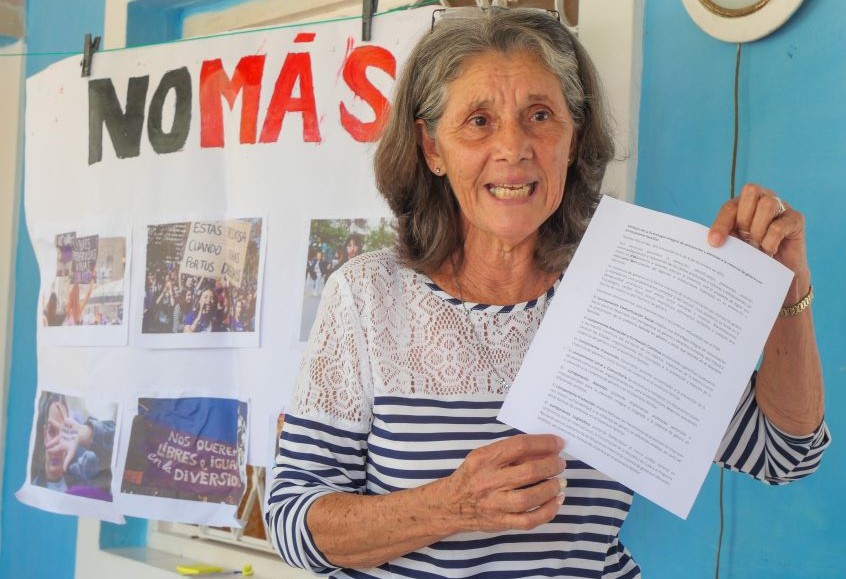
That morning held many surprises. Her passion for social projects had already taken root, but days like that one arrive, when certainties return to her from diverse faces.
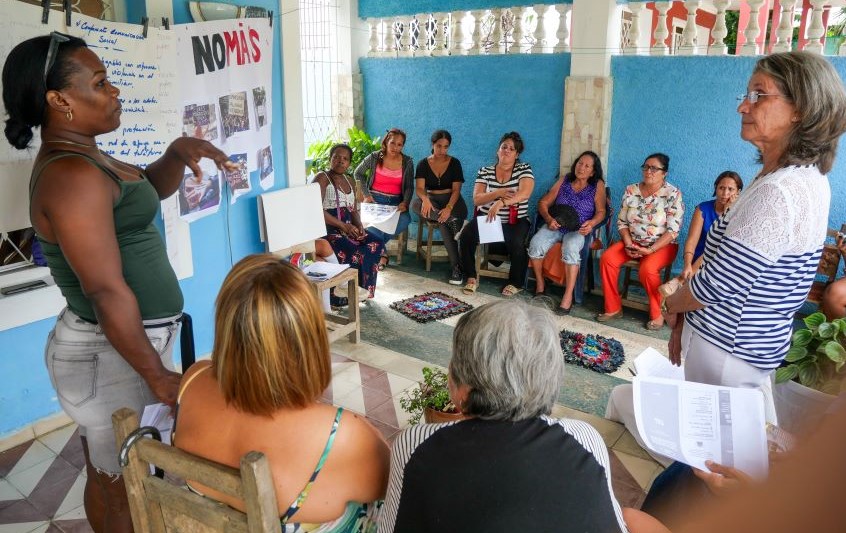
The meeting began with a group technique: “Who, like me, when I was younger, was a victim of some kind of violence and suffered greatly in silence…” In the next turn, the young woman who had spoken after her began to recount her experiences, her face flushed. She confessed that she had never told anyone, but she had been raped at the age of nine, and her family had never spoken about it.
In the third session, the experience became vivid and clear: another voice announced that she was being abused by her husband, that she felt trapped in her own home, that financial hardship prevented her from breaking the marital bond, that sometimes she even considered taking her own life… For Celia Díaz Cantillo, PhD in Pedagogical Sciences, professor in the Pedagogy-Psychology program, and coordinator of the Chair of Women: Gender and Society at the University of Las Tunas, every experience that burdens the female experience is a daily challenge to rediscover herself amidst everyday difficulties, which motivate her to continue promoting gender studies.
Talking with her is a sanctuary of sisterhood, “because women carry experiences, biases, and windows through which they peer to explore a diverse world.” They are the driving force that, after retirement, gets her up at dawn, full of motivation. “Support from science is more than necessary.”
UNDER THE VIOLET UMBRELLA
It's no coincidence that Celia was involved in two vital projects this year. One is No More: Prevention and Response to Violence Against Women in Cuba, a collaboration between the Italian association Cospe, the Federation of Cuban Women (FMC in Spanish), and its Women's Publishing House, in partnership with important institutions in the country.
The second, under the auspices of the FMC, Support for the National Response to Gender-Based Violence, landed in Las Tunas with the intention of delving into the realities within communities. In both projects, the chair led by Professor Díaz Cantillo provides guidance and, at the same time, serves as the workforce to apply the diagnostic tools.
“This latest project is essential for us and for the country. Having a long-term initiative that seeks to raise awareness and bring visibility to the nature and manifestations of violence is an opportunity we must fully embrace.
It's being implemented in Las Tunas across all 19 local councils, and it's providing us with valuable experience that is shaping our work routines. What have we discovered? A wealth of experiences and stories. Most importantly, we've helped a group emerge that can now recognize and identify the manifestations of violence in their homes, with their partners, at work, and in their social circles.”
“We are approaching a complex social phenomenon, with nuances and antecedents, rooted in structural violence and the lessons we have learned from this patriarchal society. Our work in the communities of Las Tunas has meant confronting a scourge head-on, one that we often don't understand because we haven't experienced it firsthand.”
“When you interview these women and men, they acknowledge that, due to fear of certain family, social, and other factors, they don't seek help, report the abuse, or assert their rights.”
“Sadly, we have also noticed another fear at play. It stems from the fact that, at the institutional level, there is no convincing action to confront the violence. It even happens that a victim goes to the National Revolutionary Police (PNR in Spanish) to file a report and is sent to see the sector chief in their area, and along the way, the will to defend their rights is lost.”
“Today, we need to create spaces where people can go and feel confident that we are listening to them and giving them the tools to move forward.” That support is vital, and we still have a long way to go.”
ALARMS AND SUPPORT FROM SISTERHOOD
“When you arrive at the spaces for dialogue, you realize that the violence isn't understood by the population. It's interesting that adult women, young girls tell you they had no idea they were being abused. A process of self-recognition begins, which is rewarding.
“As soon as women and men begin to identify where their boundaries are and how they have been violated, you're winning a battle, and we are achieving that, but the paths aren't clear. We're navigating a terrain with a lot of legal support, but in practice, the support mechanisms are lacking.”
Celia affirms that the comprehensive perspective, which her work in the communities allows her to access, now reveals many realities that don't always find the most receptive ears.
“It hurts that violence continues to have such a profound impact on our society. I'm not just talking about physical violence, which is the most common form, but also psychological, institutional, and sexual violence. It hurts that in workshops, such a high percentage of women acknowledge having been victims of sexual assault, and that families choose to keep these issues silent.”
“I always urge women to become more empowered; a greater awareness of risk is needed. The family is vital because that's where violence is learned and then reproduced, but it takes root in these early years. In the classroom, I hear a wide range of perspectives from young people, and sometimes I have to pause the lesson and explain essential social phenomena.” “Respect is the foundation of peace, and that must be taught. You are unique, and it is my responsibility to accept and respect you. We must recognize the importance of individuality. I believe we lack a more effective connection between home and school. If we achieve this, we can cultivate a more well-rounded human being, one who doesn't hit, rape, lie, or cause harm…”
According to the Doctor of Science, it is necessary to dedicate more time to working closely with families in communities, fostering more community-based cultural processes.
“Violence against women and their emancipation is a perennial struggle that has not ceased. Today, gender issues are not integrated into our work as they should be. We are at a more academic stage, focused on discourse and regulations, but we lack the methodologies to implement these issues and transform Cuba in favor of the rights of women and girls.”