
Amid the fuel scarcity caused by the tightening of the U.S. blockade, which complicates the country's energy crisis, the Las Tunas Taxi Agency has become a key player in maintaining public transportation in the city.
For a week, the electric tricycles were out of service. Alexander Osorio Peña, head of the agency's Operations Group, explained to 26 that this was due to a short circuit that damaged the main breaker at the facility, which is designated for charging the tricycles.
"After several efforts to obtain the necessary equipment, our colleagues from the Comprehensive Automation Company (Cedai) were responsible for restoring service. Currently, the electric tricycles are operating normally at three key locations: Casa Insólita (Unusual House), Calle 39, and the Ernesto Guevara Hospital."
Reynaldo Reyes Silva, the provincial Transportation Delegate, reported that as part of new measures to protect the most vulnerable sectors, two electric tricycles have been assigned to the "Guevara" Hospital and two to the Mártires de Las Tunas Pediatric Hospital.
"These vehicles will now facilitate the transport of patients discharged after surgery, women who have just given birth, and people undergoing chemotherapy. This service is being reinstated there so that patients at least have one option," the delegate emphasized.
On the other hand, the internal combustion tricycles that previously served the city have been out of service since December 10, 2025, because they have not been allocated fuel, confirmed the head of operations.
This situation reflects the resource shortage facing transportation in the province, which is compounded by the intensification of the economic, commercial, and financial blockade imposed by the United States government against Cuba. As words of encouragement, Osorio Peña said that the electric tricycles could be used to transport hemodialysis patients. "If the time comes, we are fully prepared to use them, although the province still has fuel specifically for this vital service."
A SCHEME THAT SAVES LIVES
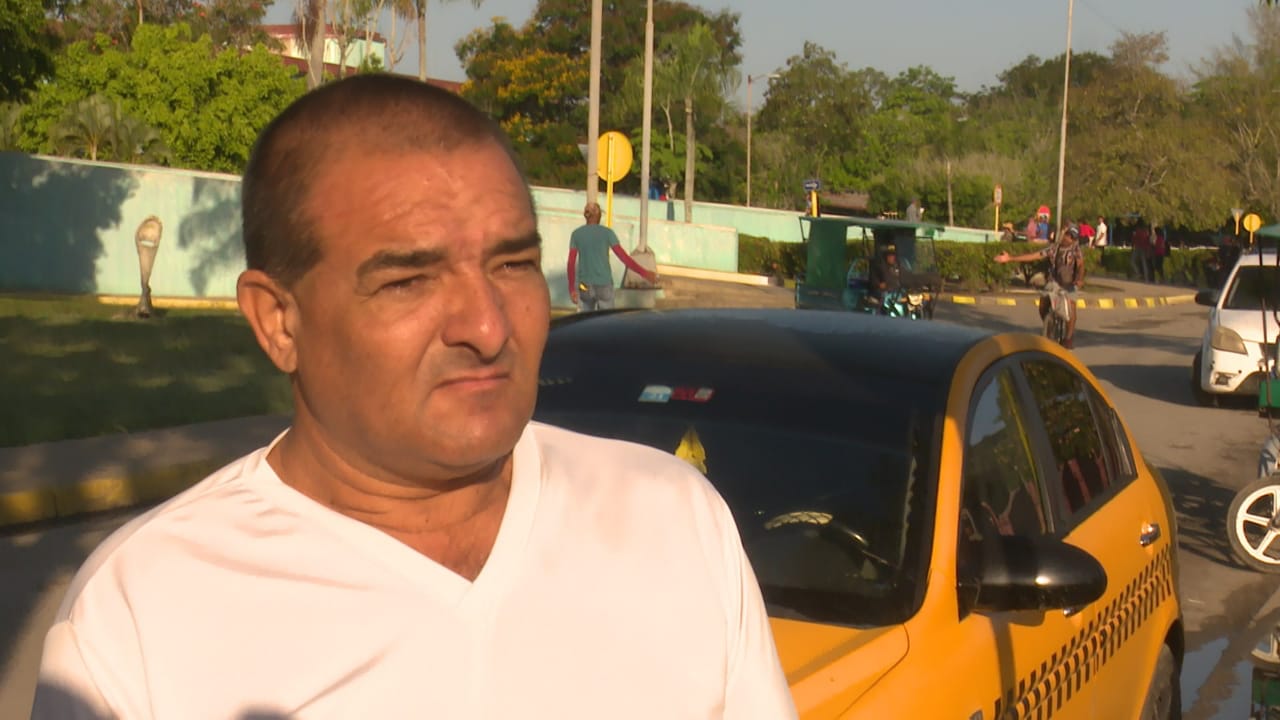 Despite the shortages, medical transportation continues. According to Yamilet Infante Jorge, head of the agency's Commercial Group, 104 patients are currently receiving hemodialysis treatment at the province's hospitals: the "Guevara," in the capital; the "Guillermo Domínguez," in Puerto Padre; and the Luis Aldana Palomino, in "Amancio.”
In a context where every drop of fuel counts, the Las Tunas Taxi Agency has had to reorganize its service. "In the main municipality, hemodialysis patients who previously traveled alone in a car will now travel two per vehicle, whenever possible.
"Furthermore, to optimize resources, patients from distant areas such as Manatí, Jobabo, 'Colombia', and hard-to-reach communities (Barranca, Becerra, or Bartle) will be admitted to hospitals the night before their treatment. A similar strategy is being applied in the northern zone with patients from the 'Jesús Menéndez' and Puerto Padre municipalities."
In daily coordination meetings, authorities are seeking alternatives to avoid disruptions. So far, no hemodialysis treatment has been suspended, and constant updates are being made to preserve this sensitive service.
COMPLEMENTARY ACTIONS
The Transportation Delegate assured that the government leadership has safeguarded other important services. Medical on-call personnel, transportation for hospital cleaning staff, and assistance at funeral homes for deceased family members are being maintained.
As a palliative measure for the population, inspectors and officials have been deployed at 11 key stops in the main municipality to assist people and monitor the use of available capacity in the few vehicles that are circulating. Additionally, checkpoints were activated at exits to all municipalities to ensure that no one with available capacity travels without helping passengers.
Despite the fuel shortage and the need for operational adjustments, the Las Tunas Taxi Agency, in conjunction with local authorities, reaffirms its commitment to the health and well-being of the population, whether ensuring the transfer of patients who need hemodialysis treatment, taking a mother and her newborn home, or providing assistance to people at bus stops. The premise is one: to leave no one without support.