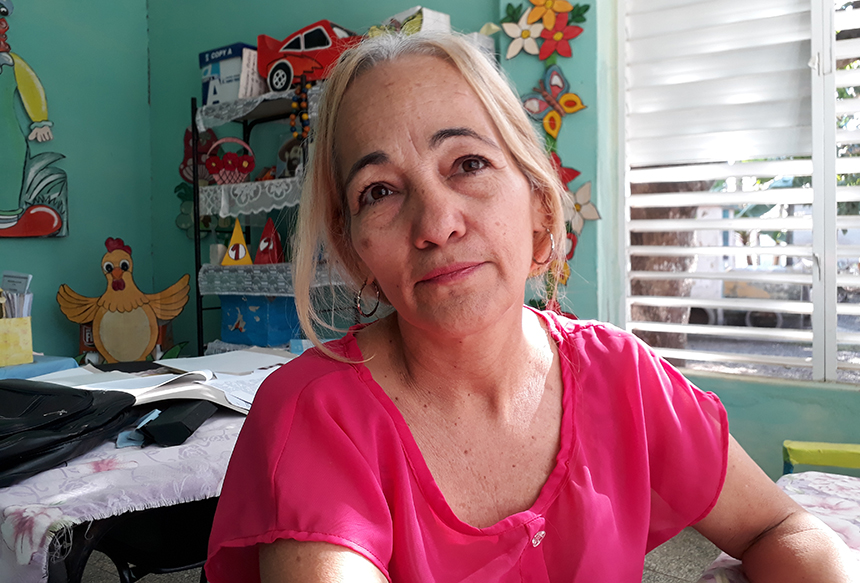
Amid the difficulties the country is facing, childcare centers have had to reorganize to guarantee care for the infants. Dulce Alcina Rodríguez, director of the Pequeños Capullos childcare center in the province of Las Tunas, explains how they have followed the guidelines of provincial, municipal, and early childhood authorities, always to maintain service and build trust with families.
Las Tunas, Cuba.– “The first measure was to convene the management council, where the responsibilities of each worker were analyzed, and families were informed about the situation,” she commented.
The director insists that education, like health, is a national priority and that early childhood requires special attention. Therefore, drop-off and pick-up times were made more flexible to address transportation difficulties, and direct parental support was sought.
“Many families have contributed water, firewood, and help transporting food, using electric vehicles like mopeds and motorcycle taxis. We have a resilient staff here who don't hesitate to cook with firewood, if necessary, because the important thing is that the children receive their meals properly prepared,” Rodríguez emphasizes.
The institution has also adopted measures to save water, electricity, and fuel. They implement automatic power cuts, unplug unnecessary equipment, and use charcoal for cooking, while the staff have joined in defense and self-sufficiency efforts.
“In the institution's gardens, we've harvested plantains, spices, and other products that supplement the children's diet. The families have responded positively, without showing any dissatisfaction. This isn't a time to panic, but rather to be realistic and understand the situation.”
Meanwhile, the children continue their routine in a normal and peaceful environment, playing and learning as always. Rodríguez explains that, although the current conditions require constant reorganization of services, the staff's willingness and the support of families have allowed them to maintain the children’s care and well-being. They have even ensured meals for the staff, although they plan to reorganize the facilities if, at any point, it becomes impossible to provide them with lunch.
“Now it's this measure, and tomorrow there may be others, but always with peace of mind and the certainty that early childhood remains a priority in Cuba,” she concludes.
Thanks to family support and staff commitment, this educational center has continued its teaching as normal, as Dulce Alcina stated, “childhood doesn't stop.”