
In the watchful silence of a ward at the Dr. Ernesto Guevara General Teaching Hospital in Las Tunas, life is measured in grams and weeks. This is no ordinary ward; it is the temporary home of the smallest and most vulnerable, a place where every breath is a triumph and every gram gained is a battle won.
Here, at the heart of Las Tunas’ Neonatology unit, the medical team not only heals but also builds a future, embracing those who come into the world prematurely or with just enough weight to defy the odds.
Neonatology specialist Yadiana Maite Prado Brito puts it plainly: “This unit is very special because it focuses on the newborn. And not just those with complications, but also the healthy babies born in the postpartum wards, where many mothers believe the doctor visiting them is a pediatrician, when in reality they are neonatologists —the specialists responsible for monitoring the baby from birth through the first 28 days of life.”
But her perspective extends beyond the crib, recognizing that every baby reflects a story that begins even before birth. “We don’t view the newborn as just an individual; we also take into account their medical history, the mother, and the family,” emphasizes the doctor, making it clear that comprehensive care is the cornerstone of her philosophy.
THE CHALLENGE OF THOSE WHO ARRIVE EARLY
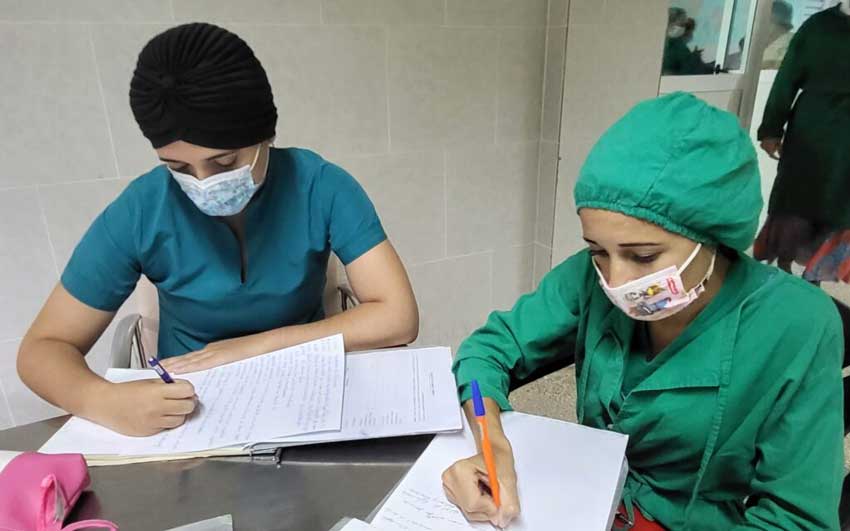 The main challenge comes in the tiniest form: premature babies, born before 37 weeks of gestation, and those with low birth weight. In Las Tunas, they have managed to care for infants as young as 27 weeks—a critical period when they should still be in the womb.
“Our ultimate challenge is for them to reach an ideal weight and have a corrected gestational age while being as healthy as possible,” says Dr. Prado Brito, thereby describing the ultimate goal: to deliver a healthy baby to their parents, so they can enjoy them to the fullest.
Most of these cases involve mothers with a history of hypertension or preeclampsia, or teenagers with unplanned pregnancies, which adds a layer of social complexity to the medical mission. As the specialist explains, these infants often require long hospital stays, and it is precisely during those days that the staff deploys its full arsenal of care to ensure that every gram gained is another step toward discharge.
INNOVATION AND HUMANIZATION: THE LAS TUNAS MARK
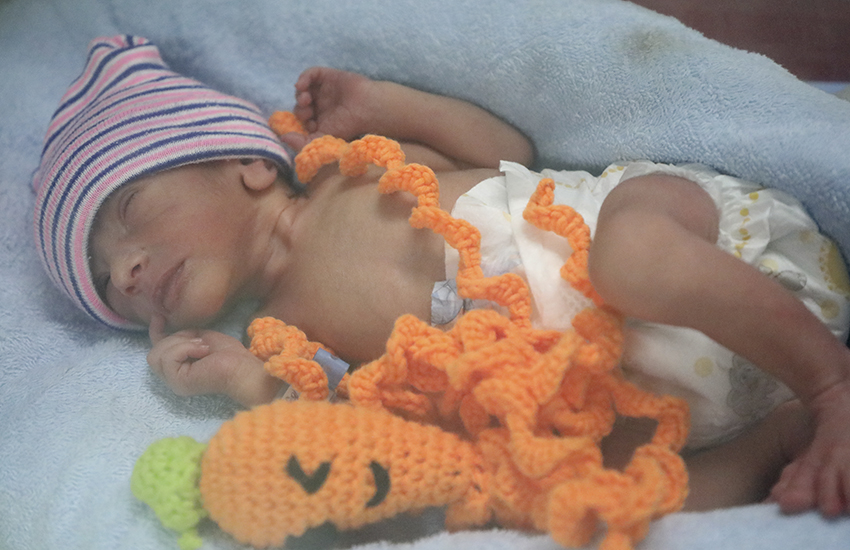
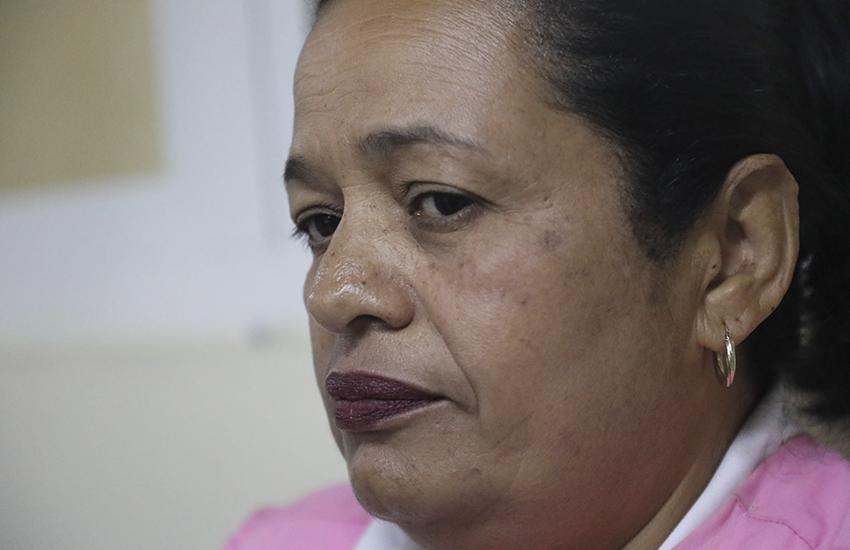 But the Las Tunas service stands out not only for its technical expertise but also for its commitment to humanization. One of the most innovative strategies has been the implementation of “octopus therapy”—small crocheted octopuses whose tentacles simulate the umbilical cord, providing the baby with a sense of security and calm.
“They feel calmer and more confident; they rest better,” explains Vilma Utria Peña, head nurse of the Neonatology unit, who notes that Las Tunas was one of the first provinces to implement this technique.
Added to this are neurodevelopmental care practices, such as the “nest,” which recreates the maternal womb to promote rest and weight gain, and the skin-to-skin or “kangaroo” method, which strengthens the bond with the mother and shortens hospital stays. “This helps them gain weight; they’re calmer and progressing satisfactorily,” says Utria Peña, highlighting how these small, seemingly simple actions make a difference in the newborns’ progress.
Behind every incubator is a team of people who work out of love, even though the current situation adds an extra layer of difficulty. “My staff faces the same challenges as everyone else—as the general population does. They’re people who aren’t getting enough sleep, but they still come to work. Despite all these difficulties, they come to work,” she says proudly. Most are women—many of them mothers—who have learned to draw on their compassion for every little one who arrives.
“Being a neonatal nurse isn’t just a profession—it’s about having a big heart, because it’s a demanding but very rewarding profession. Handing that child over to his or her mother—a mother who isn’t here with her baby—fills us with great satisfaction,” adds the head nurse, whose words reflect the sentiment of an entire team that finds its reward in every discharge.”
EDUCATION AND PREVENTION: THE SHIELD AGAINST MYTHS

Beyond intensive care, the service has a strong educational component. Through talks, myths about breastfeeding are debunked, and warnings are issued about dangerous practices, such as the use of herbal decoctions that—although passed down from previous generations—can be toxic to a newborn’s digestive system.
“Many arrive with exogenous poisoning from these decoctions —the kind grandmothers used to say, ‘They gave this to me and nothing ever happened to me,’ but it does happen,” warns the specialist, emphasizing the importance of outpatient consultations and guidance for first-time mothers so they return home with knowledge and confidence.
With 14 infants currently hospitalized, constant monitoring and a routine of checkups are maintained to detect any abnormalities early on. “These are inexperienced mothers, and we really reassure them, explain things to them, and provide details so they can return home feeling more confident,” adds Dr. Prado Brito, highlighting that the work goes beyond the purely clinical.
A LOOK TO THE FUTURE: TRAINING NEW GENERATIONS
This department at “Guevara” is preparing to continue writing stories of triumph. With survival rates that ranked the province among the top six in the country last year, its main driving force is the training of new specialists.
More than 10 second-year residents and several first-year residents are currently training under the guidance of a team that understands that the true legacy lies not only in saving lives, but also in spreading knowledge.
“We have a large number of residents, and that’s very good, because our main goal is to prepare and train them to become new specialists, new neonatologists,” says the doctor, convinced that the future of the specialty lies in the hands of these young people who are learning today.
In Las Tunas, every baby who gets to go home in their parents’ arms is irrefutable proof that, even in the most fragile beginnings, life always finds a way to flourish.