
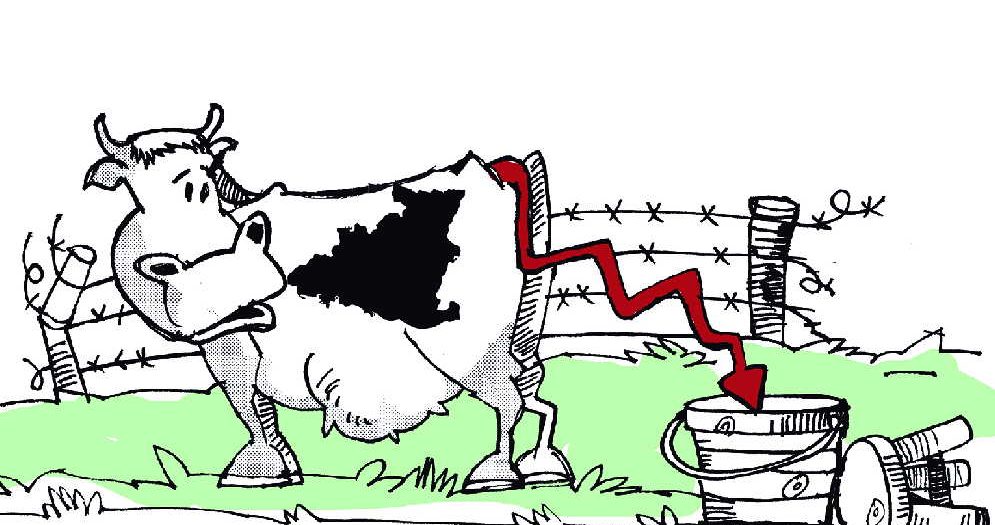
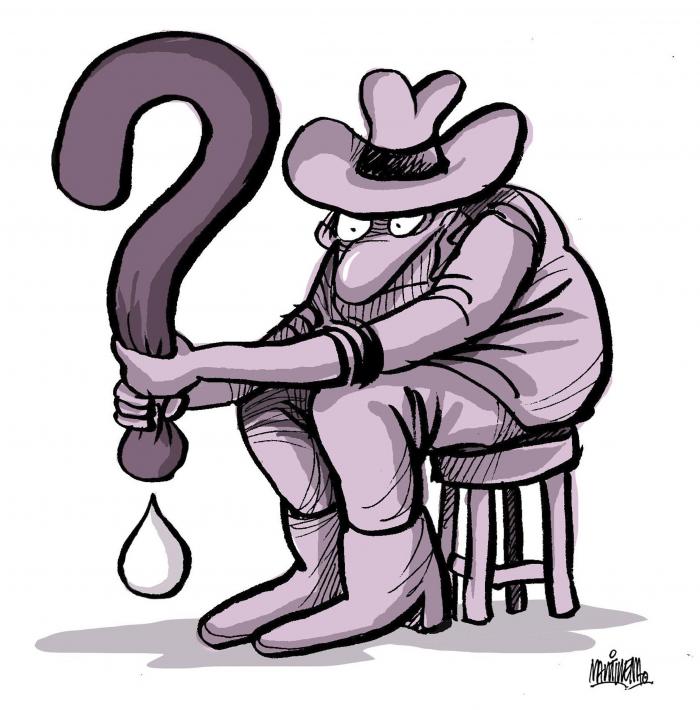
Livestock, milk, meat...? The daily average milk delivery in Jobabo at the end of May did not exceed 2,000 liters, which represents about a third of what was collected for that same month before 2020. We are talking about a drastic and progressive decline, very difficult to recover from in the short term.
Those familiar with the subject cite the deterioration of the herd as the cause. This factor ranges from an annual decrease of between 7 and 10 percent in the municipality's overall herd, lack of feed and water during prolonged periods of drought, reduced birth rates and survival, high mortality rates, to the overexploitation of livestock for slaughter to meet quotas, and theft and illegal slaughter. Adding to the pressure is the lack of genetic monitoring to improve the breed and investment in the livestock environment, coupled with a shortage of supplies and veterinary medicines.
But there is more. While the demands on livestock farmers have been greater than on other productive actors in the agricultural system, the resources allocated to this agricultural sector are between 80 and 90 percent lower. This includes general supplies, training, care, and mechanized equipment...
An example: in the last 15 years, the only collaborative project that has had a broad benefit (with resources and money) for cattle farming in the territory was Endógeno. And despite its favorable initial impact on a significant number of cooperatives (mainly UBPCs in Spanish), it was not followed up on, nor was control considered, so that these supplies could be converted into greater productivity.
After Endógeno, the only other attempt to promote dairy production was the delivery of two mechanized milking systems, one to a CCS producer, Adriano Nieves, and the other to the UBPC Primero de Enero. According to both, they were hardly ever used due to technical and quality issues.
One notable factor already mentioned is the drought, and no one can fight nature unless deep wells, ponds, or micro-dams are built (with planning, willpower, investment, etc.) to take advantage of the short period of rainfall and provide livestock farmers with the means to plant high-quality, resistant animal feed.
Now, there is hardly any fuel, it is true, but when the situation was not so “tight,” there was also no vision to balance that distribution in favor of the livestock sector. With few exceptions, fuel has always been discussed in terms of collecting milk, not producing it.
On the other hand, between 2017 and 2018, the already complicated state livestock sector was dealt a “coup de grâce.” More than 85 percent of the herd in the then Integral Agropecuaria was removed from the municipality by provincial officials, without taking into account that this compromised the development of the sector in the locality, and nothing was done by Jobabo to prevent it.
The argument was based on the neglect of the masses and the prospect of extreme drought, i.e., the risk of higher mortality than already existed. While this was true, what the decision-makers failed to do, far from taking the cattle away, was to create the conditions with resources, both material and human, to reverse this scenario.
 Months before the transfers, to a full house, one of Jobabo's first livestock development strategies were discussed; however, once the PowerPoint presentation, worthy of a master's degree, was closed, it was never mentioned again until a couple of years later, when another strategy was presented, then another, and after COVID-19, a new one. All without follow-up or analysis.
There was no shortage of warnings about the collapse of livestock farming. But that was all it amounted to: warnings and commitments... And every time the plan (for milk and meat) is put at risk, open fire is directed at the farmers. In contrast, except for a few meetings at the end of last year and the beginning of 2025, no one went after the state entity with a strategy in hand, which, ignoring its commitments to livestock farming, still cannot supply a single warehouse in the municipality.
Over the last 15 years, the only incentive “strategy” seen for the sector has been inflationary measures, which, far from having a real positive impact on increasing supply, cause production to stagnate or even decline.
Why does this happen? Well, when you see that doing the same thing earns you more, you don't do more. And none of the increases in amounts have been accompanied by other measures to stimulate production. On the contrary, there were increases in the prices of inputs, and until recently, the value of meat was left at undervalued prices. Therefore, there was no comprehensiveness, only inflation accompanied by non-payments, non-payments, and non-payments... and complicated access to money in banks.
Although some consider legal (authorized) slaughter measures to be a stimulus, the changing regulations that govern it discouraged those who thought they would continue to eat beef steak from one year to the next. Currently, those who can legally slaughter animals can be counted on one hand.
What's more, the number of those who have been able to take a cow that meets the weight requirement to the slaughterhouse each year, without having to slaughter more animals due to slow conversion, is negligible. Here comes what I mentioned earlier: genetics, feed, water, resources, proper management...
There are still alarmists who ask: why does Jobabo, with so much potential, not have good livestock and, therefore, more milk and meat? Perhaps they are unaware of recent history, or perhaps they ignore it, simply because the drivers of all these processes have not changed much.
Perhaps they do not remember that there was a very successful local feed factory, that there were state-run experimental areas for pastures and fodder that supplied part of the raw materials for that industry; and that every three months there was a livestock plenary session, not to indulge in triumphalism, but to analyze the problems head-on and seek ways to solve them despite the marginalization concerning other programs in the agricultural system.
There are solutions today, perhaps in the medium or long term, but they exist. Quite simply, those who have this mission must be prepared to understand the producers culturally and, at the same time, break the inertia of those who are not willing to get their boots muddy. Fair financing must be negotiated to purchase resources and purebred herds, the scarce fuel must be better distributed, always with the ranchers in mind, and those old, unimplemented strategies, which are very useful, must be dusted off.
We must also start from an untapped potential: training and knowledge, with the support of those who previously practiced good ranching. It is inconceivable that cooperatives and other entities should be singled out at a meeting for not taking advantage of the achievements of the Municipal University Center, and that they should not be attentive to students graduating from technical careers related to the agricultural sector. Or that the company should allow itself the luxury of losing newly graduated engineers due to a lack of attention.
There are many rigorous and objective analyses to be done, the kind that generate achievable agreements and motivate people to seek solutions. I insist that we must banish the inertia of those who are indifferent to the fate of livestock farming.