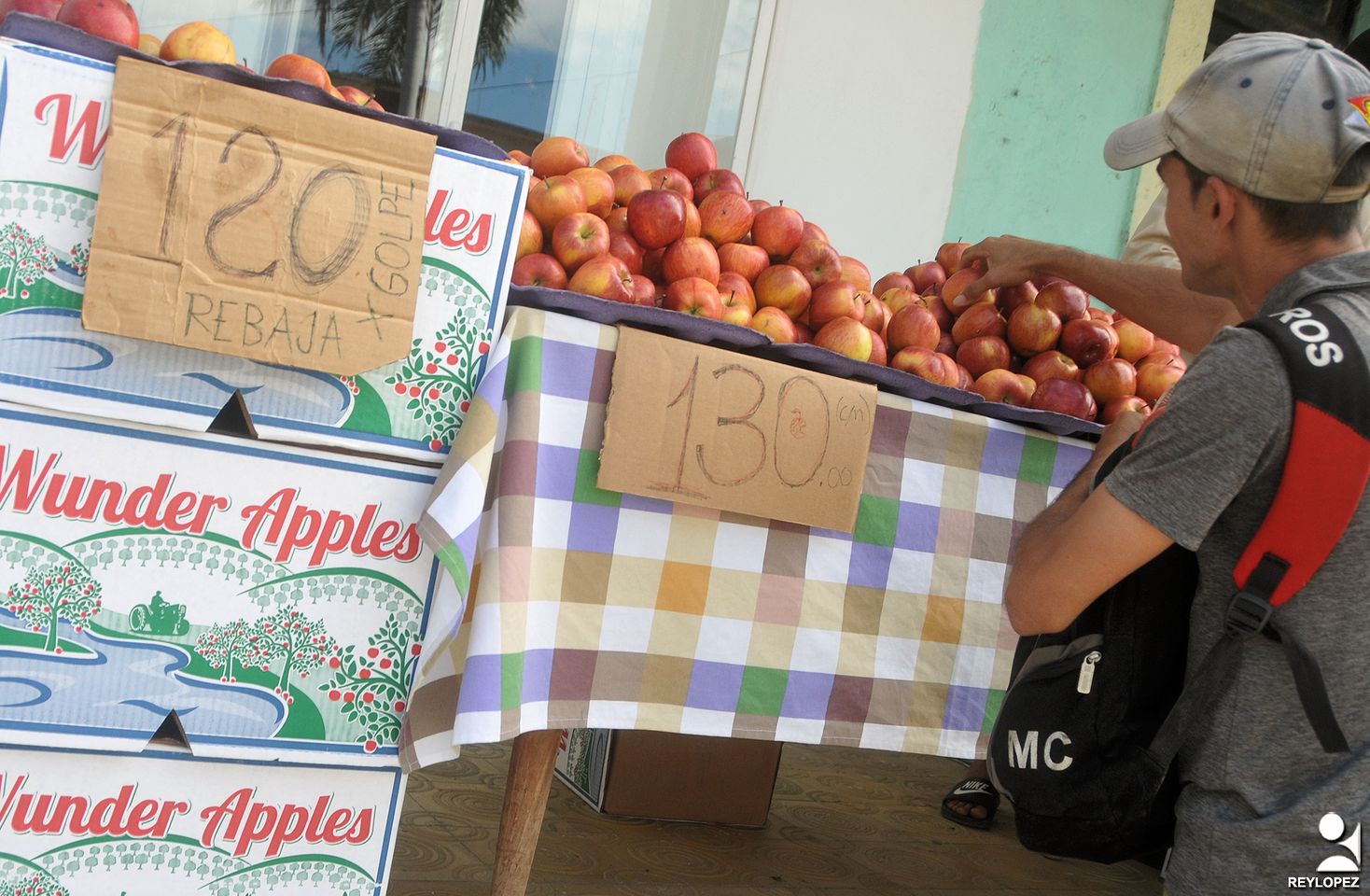
It doesn't take much information to know that prices in Cuba, and of course, in Las Tunas, have been rising steadily... at least over the last five years.
Although experts assure us that this is a complex issue that has been going on for a long time, ordinary people here began to notice it in mid-2022 and seem inclined to select a few culprits. Who is right? We'll see; what is clear is that we wake up every day to more expensive products and services.
THEY GO UP, THEY GO UP...
In June of this year, Las Tunas was not the most expensive province, but the prices of items such as garlic and powdered milk were above the national average, according to the National Office of Statistics and Information (ONEI in Spanish) in its monthly report on the behavior of the consumer price index (CPI in Spanish). This indicator measures how the prices of goods and services that people usually buy, such as food, transportation, housing, education, and health, among others, change on average.
For its CPI, ONEI evaluates the prices of 298 items, which represent more than 90 percent of Cuban household spending. It is a group of basic food products in a sample that covers various markets. Most of the establishments visited, two-thirds of the total, are in the non-state sector.
The source itself pointed out that other items highly valued by consumers, such as meat and grains, follow the country's trend, but with less volatility. These figures also revealed that ours is the province where items such as red beans, rice, and pork were sold at higher prices than in the rest of the eastern region.
Digging deeper into the ONEI data, it can be seen that the rise in prices in Cuba, i.e., our inflation, peaked in 2023, to the point that several months of that calendar year, those increases were as high as 40 percent. Then, between 2024 and 2025, there was a gradual slowdown, which does not mean that it is decreasing, but rather that it is growing at a slower pace. In fact, between May and June of this year, it showed signs of stagnation.

Carlos Lage Codorniú, an economist and currently an official with the United Nations Development Program (UNDP in English), explained in a debate convened for this purpose by Temas magazine that for there to be inflation in an economy, regardless of its political orientation, three fundamental causes must be combined: demand problems, basically too much money for the same amount of goods; cost pressures, as entrepreneurs faced with the dilemma of increasing prices or giving up profit margins often opt for the former to maintain their profits; and expectation pressures, that is, producers in general, but also consumers, who, sensing that prices will rise, tend to act in advance to protect themselves from this scenario.
In Cuba, Lage Codorniú stated, all these causes apply, insisting that inflation is a response to both short-term phenomena and distortions that have accumulated over decades.
At the forum itself, Rafael Montejo, professor at the Faculty of Economics of the University of Havana, added that there are structural elements in our country that push prices up, such as the decline in food production and foreign trade, which is decisive given our high dependence on imports.
Contrary to the opinions expressed, especially on our social media profiles, which tend to blame the current inflation solely on the 2021 monetary reform, the head of Fiscal Policy at the Ministry of Finance and Prices pointed out that the abolition of the convertible Cuban peso uncovered hidden processes. Inflationary issues had been weighing on the Cuban economy since at least 2008, he said.
At his side, on the panel convened by the prestigious Temas, Aldo Álvarez, a lawyer by training and senior partner at the private company Mercatoria, provided relevant details. Due to sanctions against Cuba, he said, more than 90 financial institutions have left the country in recent years, while defaults on payments to suppliers and business partners operating here have increased. All of this creates a higher degree of uncertainty than in other places and, as a result, drives up the price of goods sold on Cuban soil, he explained.
He added that there are also internal limitations, such as “differences in currencies, exchange rates, payment methods, closed and open financing circles, and the inability of the banking system, for various reasons, to process payments, with financial intermediaries and risky and complex solutions to simple problems.”
For his part, economist Oscar Fernández warned that in the midst of the post-pandemic crisis of COVID-19, which coincided with the monetary reform, an economy that artificially kept prices and wages acceptably close to each other disappeared, especially because the state had the financial capacity to monopolize foreign trade.
But, Fernández explained, as the state lost weight in terms of the supply of imported goods and private companies appeared—with market conditions becoming widespread—the purchasing power of wages, already depressed, ended up collapsing. It is, he clarified, a situation that “has absolutely nothing to do with the bad intentions of any specific actor.”
Added to this is another aggravating factor that several analysts warn about: the loss of reputation of the public financial system, the result of an incomplete monetary system and banking campaign, which in practice does not bring economic actors closer to banking operations. This is no minor issue, because it deprives the state of tools to manage its monetary policy and, with the agility of other countries, to indirectly influence inflation.
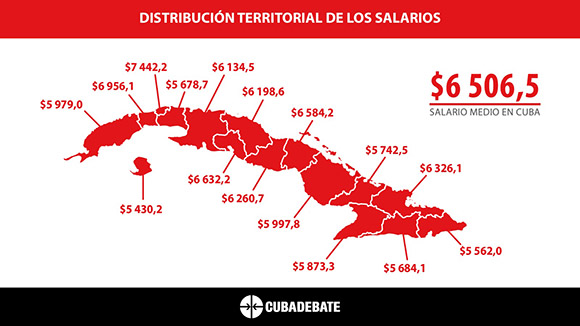 |
| Average salary in Cuba. Distribution by province. |
ONE GUILTY PARTY?
We asked our audience what they thought were the reasons why prices in Las Tunas were not falling, especially food prices.
The most voted option reflected a perception among citizens that the scarcity of local goods was the main factor sustaining the rise in prices, suggesting a concern about dependence on imports or the inability of the domestic industry to meet demand.
Likewise, the fact that “state lack of control over prices” was another of the most frequently cited factors indicates that inflation is linked here to failures in government regulation. The survey also revealed a division between those who criticize the private sector and those who point to structural problems such as insufficient income.
What about factors such as the US economic blockade, which has even been noted by private entrepreneurs? It was among the least voted options, suggesting that respondents prioritize internal causes over external ones.
It could be inferred, then, that the population of Las Tunas perceives inflation to be mainly due to national issues such as insufficient supply and state mismanagement, to name two. A critical view of local economic management and productive capacity prevails, although there is also recognition of the influence of the private sector and wage policies.
WHERE TO START?
Inflation has multiple causes, but the results of our survey indicate that the people of Las Tunas would be more receptive to concrete explanations linked to their daily reality, such as the difficulty of accessing domestic goods.
This could be interpreted as a call for specific actions, such as stimulating local production or adjusting state controls. Similarly, there is a certain mistrust of discourses that dilute responsibilities by attributing inflation solely to the blockade, for example. The fact that it was the minority who selected all the proposed causes does not deny the multi-causality; it says that the majority prefers to point to the tangible and direct causes, which reflects a demand for targeted solutions.
In recent weeks, the analyses of the main political and government authorities in the province seem to respond to this view of the citizenry, as they seek to establish prices for agricultural products, including within the prerogatives of local governments, that respond both to the aspirations of farmers and the capacity of consumers.
“The analysis must be flexible, but consistent,” said the first secretary of the Party in Las Tunas, Osbel Lorenzo Rodríguez, at the most recent meeting of the Provincial Price Coordination Committee, after criticizing the superficiality of the studies that led to the current rates.
Lorenzo Rodríguez warned that the definition of cost sheets is not being taken seriously enough. How is it possible to set a price based on expenses that are not incurred or agricultural yields that are not obtained? The party leader asked.
More efficient controls and definitions of amounts would be in line with a commitment to supply shock, which would not have the desired effect, economists say, if the possibilities for imports are not expanded, eliminating the obstacles that allow state-owned domestic production to participate as well.
Regardless of popular perception, inflation feeds on multiple channels, and while it may be successful in the short term to appease the demands of the sovereign, the people, by undertaking sectoral actions such as those described above, in the medium and long term, if other sources of inflation do not disappear or are not mitigated, the positive effect of these partial measures would end up being temporary, turning against their promoters.
Today, experts say, Cuba does not have a controlled fiscal deficit, lacks a sustainable official exchange market, and the state has had to give up its former monopoly on domestic trade due to the effects of the crisis.
In the last year, the Cuban state, and also the government of Las Tunas, have had some success in controlling public spending and, therefore, reducing the fiscal deficit. This is a good thing and has slowed the rise in tariffs to some extent, as the statistics show. There is no denying the positive impact that the current offensive for more coherent price caps and against abusive and speculative prices would have if it worked.
However, as academics point out, these steps will have no sustainable impact if, at the same time, production and supply, especially of food, are not promoted and the structural shortcomings of the national economy are not resolved, at least in the medium term.