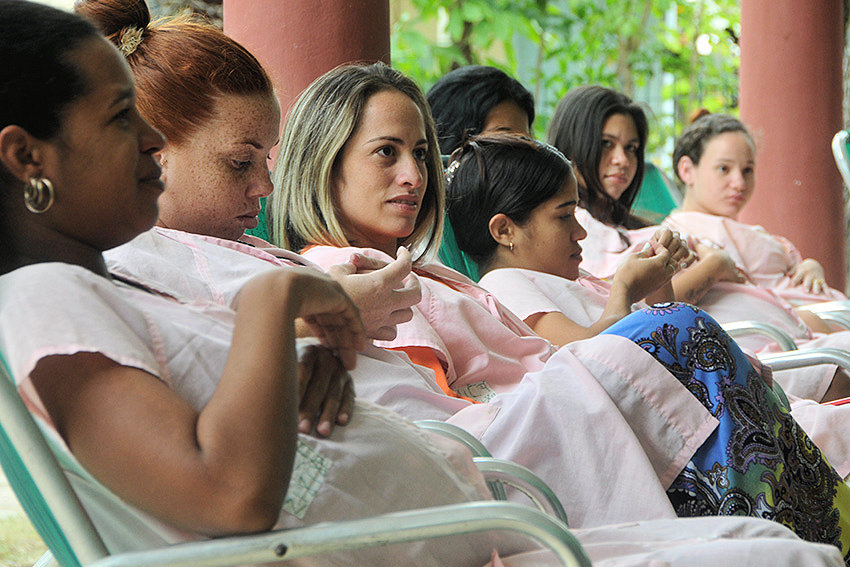
The legal obligation to provide food during pregnancy is regulated, but... why is it not enforced? What does it consist of? These are some of the questions that come to mind as this journalist delves into the Cuban Family Code, a law that has been in force for three years now and has been the subject of much discussion and debate.
Las Tunas, Cuba.- There is a section in this legislation that focuses on pregnant women, those whose financial situation does not allow them to support themselves nutritionally during pregnancy. Yes, because the obligation to provide food is not only that of the father towards his children when they are minors, and vice versa when the parents are elderly, but also extends to pregnant women.
To find out how the search for legal assistance on this issue is progressing, we approached the Delegation of Collective Law Firms in the municipal capital. Aliubis Fernández González, director of this entity, explains that no one interested in clarifying this issue has visited their offices.
The lawyer believes that it is perhaps due to a lack of legal knowledge that the public does not ask for this advice; “hence the importance of continuing to educate the population about each of the regulations that assist us, who are protective and created for the times we live in.”
Cuban laws have established the duty of parents to provide adequate nutrition for the development of their children from the moment of birth; however, there was a gap among legislators. Fernández González says that they were always concerned about what would happen during those nine months to mothers who did not enjoy a favorable economic position.
Chapter II of the Family Code, Section Two, and Articles 42 to 44 establish that pregnant women have the right to request child support from the father or mother of the child they are expecting. It should be clarified that this responsibility is temporary, lasting only for the period of gestation.
“It is a process that, if no consensus is reached because the person is unwilling, is carried out before the court with legal representation. Financial assistance for the child's arrival into the world may also be included,” says the expert.
She specifies that this obligation cannot be enforced if it is proven that it was an act of bad faith on the part of the mother to create discomfort for the father with his current partner, if they are no longer together, or to harm him financially. Similarly, she points out that this assistance does not serve as proof of paternity if the father demands it.
FOR ADOLESCENCE, A SEPARATE ISSUE
Fernández González points out that "in the case of pregnant teenagers where the other parent is also a minor, the adults who have guardianship of both are fully responsible for providing for her. In the previous Family Code, when a minor entered into a de facto relationship or became pregnant, she was automatically emancipated. This is no longer the case.
“The underage parents of the newborn do not exercise direct parental responsibility. They guide their child throughout their development until they reach the age of majority, but legal decisions about the child are made by the legal guardians of the teenage parents.”
...
One encouraging aspect of the current Code is that it recognizes families with a mother and father, as well as same-sex families. The latter can conceive a child through the means established by the law itself, such as assisted reproduction or surrogacy. Therefore, it also indicates the responsibility of this other party when it comes to assisting with the mother's nutrition.