 |
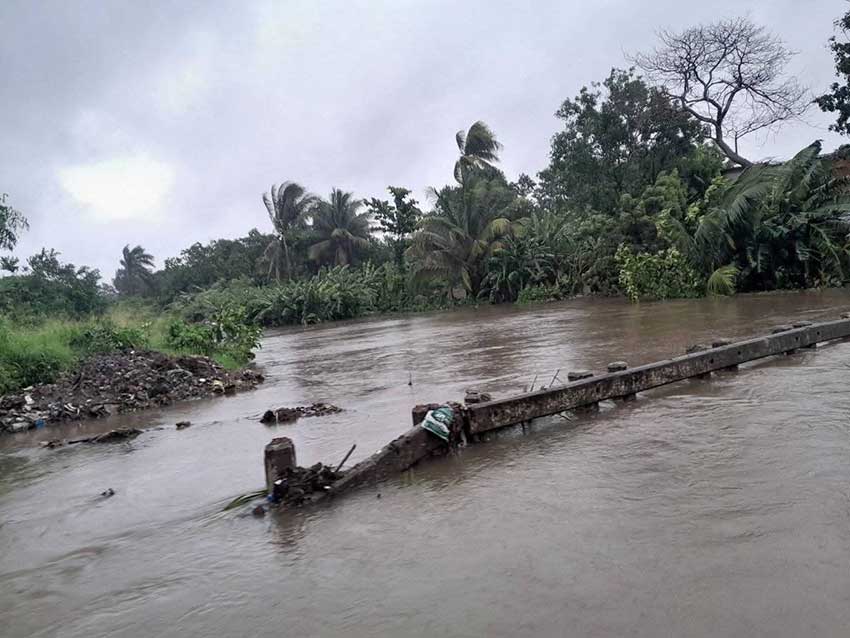
| Flooding in low-lying areas of Las Tunas City: the flow of the "Hórmigo" river overflowed the bridge on René Ramos Street. |
- Although the powerful Hurricane Melissa did not make direct landfall, its outer bands left a trail of damage to electrical and telephone services, housing, and agriculture. Las Tunas begins to recover.
Las Tunas, Cuba.– This eastern Cuban province is experiencing a sigh of relief with its sights set on recovery, after the close passage of Hurricane Melissa. While the center of the hurricane did not make landfall, tropical storm-force winds and persistent rains did shake, especially, its eastern portion.
Although the eye of the storm, now a Category 2 hurricane, is moving away from Cuba, the effects continue to be felt. The Institute of Meteorology warned that the northern coast of Holguín and Las Tunas should remain vigilant for waves up to seven meters high and moderate to severe coastal flooding.
One of the hardest-hit services has been electricity. Anisley Santiesteban Velázquez, technical director of the Electric Company, reported significant preliminary damage. "Primary lines have been found on the ground in several circuits across different municipalities, along with broken or damaged poles," he said. Santiesteban called for citizen cooperation to conserve resources and report any damage, clarifying that service restoration will depend on a thorough inspection and the availability of power generation.
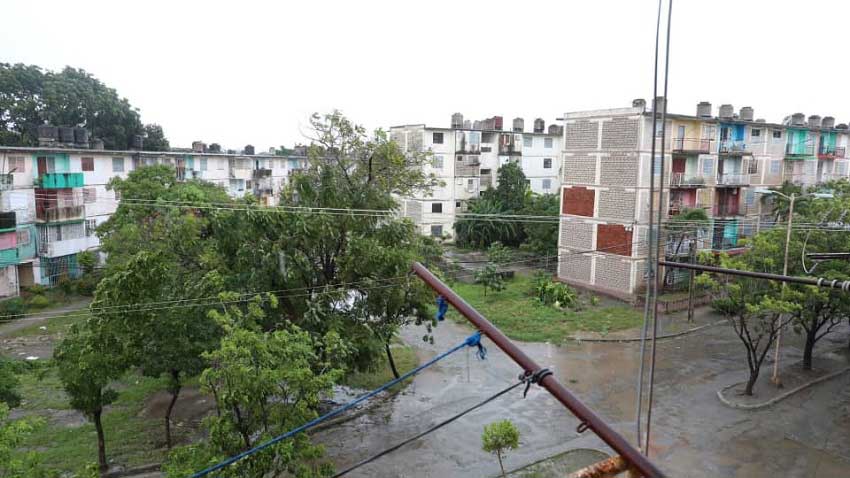
Meanwhile, telecommunications are facing a challenge. ETECSA's Territorial Division reports more than 15,000 interrupted telephone services, mainly in the municipalities of Manatí, Puerto Padre, Jesús Menéndez, Majibacoa, and the provincial capital. Liner crews are already being deployed to clear affected lines, mostly due to fallen trees. To support the recovery efforts, mobile generators are being set up, and reinforcements are expected from the province of Ciego de Ávila.
Rainfall has been substantial. According to the Delegation of Hydraulic Resources, the Copo del Chato dam registered the highest volume with 181.2 millimeters, forcing the reservoir to be alleviated. Other notable reports include the Juan Sáez dam (164.9 mm), as well as the municipalities of “Jesús Menéndez” (91.7 mm) and the provincial capital (84 mm). Overall, Las Tunas reservoirs increased their volume by 9.44 million cubic meters, reaching 44 percent of their total capacity.
Reports from the municipalities detail various impacts. From the Puerto de Manatí coastal community, reports indicate roof damage to a house near the beach, zinc roofing detachment on other properties, and a downed power pole, as confirmed by Adrián Valdés Acosta, director of the Fishing Business Unit.
In Puerto Padre, approximately 9,000 people living in at-risk areas were evacuated, and more than 600 remain in shelter centers. Damage has also been reported to gastronomy facilities near the city's waterfront.

In Jobabo, preliminary reports indicate damaged electrical wiring in the rural settlements of San Antonio and Aguas Blancas, and five homes affected in Zabalo, according to Radio Cabaniguán journalist Yaidel M. Rodríguez.
Meanwhile, in the municipality of “Amancio,” the president of the Defense Council, Alfredo Fidel González Escobar, called on residents to prepare for intensive sanitation of all communities once the recovery phase begins, to prevent arbovirus outbreaks.
He also appealed for solidarity with the neighboring province of Santiago de Cuba and the entire eastern region, which suffered the direct ravages of Hurricane Melissa.
The president of the Provincial Defense Council, Osbel Lorenzo Rodríguez, reflected on social media: "It has been such a difficult night, but we must remain calm and, when possible, go out with all our strength to achieve recovery. #LasTunas #VictoryForLasTunas #YesWeCan."
While the province meticulously assesses the damage and deploys its forces, the unanimous message is one of unity and hard work. The National Civil Defense General Staff has already declared a return to normalcy for Ciego de Ávila and Sancti Spíritus, which Las Tunas hopes to reach soon, once the remnant effects of this weather event have subsided. (With information by municipal correspondents)