Managing energy adversity in Las Tunas is a complex exercise in balancing demand, available generation, and the need to maintain essential services, according to specialists from the local Electric Company.
This is not the first time that 26 has addressed this issue; however, the persistence of an obvious difference between the length of power cuts in the provincial capital and the rest of the territory continues to be the subject of public criticism. The call by the country's top leadership to reduce this disparity as much as possible has added fuel to the fire of the debate.
Curiously, the relative rotation of blackouts in the main city of Las Tunas distinguishes it positively from what happens in other Cuban provincial capitals. How is this possible?
NO FAVORITISM, JUST TECHNICAL PRIORITIES
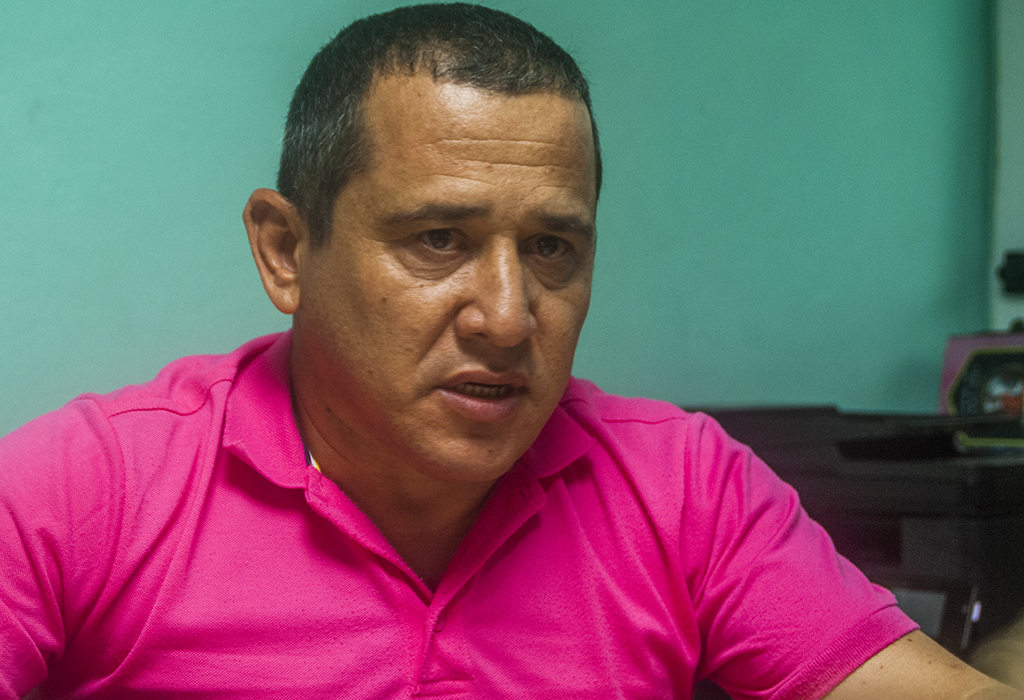 Electricity consumption in Las Tunas is around 110 megawatts (MW), with peaks that can reach 115 MW at critical times, between 6:00 and 8:00 p.m., according to Yordis Vega Espinosa, director of the Provincial Load Office of the Electric Company. Demand in summer, although lower than in winter, he explains, is more prolonged and can extend until 1:00 a.m., making it difficult to operate the system.
The first step, he adds, is to identify the circuits that cannot be shut down, which are located at the head of the grid, including vital centers such as hospitals, the Blood Bank, the Fishing and Dairy Products companies, drinking water pumping stations, universities such as the Medical Sciences University and the Pepito Tey campus of the University of Las Tunas.
It so happens that “we have the possibility of reaching these institutions with service from two circuits in different locations.” In addition, he explains, “all these organizations are almost always located at the end of a circuit. So, to reach them with energy, we have to pass through, so to speak, the entire city of Las Tunas, because the electrical substations that supply the city are located on the northern ring road.”
Something similar happens with the water pumping stations, which, being located at the exit to the provinces of Holguin and Granma, require us to “cross” the entire town to supply them with power.
This is not the case in cities such as Puerto Padre, he explains. Its two hospitals are located at the beginning of the line, so during hours of low power availability, they can be supplied with less load because there are no residential areas along the route that would otherwise increase demand.
Other circuits within the Capital of Cuban Sculpture tangentially suffer fewer “blackouts.” These are the ones located near the diesel engine batteries of the distributed generation system, built in the heat of the Energy Revolution at the beginning of this century.
“At the time of their construction, argues Vega Espinosa, the transformers required to connect them directly to the national grid's transmission lines were not available.” This required a solution consisting of the creation of five distribution circuits, through which these batteries would be connected to the National Electric Energy System (SEN in Spanish).
This situation, Yordis continues, ended up favoring households located in at least three of these areas. “Because we can also rotate between them to evacuate the generation from the diesel batteries. That only happens in our province.”
FROM 12 TO MORE THAN 20 HOURS OF OUTAGES: WHY?
However, these reasons do not seem sufficient to understand why, in previous months, it was possible to define a more or less stable schedule for the rest of the Las Tunas region, or what specifically happens with the 2020 circuit that supplies the southern area, particularly the municipality of Jobabo, and a percentage of “Colombia.”
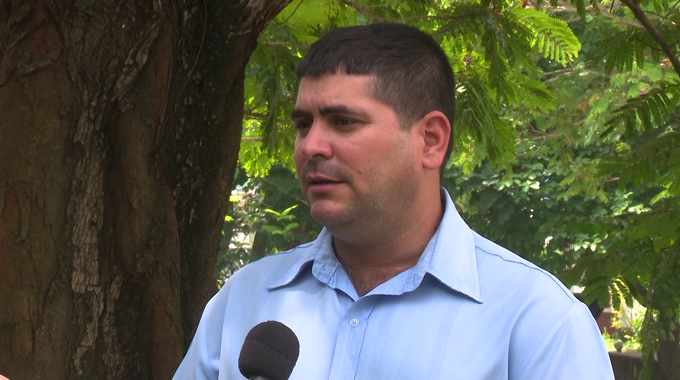 Anisley Santiesteban, technical director of the company, explains that “2020” presents a particular situation because it is linked to the neighboring province of Camagüey. Even so, he emphasizes, they have explored some alternatives in order to get power to those and other southern parts of the Balcón del Oriente Cubano.
“For a while, he explains, to ease the impact on the Colombian territory, we supplied half of the municipality from the C840 circuit that comes from the 110 kV substations in Amancio. However, this overheated the transformers, led to oil leaks, and created a fire hazard, so we had to eliminate that solution."
“When the Felton and Guiteras thermoelectric plants were out of the system, Yordis notes, we had an average impact of between 18 and 19 hours. The increase is because we had a different deficit with higher demand, which exceeded 3,500 MW nationwide, while generation was experiencing problems."
"Main plants and floating stations were taken out of circulation, which reduced generation by about 300 MW. When the province exceeds 50 percent of the impact, we cannot work with the block system. At 5:00 p.m., we already have the maximum that can be shut down, and it is not possible to provide service to anyone until the system improves or demand drops, which occurs around 11:00 p.m."
"We try to prioritize the north coast during the summer months. ‘Jesús Menéndez’ has prioritized objectives during the day for the salt flats and the port, but not at night. Although during the summer, we were able to sustain it."
“The TK53 circuit, explains the manager, supplies the entire El Socucho area, and we managed to keep it running during the summer because it is smaller, consuming around 1.5 MW. Once the summer phase was over, we began to rotate Puerto Padre, just like the other municipalities. We have tried to get power to ‘Jesús Menéndez’, but that has not always been possible, and that area is affected a little more."
"We have had some problems with the circuits in Villa Azul because when their substations are affected for this number of hours, they cause overloads in the transformers and trip the circuits, which has made the situation more tense. That is why we decided that TK47 and TK53 would not have service at the same time, to section off TK48 to cover part of Puerto Padre until demand dropped, and then reach Maniabón and Vázquez," he says.
Rural communities are worse off, he admits, as repairing faults has become more difficult due to the poor condition of the roads. “Sometimes they are left pending from one day to the next, and remain without service for up to two days. That is why we coordinate with district representatives and neighbors, who help us with tractors or animal-drawn vehicles so that our technicians can access the sites where the faults occur.”
In the south, Anisley points out, the situation was different: "During the two summer months and part of September, we were almost always at maximum load shedding capacity, because national demand exceeded 1,200 MW. Especially after 4:00 p.m., the demand on the prioritized circuits exceeded 30 MW, which put us at the maximum power cut limit, while the National Dispatch required us to stay within that limit."
“Only after midnight, when they sent us five or 10 MW, could we restore circuits, with ‘2020’ being one of the first to be selected because it was not in the same 30 MW bar.”
WHAT IS PREVENTING THE RETURN TO ROTATIONS OF THE TWO BLOCKS?
“When we achieve stability in the generation deficit, which does not exceed 50 percent of the demand in the province, Yordis responds, we will be able to resume the two blocks that existed at one time. It all depends on plant maintenance, breakdowns, and the weather, specifically the drop in temperatures.”
In his arguments, the head of the Electricity Office rules out any manifest desire to unfairly favor one area over others. Decisions, he emphasizes, are made based on technical and social criteria. The prioritization of circuits responds to the essential need to maintain basic services and existing infrastructure, such as dual power supplies to hospitals.
For his part, the technical head of the Las Tunas Electric Company is emphatic that the decisions made here are not unrelated to what is happening in other parts of the country. Every decision is made with the approval of the National Load Dispatch Center, which supervises the process step by step. "We could restore some circuits in the south, but it is impossible to serve them until we are assigned capacity. Otherwise, they would ask us, 'Why did you shut down (turn on the electricity) if we haven't given you anything?
“In recent days, he says, demand has fallen by around 300 MW due to changes in temperature and improved generation. The peak electricity demand now occurs around 7:20 p.m., and after 8:00 p.m., demand drops considerably. At that point, we are almost always receiving five or 10 MW, which we use to serve the highest priority circuits, such as 2020 and others in the south, which are directly connected from Camagüey."
The goal, they both conclude, remains to return to the two-block rotation system when generation stabilizes and the provincial deficit falls below 50 percent. In the meantime, the Balcón de Oriente depends on national thermal generation remaining above 1,900 MW, solar generation being incorporated, and temperatures continuing to decline, alleviating national demand.