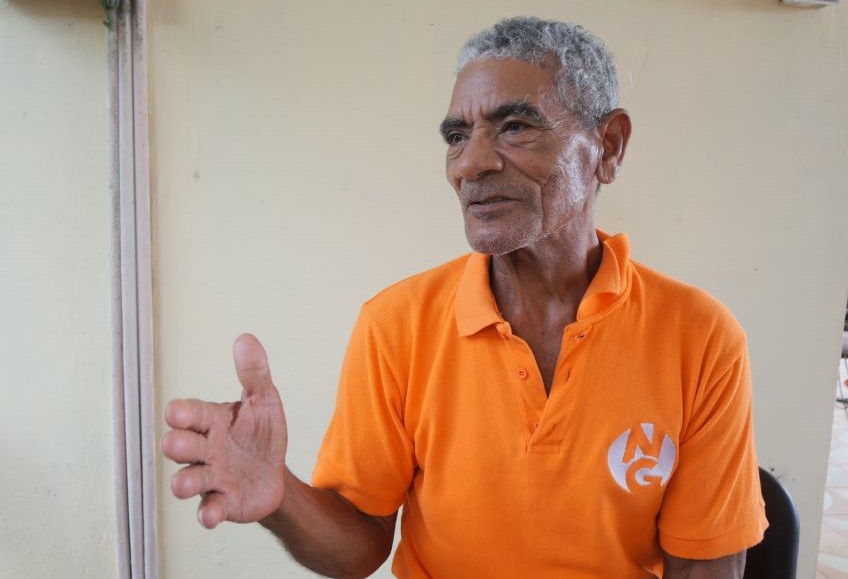
There was a feeling that could not be erased, the face of Hurricane Flora, the water that took everything in 1963. When Raúl Aldana Álvarez, 72, from the town of Guamo in the Río Cauto municipality, was told that Melissa was coming strong, that image came back suddenly and forced him to decide quickly. It wasn't just out of fear; it was because of the memory of what happens when you stay.
"The reports started early and were repeated nonstop. At home, people talked about strong winds, rising rivers, rain coming down from the mountains, and gathering in the Cauto. I heard it all and repeated it to my family: we have to leave. We left with just the bare essentials, carrying as little as we could, because everything else can be replaced, but life cannot. People sometimes worry about their animals and crops, but I thought about my grandchildren, my children, my family's health, and getting to a safe place."
We took the train as if we were boarding a hope. While in motion, there were technical problems. We felt the jolt, the cars behind us braked, the car shook, and for a moment it seemed like everything was going to go wrong.
Water was everywhere, and you could see the current near the tracks. Someone said it looked like a derailment, but we kept going. That fear made our skin tingle, and we took each step carefully, with the anguish of those who don't want to look back.
The river rose like an advancing wall. The water rose and didn't stop. It covered the slope and more than a kilometer of land, leaving the landscape level with the river. On the highway, on the roads, the view changed: half-submerged trees, submerged trees, and houses with water up to the roof. “When they told us it was starting to go down, I breathed differently, but no one trusts it until they check it out.”
“We stopped for a while in Jobabo and then continued to Las Tunas. Our arrival was a relief. The sister provinces and neighbors organized food and assistance. Seeing people working, welcoming families, and providing what was needed calmed some of the fear that had been left behind. It's not a place to stay forever, but it is a place to regain your composure and start thinking about returning more calmly.”
Raúl had thought about staying at first. He felt experienced; he remembered the rain and storms, believing that with four neighbors and a boat, he could hold out. But the night before, he was convinced otherwise, that staying out of habit or pride was dangerous. “I told my family to leave and not look back. Material things can be replaced, but family cannot.”
“We left behind what weighed us down and what we couldn't wait for. Now the question is whether the water reached the place where we left some of those things, or if they were saved. When we return, we will assess the losses and collect fragments of our lives. What was lost will have a different price for each of us, but the first thing is to be able to talk about it out loud and be alive to do so.”
Walking through the shelters and seeing other families makes you think about all those decisions that were made in minutes. Seeing grandparents staring into space, children who don't understand why they traded their home for a mattress, and seeing neighbors sharing a meal and a few words. In those moments, you know that the catastrophe is not just the water, it is the time that leaves people's lives out of place.
“When I return to Guamo, I don't know what I will find. I expect to see streets with fallen trees, damaged furniture, and damp memories that will need to be dried. I also expect to see helping hands willing to lift boards and clean yards.”
What is certain is the lesson: the experience is worthwhile. Leaving in time, saying goodbye to what matters less, and taking care of what matters most—those decisions make the difference between telling the story and being part of it without a voice.