I have never paid attention to horoscopes. Those who believe wholeheartedly in their prophecies have every right to do so. But personally, I find them frivolous and not worth considering. I know my sign is Sagittarius because I was born on December 18.
But that's the extent of my knowledge on the subject. However, on May 7, 2002, something curious happened to me while I was on a journalistic assignment in Guatemala. The zodiac column in the capital's Prensa Libre newspaper predicted the following: “Today you will receive an incredible surprise that will thrill you.” In all honesty, I must admit that... it was right!
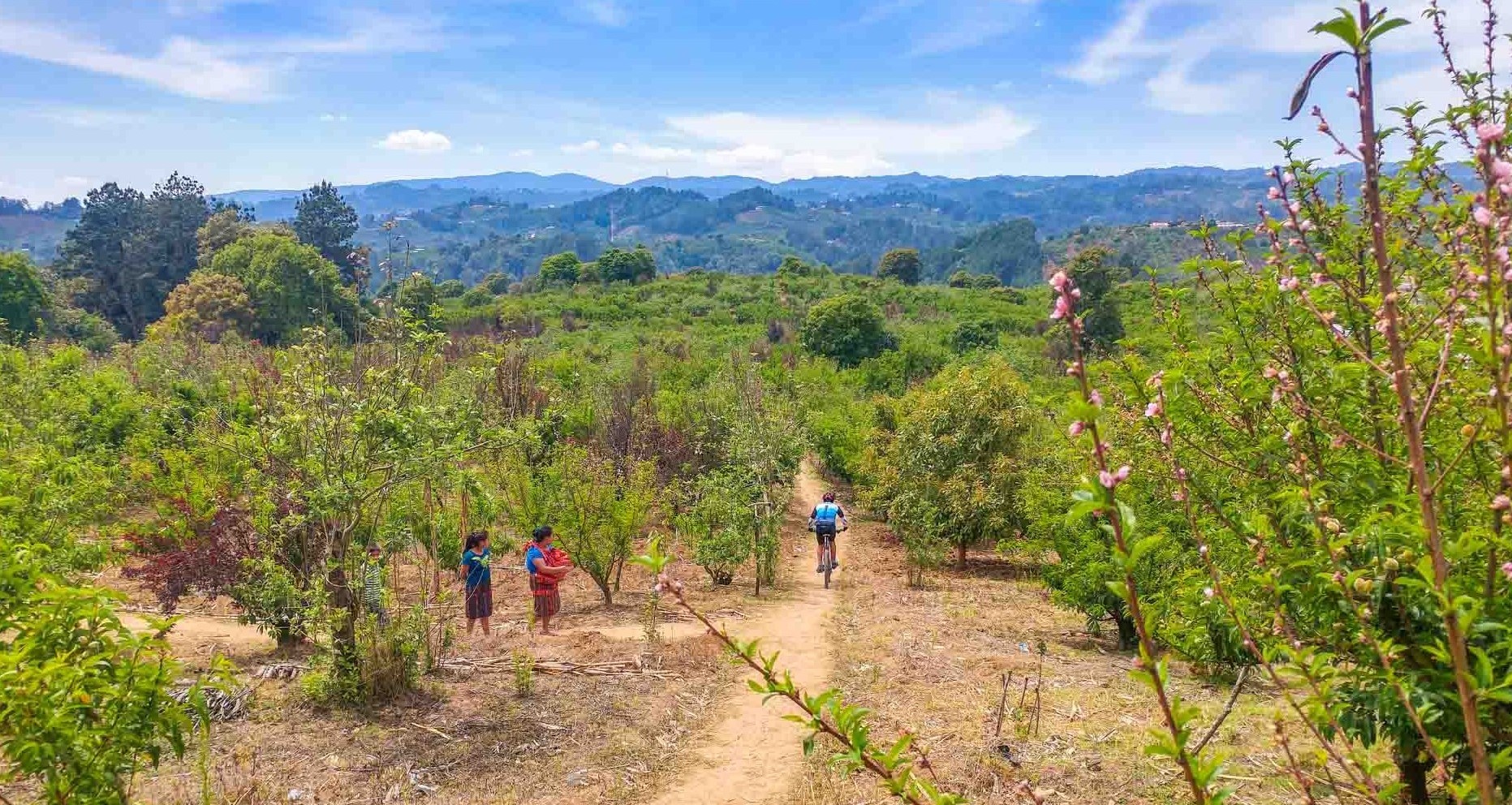
That day, I went with one of our doctors to a remote village in the mountains of Quiché. “A man living here with the indigenous people who says he's Cuban,” the doctor told me when we arrived at the village. I looked at him, incredulous. “Repeat that,” I almost demanded. He did, and from that moment on, I couldn't think of anything else.
I peppered him with questions: “Who is he? Where does he live? Can I see him? How do I get to his house? Can we go right now?” A local who was listening to us kindly offered to take me there. I took him up on his offer, and after walking a hundred meters, he showed me a humble house with a palm roof and mud walls.
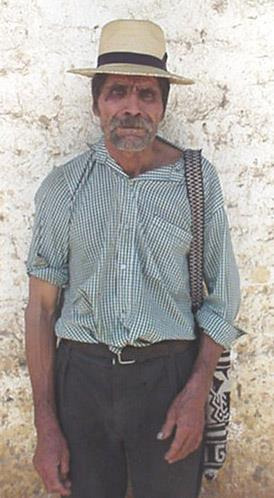 “We're here, he said. The man at the door is Cipriano.” Before me stood a man of about 75, emaciated, tall, and still well-built. He wore a long-sleeved shirt with the sleeves rolled up to his elbows. His sun-weathered face showed a sparse, unkempt beard. His eyes betrayed colossal exhaustion. He wore a white hat with a thick cloth band around the middle. A multicolored indigenous backpack hung from his left shoulder. He looked at me strangely when I approached him. I held out my hand, and he shook it. The first few sentences we exchanged were more or less along these lines:
“Good morning.”
“Good morning.”
“How are you?”
“Fine, and you?”
“Pretty good, thank you.”
“You're welcome.”
“I've been told you're Cuban.”
“Yes, I was born in Cuba.”
“Ah, then we're compatriots, because I'm from there too.”
“Really?”
“Yes, I'm a journalist, and I'm traveling around Guatemala.”
“Well, welcome.”
“And where in Cuba are you from?”
- From the province of Oriente, from Victoria de las Tunas...
My heart skipped a beat. I was overcome by an emotion that is difficult to describe. Had I heard correctly, or were my ears deceiving me? Was this man a fellow countryman of mine? No, that would be too much of a coincidence! How could I explain his presence in a Central American mountain range, at an altitude of almost 2,000 meters? When had he left his homeland? What was he doing living in an indigenous village? It was simply baffling. The old man noticed my confusion and came to my aid. I was amazed at the coherence with which he explained the circumstances that had brought him to the country.
“My name is Cipriano Almaguer Peña,” he said in a hoarse voice when I asked him his name. "I was born, I think, in 1925, in a place called Dumañuecos, near the Manatí sugar mill. My family had a small plot of land there and was engaged in farming and such. Those were bad times. There was no money, no clothes, no food... I never went to school. I had to help my father with the planting. When I was 18, I ran away from home and..."
Cipriano headed for Havana with a buddy from the neighborhood. In the capital, they parted ways, and each went his own way. The young peasant began to hang around the docks and get to know the sailors. One of them offered him a chance to stow away on a ship bound for Honduras. He accepted. He nearly died of hunger and thirst, hidden among rolls of rope. When he arrived, he began looking for work, and the United Fruit Company offered him a job as a stevedore. He spent many years loading bananas. Then he traveled to Nicaragua and El Salvador. Until one day, an accident with a crane left him crippled. He was fired. He tried to return to Cuba, but he had no money.
“I came to Guatemala in the 1950s, I don't remember exactly,” he added. "Here, I did everything to survive. From working in the cornfields to tending cardamom plantations. I got close to an indigenous woman who gave me seven sons. They're scattered around, each doing their own thing. My wife? She died a long time ago. Dumañuecos, you say? I never heard from them again. I was never attached to my people."
He invites me in. Like most indigenous houses, his has no divisions or windows. The floor is dirty. In one corner, a rickety cot attests to the poverty of its occupant. A wood-burning stove smokes timidly in the back. A few pots are damaged from use. There is also a bundle of firewood, a clay jar, a pile of clothes, a tray for making corn tortillas, a Gallo beer calendar, and a small metal trunk. Cipriano limps over to it, opens it, searches through it, sniffs, rummages, pulls out a tattered piece of paper, and shows it to me, happy.
“Look at this piece of a newspaper from Victoria de las Tunas from those years,” he says. It was called El Liberal. It talks about Lalo Fontaine, the mambí, who was my godfather. I always keep that clipping among my things. It's the only memory I have of them. Citizenship? I'm Guatemalan now. I even learned to speak Quetchi. I've been living in this country for many years, and I must be grateful. My friend, forgive me, but they're waiting for me. I have to go now...
He stands in front of me. There is hardly any expression in his eyes. I hug him, but he doesn't return the gesture. He gently pulls away. He goes to a corner of the house and comes back with a cane. My eyes start to cloud over. I still can't believe it! Outside, someone calls his name. Surprised and moved, I thank the horoscope. I say goodbye.
“Well, Cipriano, I'm leaving too...”
“Take care.”
“I'm glad I found you.”
“Me too, sir.”
“I never thought I'd meet someone from Las Tunas so far away.”
“Even I'm surprised...”
“Look, I'll give you this Cuban almanac as a gift.”
“Thank you.”
“May I take a photo?”
“But only one, I don't like them...”
“Well, come here.”
“No, right here.”
“Will we see each other again someday?”
“I think so, up there...”
And, with his arm outstretched, he pointe to the sky.