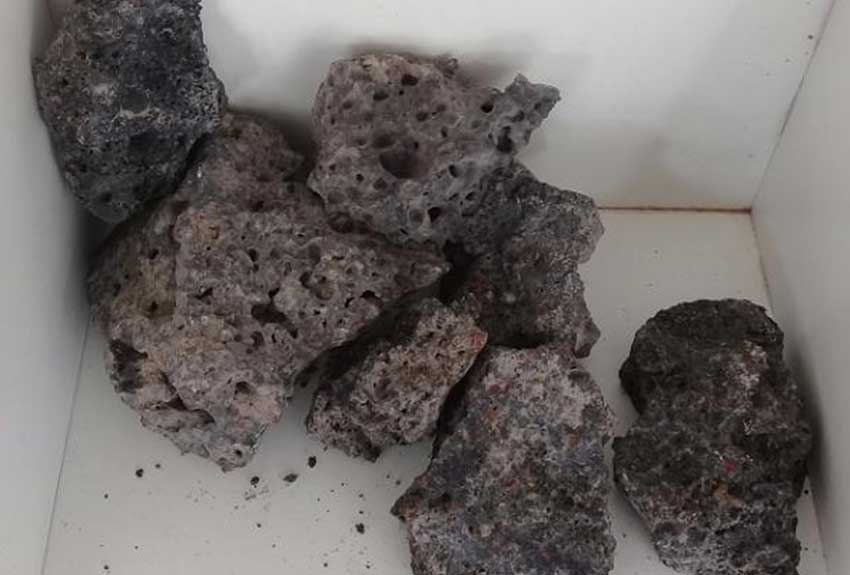
What was once just an industrial waste has become a resource coveted by the population. The slags generated by the Las Tunas Stainless Steel Company (ACINOX) have demonstrated their positive impact on the environment and the local economy.
These wastes, far from being an environmental problem, have been positioned as a valuable raw material for construction supplies. From them, it has been possible to develop eight types of mortars, mainly for communal services and other construction works in the province.
Its production and commercialization have generated economic income, thus closing a virtuous cycle that reduces environmental damage and provides tangible benefits to the company itself and the population.
An environmental strategy was designed that involves all ministries and includes legal preparation to respond to the natural resources and environment macroprogram, reported Victoria Serrano Pérez, an analyst at ACINOX Las Tunas.
She also highlighted climate risk management with adaptation measures, investments, renewable energy use, consumption reviews, disaster responses, and drills for extreme weather events.
Researchers from the University of Las Tunas joined the initiative intending to achieve a better-quality product, taking into account its composition and durability. Ángel Eduardo Espinosa Borges, a researcher at the higher education institution, highlighted the importance of slag, differentiated into white and black, as well as its components and distribution.
"It is not only about worrying about obtaining a final product, but also being aware of the research results from a laboratory and making the investment that is needed," he pointed out.
In this way, the Las Tunas industry shows that waste management, applied research, and institutional collaboration can drive sustainable development, with concrete benefits for the population and the environment.