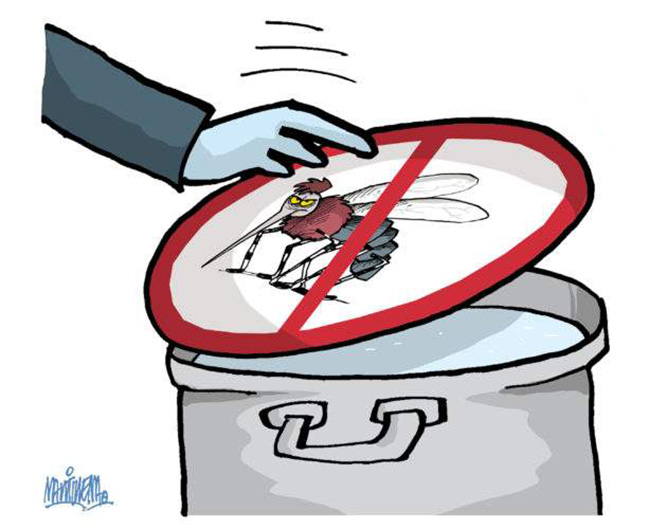
Recent information released by the Ministry of Public Health in Cuba places Las Tunas among the provinces with an increase in nonspecific febrile syndromes. As a result, sanitary services are being reorganized in accordance with established medical protocols to address this complex situation.
Dr. Yumara Acosta García, acting Director General of Health, told 26 that the entomological and epidemiological situation in Las Tunas has seen an increase in febrile cases in recent weeks, as well as an increase in confirmed dengue fever patients through testing in four municipalities.
“The most complex scenarios, from an entomological and epidemiological perspective, due to the circulation of the two arboviruses currently affecting us —dengue and chikungunya— are concentrated in the four health areas of the provincial capital, Puerto Padre, Majibacoa, and ‘Amancio’,” the doctor emphasized.
“Likewise, cases are trending upward in Colombia and Jobabo. We have assessed that these increases are also due to the actions we, as a sector, have been implementing since November."
“Among the main issues we detected at the beginning of the cycle was that sick people stayed home, and therefore, we had no case reports.” Now, with the support of the University of Medical Sciences and other organizations, we have managed to increase the inquiry in the communities, which has led to a greater number of cases coming to light.”
The director warned that this situation has enabled better identification of residents with symptoms, enabling the implementation of differentiated processes from an epidemiological perspective for surveillance, and from an entomological viewpoint for technical, destructive, and adulticide treatments. "Currently, we are focused on the second stage of adulticide treatment. We are trying to reach 100 percent of the locations in the urban area. We still need to cover the ‘Jesús Menéndez’ municipality, which should be resolved by the end of the week. In the high-risk blocks, we have carried out indoor treatment."
“We have already completed the first round and are still focused on eliminating the adult mosquito. The collaboration of the population is essential because without self-monitoring within households, breeding sites cannot be eliminated, and if the infected eggs hatch, there is no way to stop the vector.”
IN HOSPITALS
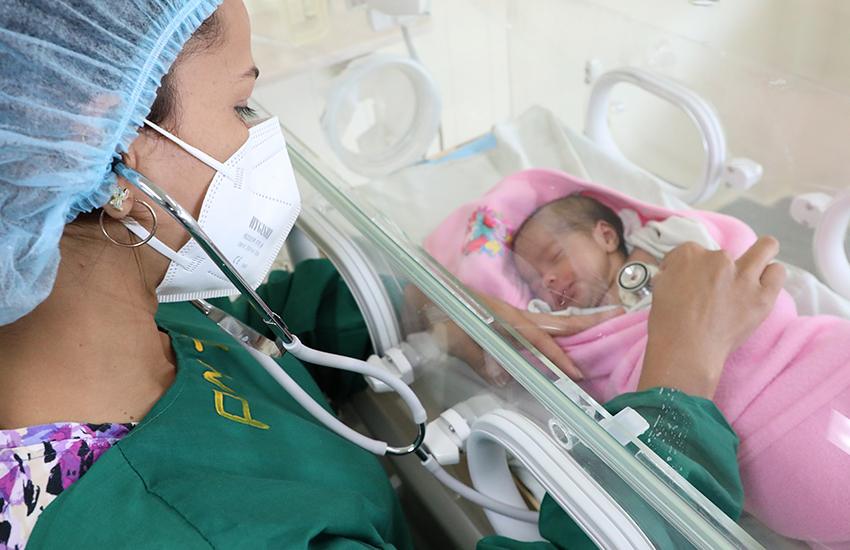
Acosta García explained to 26 that regarding hospitals, the province is complying with ministerial directives to implement protocols for the management of newborns, pregnant women, and infants. The reorganization of healthcare services has been carried out through an evaluation of human resources, especially in the Pediatrics department, which has been the most complex.
“At the Dr. Ernesto Guevara de la Serna General Teaching Hospital, they have done meticulous work, with bed-by-bed monitoring of patients. We are admitting all pregnant women with symptoms, especially those at term. Chikungunya is transmitted transplacental, so we monitor newborns for the first 12 days. We even take PCR samples at birth and repeat them to identify arboviruses promptly.”
“Regarding the municipalities, we are reorganizing hospital services to admit pregnant women who are in transmission zones, primarily for chikungunya, and who are asymptomatic. We have to move them from those areas and place them in wards where they can remain healthy. Puerto Padre, for its part, will assume regional responsibility, with the Guillermo Domínguez Hospital, for the local population and the residents in the Jesús Menéndez municipality. At the ‘Guevara’ Hospital, we are focused on creating all the necessary conditions to address the most complex cases and full-term pregnancies.”
“Regarding infants, I want to emphasize that they must be admitted to the Mártires de Las Tunas Pediatric Hospital, especially children under 2 years old; as well as those older who have a comorbidity or warning signs, something that the family sometimes cannot determine, hence the importance of going to the doctor.”
The director specified that, at this stage, all high-risk children must be monitored daily and willfully in their health areas by highly specialized personnel.
RAISE THE ALARMS
The expert stressed the need to raise risk awareness. “Two arboviruses are converging. Dengue is deadly when not treated promptly because the dehydration it causes can lead to shock and death. Chikungunya is more pronounced and causes debilitating pain. Both require serious attention.”
“We must keep surveillance over the elderly and all those at the extremes of age. People cannot stay at home because when they do, and arrive late, they experience serious complications. It is crucial to go to the doctor; this action saves lives.”
“We also ask people to go to health institutions to report cases and identify areas where contact tracing has not yet been conducted, so that we can implement differentiated measures. Some complain about not receiving adulticide treatment at home, but the truth is they never reported their illness.”
Despite the tense economic situation Cuba is experiencing, the sector has created the basic conditions to confront the epidemiological emergency.
“People cannot be complacent or self-medicate. These decisions have led to attending patients with alarming signs. Make no mistake, in this region, the age groups over 65 and children have experienced serious conditions. Family self-monitoring is essential, as well as covering tanks and treating latrines. Our health personnel are doing their best; however, personal responsibility must prevail to achieve epidemiological stability.”