The 176 economic and social transformations currently taking place in Cuba constitute a process of updating the country’s economic and social model, aimed at correcting distortions, broadening the participation of economic actors, and increasing efficiency. Their implementation, however, does not follow a single formula; rather, each territory must adapt the measures to its specific characteristics, potential, and challenges.
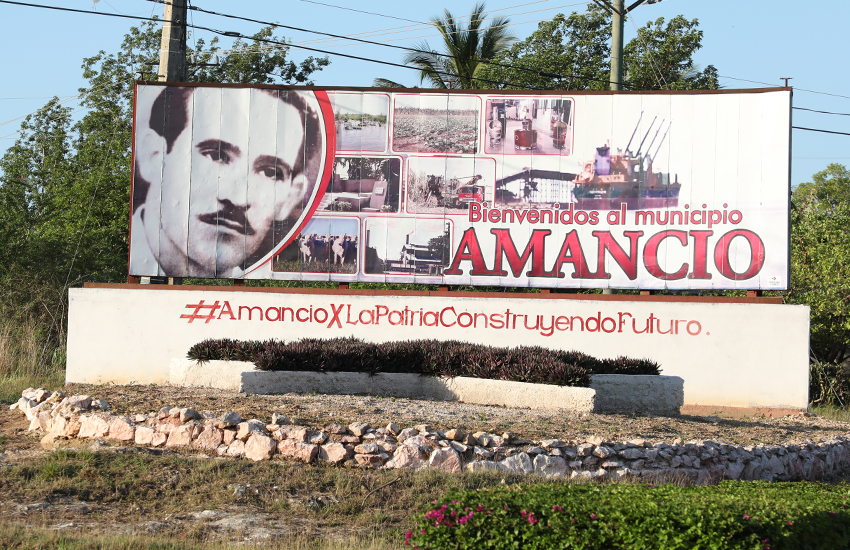
Las Tunas, Cuba.- In the municipalities of Las Tunas, this effort manifests in two distinct situations: Amancio, where the process is in the diagnostic and preparatory phase, and Colombia, where local governance is already yielding tangible results.
Maikel Padrón Acevedo, president of the Municipal Assembly of People’s Power in the municipality of Amancio, offered his assessment of the process underway in that area. He explained that community work is organized around the Party, the Administrative Council, the Municipal Assembly of People’s Power, the People’s Councils, and, most importantly, the population.
“We have launched an outreach campaign in every community. We have documentation of all the actions we are carrying out, primarily based on the proposals that emerged from the assessment of each community —specifically, how to implement them through community efforts,” stated Padrón Acevedo.
The local leader acknowledged that there is still work to be done in the social sphere, although he believes progress is being made in the right direction to achieve what the country’s top leadership demands. Regarding the transformations, he noted that this involves a long period of preparation and training, with a pending challenge in the area of regulations.
Padrón Acevedo emphasized that the process requires adapting each initiative to the characteristics of each territory and seeking the essence of what is being conveyed. “We believe there is potential,” he said, after mentioning that the municipality already has an assessment that identifies industrial, material, human, and natural potential.
Regarding economic projections, he predicted that by 2027 the territory could see an increase in local economic revenue. He explained that, starting this month, the reforms have been incorporated into oversight activities in the territory’s seven People’s Councils, including discussions with delegates and monitoring implementation progress.
TANGIBLE RESULTS IN COLOMBIA
Héctor Ramón Pérez Zequeira, mayor of the municipality of Colombia, shared an assessment of local governance which, in his own words, “has been very positive” and demonstrates that “the impact of the changes is real and tangible.”
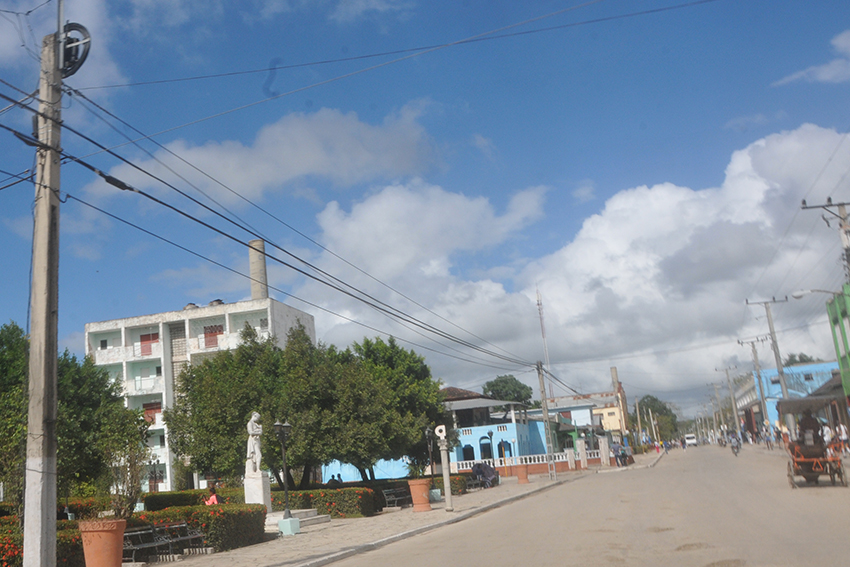
Pérez Zequeira began his remarks by explaining that one of the sectors where the changes are most evident is transportation. He recalled that at the start of his term, all public vehicles were out of service. Today, he asserts, “transportation in Colombia is up and running,” and they have “all routes and two daily departures to Las Tunas.”
How did they achieve this?
The mayor explained that they authorized leaseholders to import fuel, but the state-owned enterprise made the difference. The results, according to the data provided, are tangible: a fare that previously cost more than 3,000 pesos to reach the provincial capital now costs just over 1,000 pesos on leased buses.
The State-Owned Company, for its part, now operates using fuel produced through “cooperative co-production,” and its buses run daily at 800 pesos, which represents “a 400-peso reduction in the fare” and has created real competition. They have also restored service on the route to Camagüey Province, with prices that, he acknowledges, “are not what the population would like,” but are below the average throughout Las Tunas Province, with Colombia being the municipality with the lowest prices in Las Tunas.
The economic recovery has also reached the food industry. “Our food industry was practically at a standstill everywhere. Today, the bakery is baking bread,” the mayor noted. The food service sector, he said, “is moving forward” and is already producing bread for local businesses in partnership with a micro, small, and medium-sized enterprise (MSME in Spanish).
One of the most striking projects is the Las Delicias motel, where 32 kW of solar panels have been installed —which are already generating revenue— and where an ice cream factory is in operation. In addition, they are negotiating to set up a bakery at that location, about 5 kilometers from town, so residents won’t have to travel far to find food.
The mayor reported that they have already secured an MSME in Colombia that will be responsible for installing solar panels at all the town’s flagship commercial and culinary venues: El Castillito, El Cabaret, and the Pizzeria, where an elaboration and distribution center is also being set up in partnership with a non-state economic actor. Solar panels have been installed at the local funeral home as well.
Regarding the elaboration and distribution facility located at the entrance to the municipality, he explained that an investment was made and it now operates using a container owned by the municipality.
Pérez Zequeira did not shy away from pointing out the sectors that are progressing more slowly. He specifically mentioned agriculture and was critical of those who still expect others to solve all their problems. In closing, he called for a mindset shift: “The first thing we have to change is ourselves and our mindsets.”