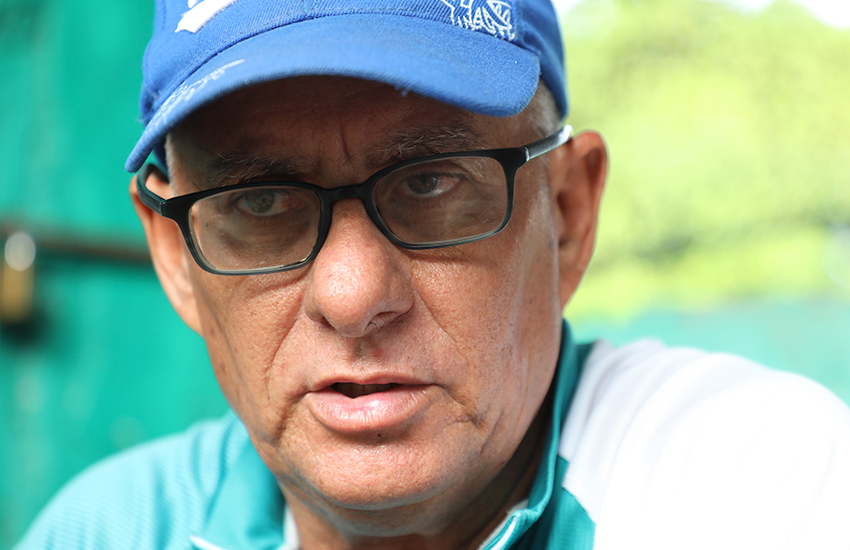
The story of cycling coach Ramón Acosta Osorio is not measured in kilometers, but in lives transformed by cycling. In the world of sports, some journeys are built on sacrifice and perseverance.
From his beginnings in the province of Holguín to his most recent successes in Las Tunas, he has dedicated his life to training athletes and leaving an indelible mark on every team he has coached.
"I am from the City of Parks. I arrived here in 1996 and started at the Carlos Leyva González EIDE, from where I moved on to the Provincial ESPA, where I began working with the youth team. That first stage left a mark on me because I understood that cycling was not just about training, but also about educating, training, and guiding young people who were just taking their first steps in this sport.
"Then I had my first assignment outside the province, working at the Cienfuegos Technical Center. It was a big challenge; it meant leaving my comfort zone and facing new work dynamics. However, the experience helped me grow as a coach."
His return to this eastern land allowed him to join the national team in this discipline in 2006. “That stage was decisive; it allowed me to see cycling from another perspective, with high-performance athletes and the demand to represent Cuba in international competitions.”
From the outset, Osorio understood that this sport was not just a matter of healthy living, but of having a willing heart; it meant being a father, a companion, and a friend. With that philosophy, he trained talented pupils who, under his guidance, went from training on Cuban roads to competing on the most demanding stages in the world.
"In 2007, I had the opportunity to work in Venezuela with that country's national track team. It was an enriching experience; you learn a lot when you visit other countries.
There are issues that we don't face here and that become evident in international competitions, such as organization, technology, and the psychological preparation of athletes. I put all those elements into practice when I returned to Cuba."
His return to the island was a complete surprise. He decided to join the Guantánamo Technical Center, where he remained for seven years. It was in Guantánamo, alongside his team at the time, that he achieved important results at the 2018 Central American Games in Barranquilla, Colombia, and a fourth place at the 2019 Pan American Games in Lima, Peru.
"After so many years away, I decided to return. I was tired of the distance, the constant traveling, and I felt the need to be close to my family. That was five years ago. Barely a week after returning, I was already working with the provincial team.
"At that time, Las Tunas was ranked 12th nationally. Little by little, we climbed the rankings, dropping to third place, and then hovering between eighth and third, and although at one point we were sent down to fifth, we weren't satisfied. We had worked too hard, invested too many resources and too much time, and we knew we could do more.
“We set out to do things smarter, to bring in the really effective athletes, to place each one in the events where they could win medals. That strategy gave us a historic result, first place in the women's competition and second in the men's. It was a source of enormous pride for everyone.”
Every sporting event has been a learning experience, and every athlete, a story. Ramón believes in cycling as a tool for social transformation. For him, every day on the national team is full of demands and commitment, with the intention of perfecting the smallest details.
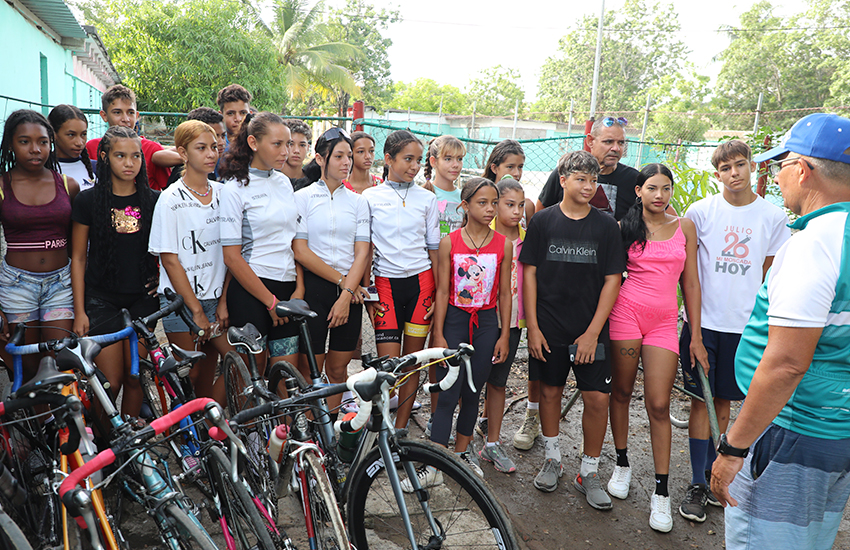
Today, the mission is different. It is no longer established cyclists who follow his instructions, but schoolchildren who are just learning to ride a bike.
"Changing the routine from working with a national team to working with schoolchildren was a major challenge. In the national team, the cyclists have extensive experience and a solid foundation; it's just a matter of polishing details and correcting specific errors. Here, on the other hand, the children arrive without any training and are unfamiliar with the technical language. We have to start from scratch, from the most basic things like sitting on a bike to how to face a competition.
"It's harder, you work harder, but it's also more rewarding. For me, it was a personal dream. I wanted to win a national championship with a school team, and I did it. Now the goal is to stay in the top three, because we have the team to do it."
After several seasons competing in different events, Osorio found the most important goal of his life in his family. He acknowledges that cycling has given him everything, but it also took away irreplaceable moments with his loved ones. He says that reconnecting with them is the best thing that has ever happened to him.
"Sport has given me a lot of joy, but my family is what keeps me going. Now I feel like I have another piece of my life with me. I continue to work passionately in cycling, but without giving up what is most essential, which is sharing my life with the people who motivate me to keep going every day.
"Looking back, I realize that this whole journey has been worth it. I have carved out my path in Holguín, Las Tunas, Cienfuegos, Guantánamo, the National Team, Venezuela... and in each place I have learned something new. This sport has taught me that there are no shortcuts; only with discipline, effort, and perseverance can results be achieved. That's what I try to convey to every athlete, because beyond the medals, what remains is the formation of human beings capable of fighting for their dreams."
Ramón doesn't talk about retirement; he talks about evolution, about continuing to shape the future of Cuba, about continuing to learn. For him, every pedal stroke is a new opportunity to move forward.