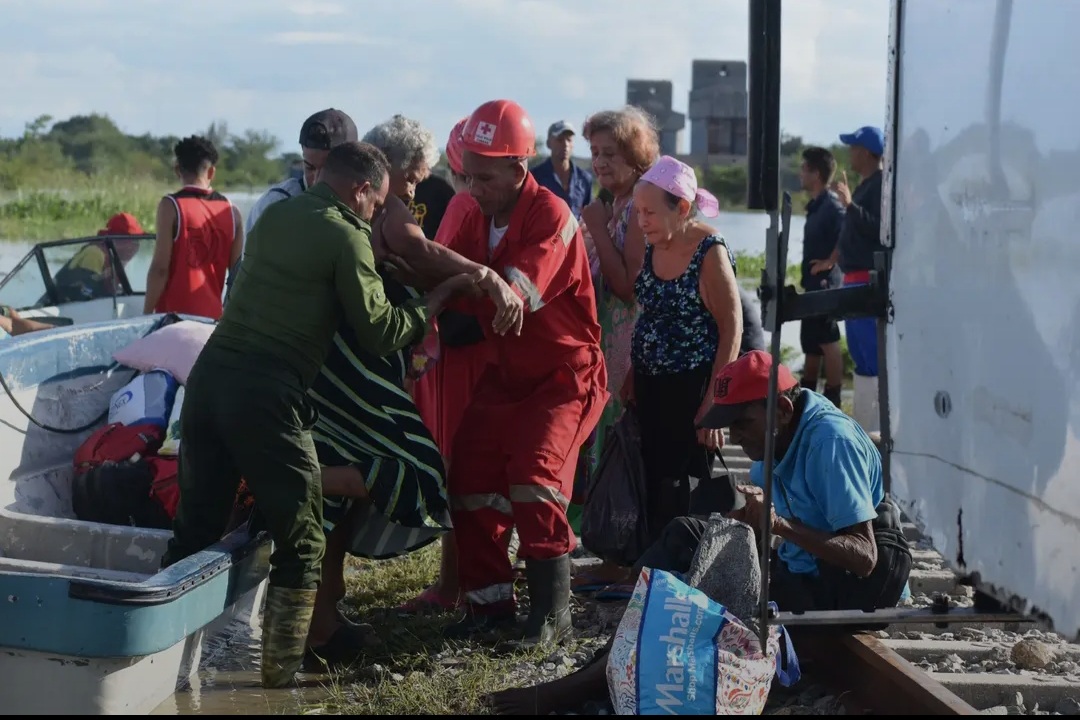
A distress call mobilized rescue teams from the Red Cross and the Las Tunas Fire Department to the municipality of Guamo, one of the areas hardest hit by flooding that followed Hurricane Melissa in eastern Cuba.
What they found there surpassed any prior training or experience: a community with water up to the level of the blinds and hundreds of people, from newborns to bedridden elderly, desperately awaiting evacuation.
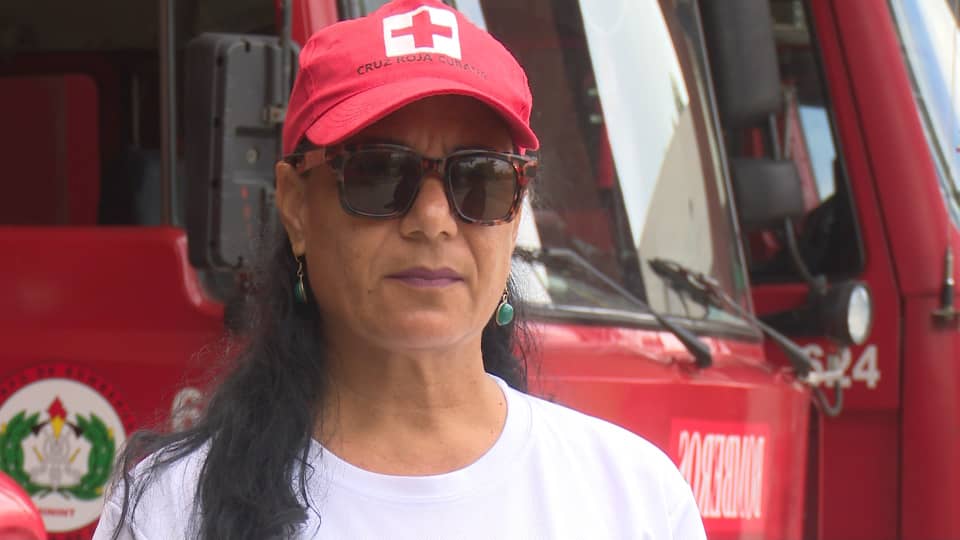 First aid instructor Niurka Torres Rosa, from the specialized Red Cross group in Las Tunas, was one of the first to receive the evacuees and told 26 that "My specific task was to receive them on this side of the water. We found several people in critical condition; our presence there was crucial given the situation." For her, the experience was an emotional shock. "The word that can describe everything we went through is sadness. There was no time to waste; we had to go; we had to save them."
With a mixture of pride and vulnerability, Niurka tells us that she is "the hen of all the chickens." This is because she was the only woman in the operation; her strong character and her compassion prevailed in the mission.
AN UNPRECEDENTED MISSION
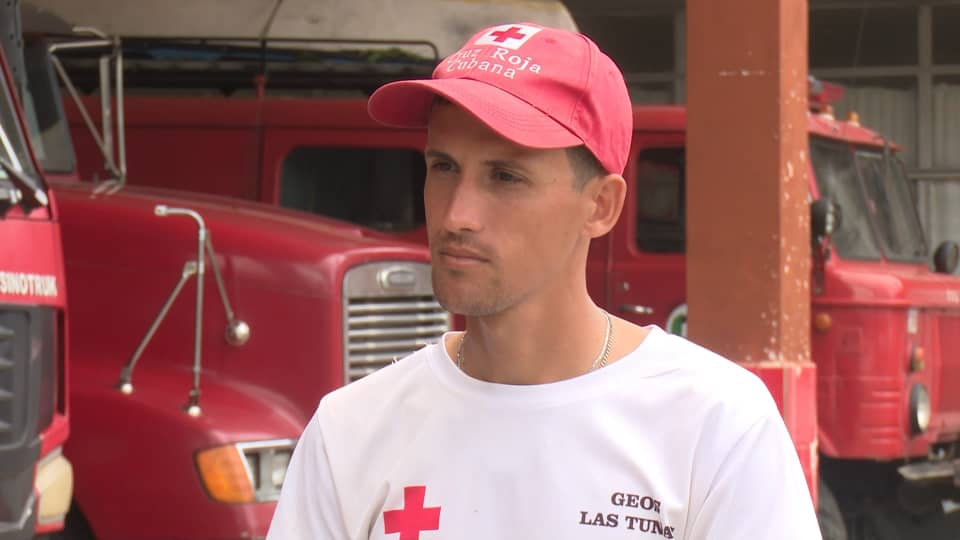 Esequiel Labrada Guerra, head of operations and relief for the Red Cross, with 15 years of experience, had never faced a mission of this magnitude. "It was intense, psychologically impactful," he confesses.
The premise was clear: "To save as many people as possible. We must protect those in need of our help," Labrada states.
That team faced dangerous currents, persistent rain, and fluctuating temperatures throughout the night: soaked clothes and constant worry about protecting every person in the area.
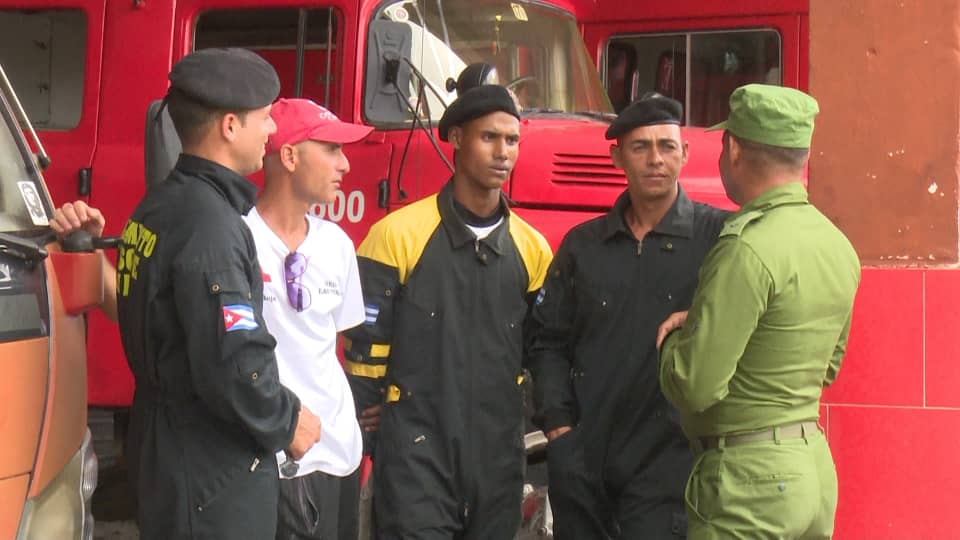
Coordination was key. The call to action came from the Provincial Defense Council and the Ministry of the Interior (MININT), activating the search and rescue team. Esequiel refers to the integration between the Red Cross and the Fire Department as a perfect partnership.
BY TRAIN AND BOAT, THE PRIORITY IS TO SAVE
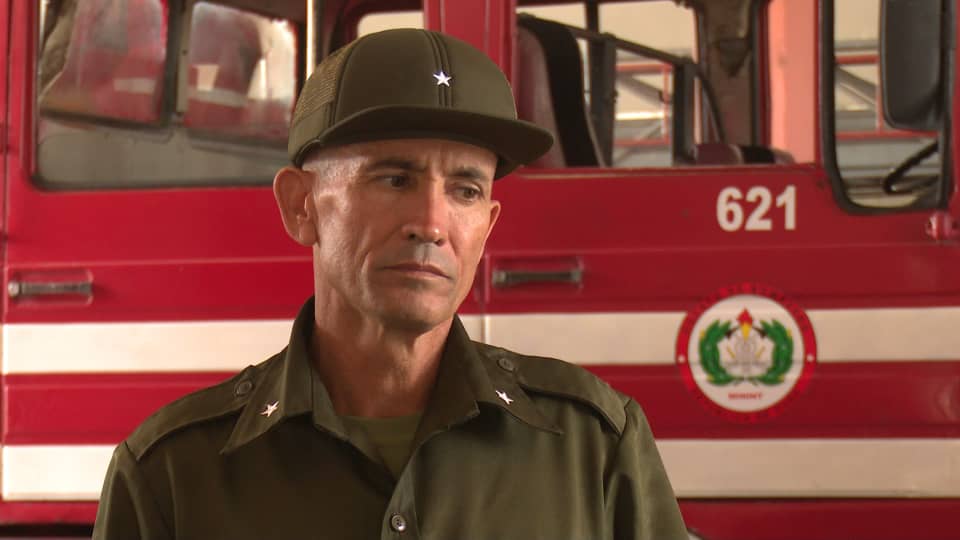 |
| Major Alside Martínez Serrano. |
Major Alside Martínez Serrano, Head of Operations for the Las Tunas Fire Department, explains that "Upon arriving at the scene of the disaster, we were faced with a shocking situation. It was difficult to see so many people, so many children, so many elderly people who had to be evacuated."
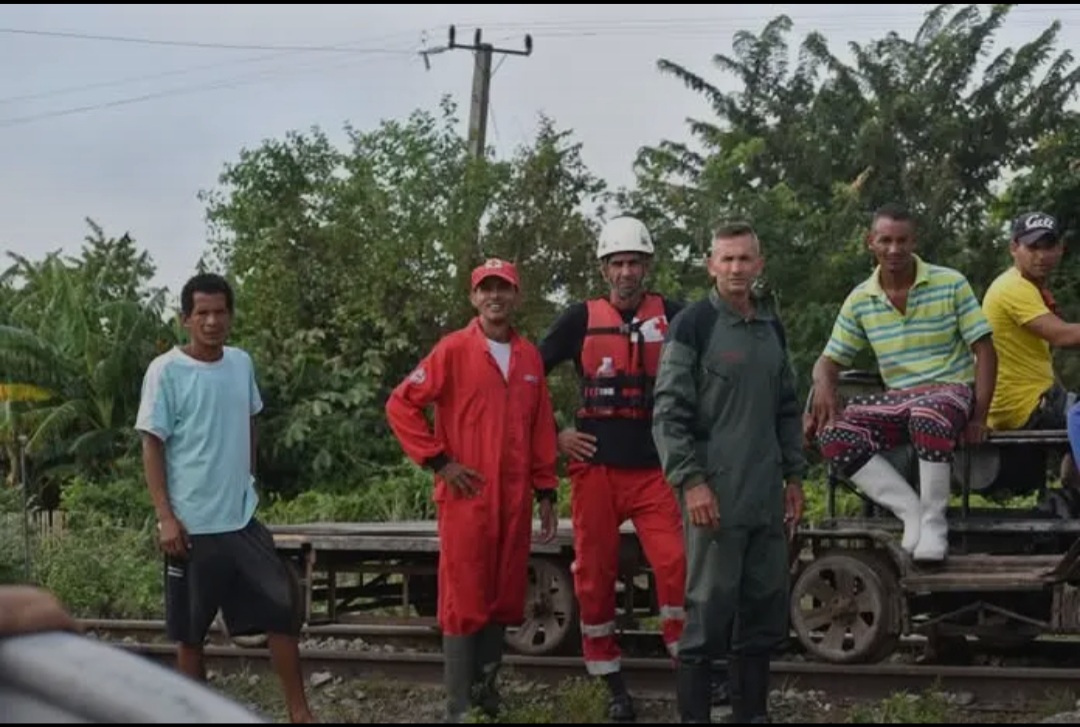
The logistics were a monumental challenge. Lieutenant Oilime Nápoles Comendador, head of the fire station's engine, explained how they used fire engine 601 to transport the boats to the railway tracks.
"We had to load the boats onto the train cars. From there, we traveled three kilometers by boat across the water to reach the isolated population."
PRESERVING HUMAN LIVES
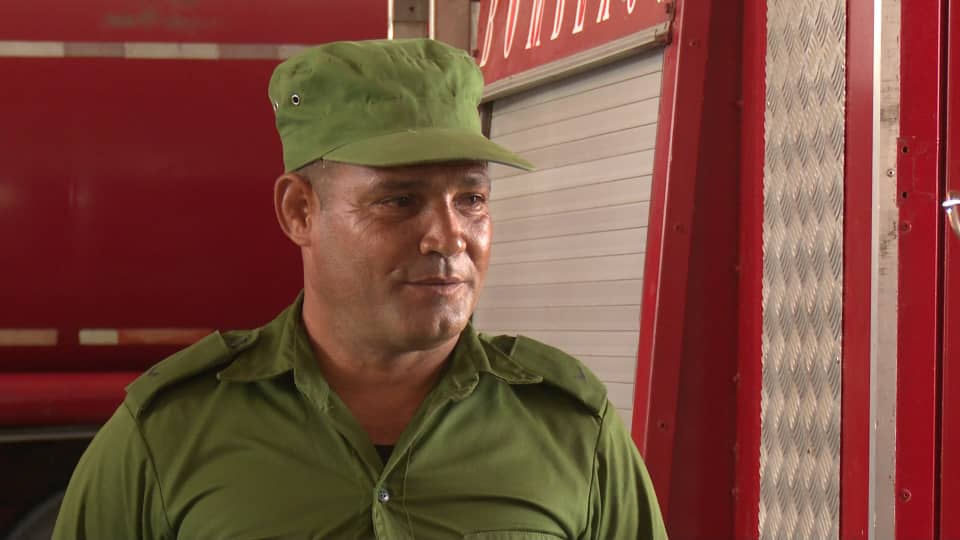 |
| Lieutenant Oilime Nápoles Comendador. |
"On the first day, we managed to evacuate approximately 400 people. It's the first time we've faced a long-distance evacuation of this scale."
"The psychological impact on the population was palpable. People were frightened. The rescuers' role extended beyond the physical evacuation, including impromptu psychological therapy and constant encouragement," Martínez Serrano noted.
Despite the tragedy, the population's reception was one of relief and gratitude. Upon leaving Guamo, the rescue teams not only left behind a community they had helped to survive; they took with them an indelible lesson.
Amid the raging waters and the despair, the motto of saving lives united firefighters and Red Cross volunteers, writing a page of courage and solidarity in the recent history of Granma. It was a mission where the survival instinct met the professionalism of duty.