In a historic session of the UN Human Rights Council, numerous international delegations unanimously supported the report of the Special Rapporteur condemning the U.S. embargo against Cuba and demanding its immediate cessation.
Cuba's victory at the Human Rights Council was decisive: a large number of delegations from all continents intervened in the debate regarding the impact of the U.S. embargo on the human rights of the Cuban people.
All supported the findings of the Council's Special Rapporteur on Unilateral Coercive Measures: the embargo against Cuba must cease because it is illegal, causes immense harm, and violates the human rights of all Cuban men and women.
Not a single nation in the Council defended the United States' criminal conduct. Every delegation called for an end to its siege against Cuba.
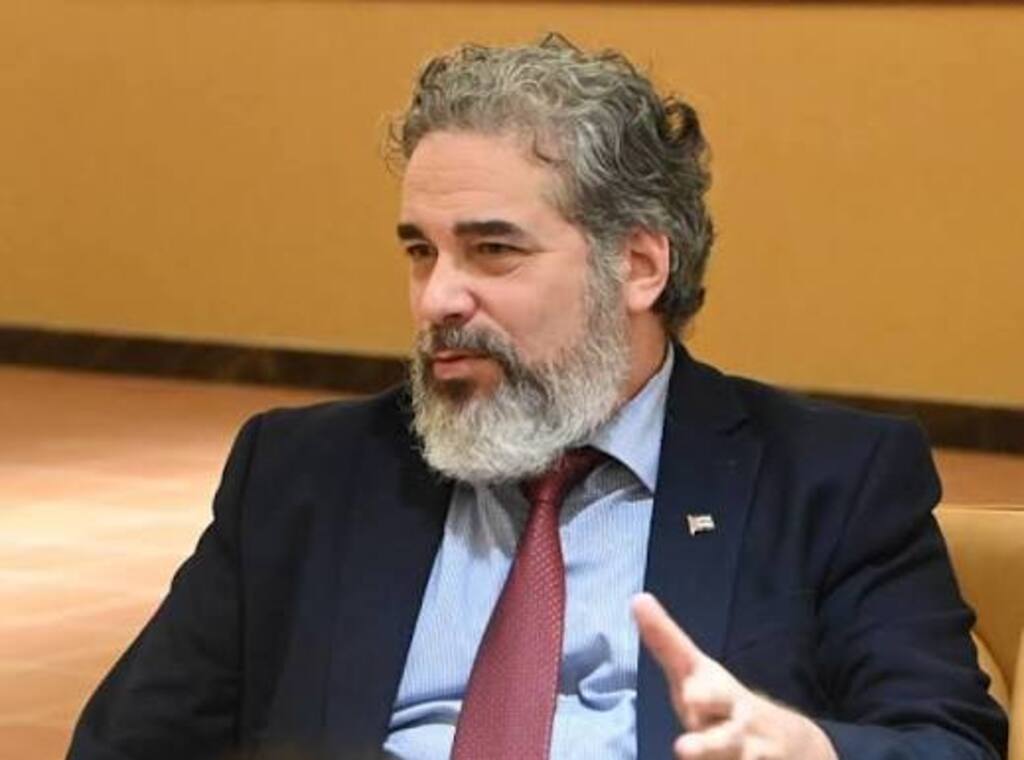
Regarding these events, Ambassador Rodolfo Benítez Verson, Cuba's Permanent Representative to the United Nations in Geneva, commented in an exclusive interview with Prensa Latina.
"I consider it important to explain the context to properly grasp the significance of what has just transpired in the Human Rights Council," the diplomat stated.
"This is the first time since its creation in 2006 that the Council has examined the impact of the economic, commercial, and financial embargo imposed on Cuba by the United States," the ambassador emphasized.
Furthermore, he asserted that the debate occurs at a particularly opportune moment, during which the United States has escalated its multidimensional war against the island nation to extreme levels.
On the other hand, it should not be forgotten that Washington traditionally uses UN bodies tasked with reviewing human rights issues as platforms to attack and single out Cuba, as part of its strategy to fulfill its long-standing objective of overthrowing the Cuban Revolution, he noted.
"Not only have they failed in their objectives, but today they have been placed in the defendant's dock, forced to listen to delegation after delegation reject their cruel and inhumane policy against Cuba—a policy that prevents Cubans from enjoying their legitimate human rights to food, health, education, development, and life," declared Benítez.
This also marks the first occasion on which a specialized, independent mechanism of the Human Rights Council has presented to that body a comprehensive evaluation of the impact of coercive measures imposed on Cuba. This assessment was based on direct evidence gathered on the ground by the Special Rapporteur during her visit to the country in November of last year.
"The results of this exercise leave no room for doubt that reason and justice are on Cuba's side," the diplomat emphasized.
"I must highlight that an unusually high number of countries and non-governmental organizations registered for the speakers' list to express their rejection of U.S. coercive measures," the ambassador indicated.
Many of those registered were unable to speak due to time constraints, but in one way or another, they communicated their support and solidarity with Cuba to the delegation—a gesture deeply appreciated on behalf of the Cuban people, he affirmed.
Another point to highlight is the thoroughness and depth of the report presented by the Special Rapporteur. The text is a compilation of irrefutable evidence and demonstrable legal assessments that stand as the precise antithesis of the narrative the U.S. government attempts to impose, he explained.
The ambassador illustrated that the report categorically refutes the false U.S. narrative aimed at depicting the Cuban government as responsible for the severe difficulties facing the country, he stressed.
"The Special Rapporteur demonstrates that Cuban authorities make immense and sustained efforts to protect the population, especially the most vulnerable, and to mitigate as much as possible the effects of U.S. coercive measures, which impact all sectors of Cuban society," he stated.
At the same time, the diplomat noted that the Special Rapporteur highlights that the actions of the U.S. government are of such intensity and persistence that they overwhelm the Cuban government's mitigation efforts, resulting in shortages of essential goods and services in Cuban households.
"The Special Rapporteur makes clear recommendations to the United States, including the lifting of the embargo and the energy blockade imposed on Cuba," Benítez emphasized.
She also calls for the cessation or suspension of all restrictions hindering the supply of essential goods—including food, medicine, and medical equipment intended for the population—as well as the maintenance and development of critical infrastructure, he described.
Likewise, she establishes that Washington must end Cuba's designation as a State Sponsor of Terrorism and revoke the state of national emergency declared under the absurd allegation that Cuba poses a threat to U.S. security, he concluded. (CubaSí)