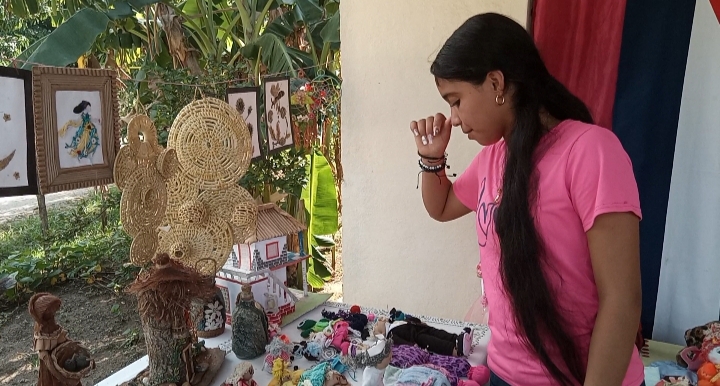
Amid the energy shortcomings and economic challenges the country is facing, Constituency 56, “El Tejar,” part of the Las Parras People’s Council, has become a model of popular participation.
Las Tunas, Cuba.- With a population of 1,279, this community has embraced the “My Neighborhood for the Homeland” work system, an initiative that seeks to integrate all social factors in the pursuit of security, well-being, and food production.
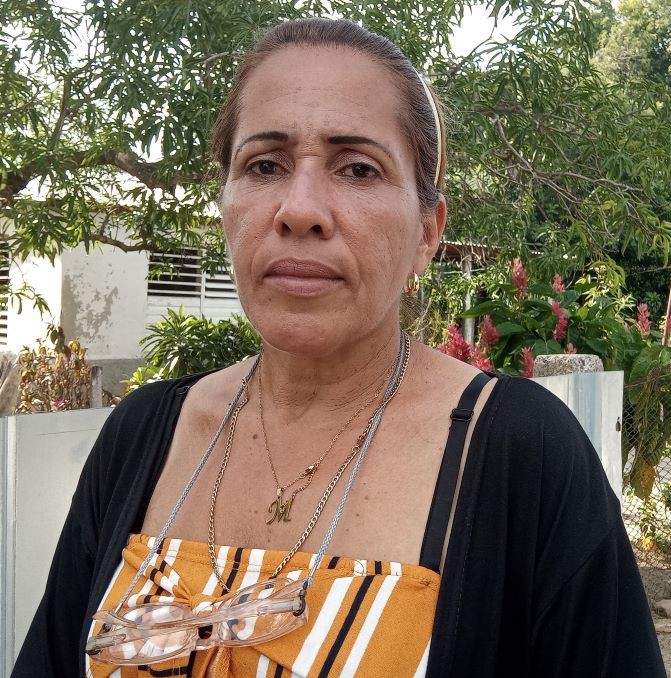 Mayelin Quiela Barroso, the constituency’s delegate, explains that this movement is not just a slogan, but a methodology for community work. “For us, it is the community’s working system, designed to integrate all sectors to ensure neighborhood safety and to foster popular participation in solving the problems that exist in the community,” she states.
One of the most significant achievements highlighted by the delegate is the progress made in energy sovereignty. In an area where electricity service is limited (with only two hours of power on Tuesdays and Thursdays, and five hours during the day on Mondays, Wednesdays, and Fridays), the community has managed to equip 20 homes with solar power systems.
These homes not only meet their own energy needs but have also become support hubs for the rest of the neighbors. “They provide viewing spots so neighbors have a place to watch the news, enjoy a soap opera, and also charge their phones, fans, and light bulbs,” explains the delegate. This solidarity is vital given the lack of power at night.
Food security is another fundamental pillar of “Mi barrio por la Patria.” Through the “Siembra tu pedacito” initiative, the goal is for every voter to make use of every available space for cultivation. “So that every voter has a planted yard, has a little plot planted, and can reap the rewards of their sacrifices and efforts,” notes Quiela Barroso.
This productive effort is intertwined with the community’s cultural life through the sociocultural project “Encontrarte.” This initiative links recreational and cultural activities with the different stages of the popular participation movement, demonstrating that culture and production can go hand in hand to strengthen the social fabric.
El Tejar is not just a residential area; it has a significant economic and social structure. Among its main institutions are a poultry workers’ collective, a construction and maintenance company, a candy shop, a bakery, a coeducational school, a family medical clinic, a nursing home, and a family care system.
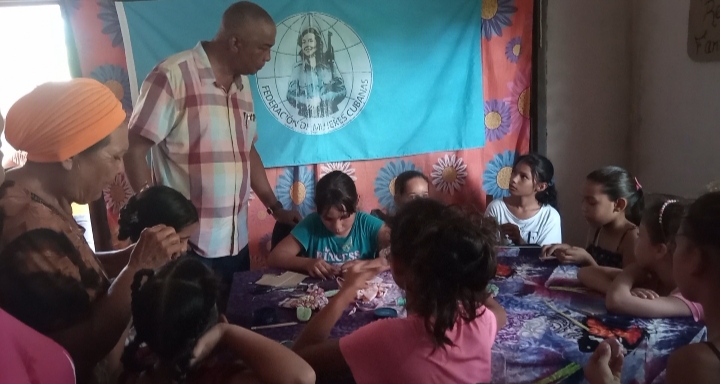
In addition, the private sector plays an important role in community dynamics. There are two micro, small, and medium-sized enterprises (MSMEs in Spanish) and more than 10 self-employed workers who, according to the delegate, take on active social responsibility, especially toward the most vulnerable sectors, such as the nursing home.
Religious groups and civil society organizations have also joined in productive activities and service fairs. “Everything is connected here —all the factors. We are one, because this movement is about achieving unity in the neighborhood,” emphasizes Mayelin Quiela Barroso.
The experience of El Tejar is presented as a model to be replicated. At a historic moment when everyone’s participation is needed, this community demonstrates that grassroots organization, solidarity, and the integration of all social actors are effective tools for improving quality of life and strengthening neighborhood safety.