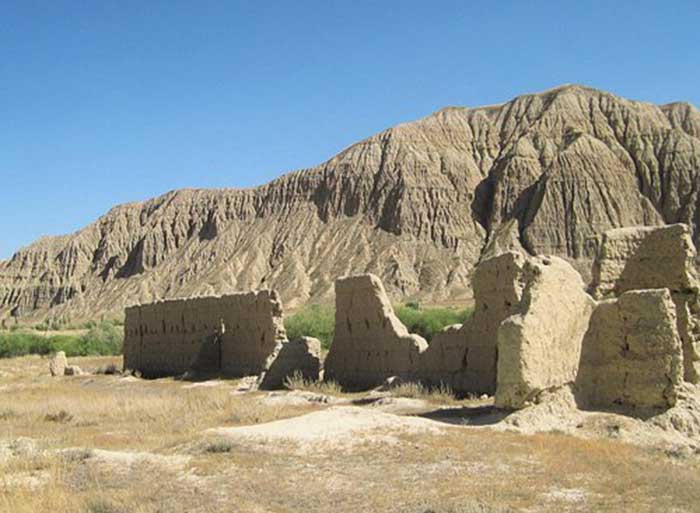
 Photo: Taken from Tripadvisor
Archaeologists have discovered the ruins of an ancient temple, presumably Buddhist, corresponding to the 7th–8th centuries in the Kyrgyz region of Chui, the country’s Ministry of Culture reported today.
"A Kyrgyz-Japanese archaeological expedition found the remains of a temple complex, presumably Buddhist, dating back to the 7th–8th centuries in the territory of the medieval city of Ak-Beshim (Suyab) in the Chui region," the ministry's statement highlighted.
The report further indicates that archaeological research has been underway at the site known as Shahristan-2 since the beginning of May 2026. This discovery confirms the hypothesis of the famous archaeologist Alexander Bernstam, who suggested in the late 1940s that a Buddhist temple complex was located in this territory.
"During the excavations, scientists found steps, a ramp, and a platform built with burnt bricks," the text adds. According to the ministry, these elements are characteristic features of religious architecture from the Tang Dynasty era.
The Ministry of Culture of Kyrgyzstan specified that the 2025–2026 excavations have provided new scientific data on the spread of Buddhist culture in the ancient city of Suyab, one of the significant centers of the Great Silk Road. Between the 6th and 11th centuries, Suyab served as the capital of the Western Turkic Khaganate.
Currently, efforts are being made to reclassify the land as a site of historical-cultural interest. The ministry emphasized that if a positive decision is reached, there are plans to create an open-air museum at the site in the future. (CubaSí)