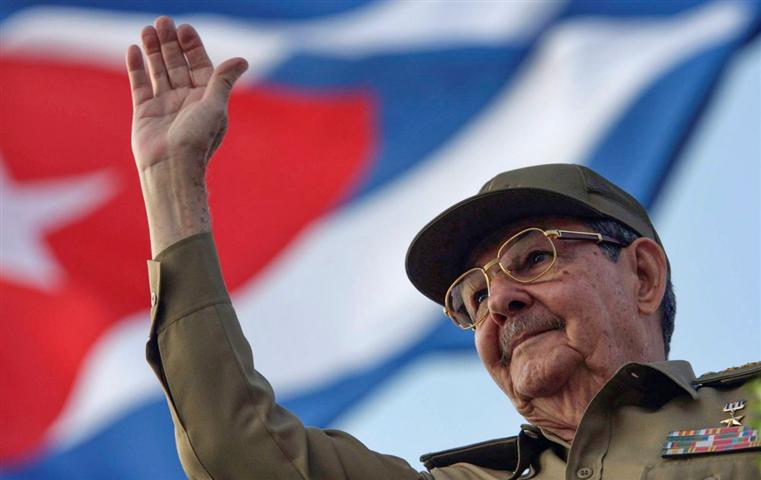
Excerpts from speeches delivered by the leader of the Cuban Revolution, Army General Raúl Castro Ruz, on February 24th at several pivotal moments for the nation.
IMMENSE REVOLUTIONARY AND HUMAN SATISFACTION
In his historic report to the 1st Congress of the Communist Party of Cuba, Comrade Fidel, who is currently leading the delegation of our Party, invited to participate in the 25th Congress of the glorious Communist Party of the homeland of Lenin, referring to the Draft Constitution that would be submitted for consideration at the highest event for Cuban communists, stated:
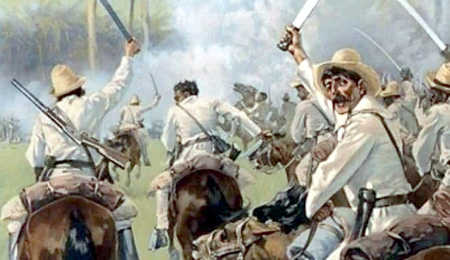
"Enriched by popular discussion and perfected by the Central Preparatory Commission, we have obtained the text on which our Congress will vote, and which will be submitted to a referendum on February 15th, so that our people, with their free, equal, universal, and secret vote, may definitively approve the Constitution that will be solemnly proclaimed on February 24th, the patriotic date marking the 81st anniversary of the beginning of the glorious War of Independence of 1895, the fruit of the moving efforts of José Martí and his glorious Cuban Revolutionary Party."
"What immense revolutionary and human satisfaction it is to put into effect on this day the Constitution that, as a synthesis of the historical struggles of our people, enshrines the aspiration of our National Hero that the first law of our republic be the Cuban people's devotion to the full dignity of humankind."
And today, February 24, 1976 —a date that from this moment forward will be doubly historic— as we gather to proclaim and officially put into effect the first socialist Constitution of the Americas, approved by the free, equal, universal, secret, and informed vote of 95.7% of all the men and women of our nation aged sixteen and over, we feel deeply filled with that immense revolutionary and human satisfaction that Fidel foretold.
(Speech at the Proclamation of the Constitution of the Republic of Cuba. Karl Marx Theater, Havana, February 24, 1976)
FIDEL IS FIDEL
 (…) I assume the responsibility entrusted to me with the conviction that, as I have stated many times, there is only one Commander-in-Chief of the Cuban Revolution.
Fidel is Fidel, we all know that well. Fidel is irreplaceable, and the people will continue his work when he is no longer physically present. His ideas, which have made it possible to build the bastion of dignity and justice that our country represents, will always remain.
Only the Communist Party, the sure guarantee of the unity of the Cuban nation, can be a worthy heir to the trust placed by the people in their leader. It is the supreme leading force of society and the State, as established by Article 5 of our Constitution, approved in a referendum by exactly 97.7% of the voters.
That conviction will be particularly important when, by the natural law of life, the founding generation that shaped the Revolution has passed away.
(...)
Our history teaches us, from the wars of independence to the present, that the greater the difficulties, the greater the demands, discipline, and unity required. Disorder, impunity, and a lack of cohesion have always been among the worst enemies of a people in struggle.
(...)
Comrades, on this day in 1895, at José Martí's call, the old and new stalwarts reignited the fight for independence, a struggle thwarted by the military intervention of the United States. Half a century later, we have managed to unite once again and confront the same enemy as always.
It was no coincidence that this date was chosen fifty years ago for the first broadcast of Radio Rebelde in the Sierra Maestra, nor that it was the day we proclaimed our socialist Constitution in 1976.
On this 113th anniversary of the beginning of the necessary war, the challenges are truly many and difficult. Faced with them, let us remember what Fidel expressed in his reflection published on December 10th, when he warned us: "The stern face of José Martí and the piercing gaze of Antonio Maceo point out to every Cuban the hard path of duty, not which side offers a better life."
(Speech at the inaugural session of the 7th Legislature of the National Assembly of People’s Power. Convention Palace, Havana, February 24, 2008)
DEFEND, MAINTAIN, AND CONTINUE PERFECTING SOCIALISM
On this day, February 24, 1895, the struggle for independence was reignited with the union of the seasoned mambises of the First Cuban War and the new generation, under the leadership of the Cuban Revolutionary Party and José Martí.
It is my duty to assume once again before you and all our people the honor of presiding over the Council of State and the Government.
In this regard, I believe it is worthwhile to reiterate what I have stated twice in this Parliament: I was not elected president to restore capitalism in Cuba, nor to surrender the Revolution. I was elected to defend, maintain, and continue perfecting socialism, not to destroy it.
(…)
When discussing these topics, it is fitting to recall what Fidel Castro said exactly fifteen years ago before the National Assembly, on February 24, 1998, regarding the first rule or characteristic that should define a revolutionary cadre: "Never covet positions; let men reach the positions that correspond to them by their merits, their work, their virtues, their patriotism."
(Speech at the inaugural session of the 8th Legislature of the National Assembly of People’s Power, Convention Palace, Havana, February 24, 2013)
THE ABILITY TO FIND AN ALTERNATIVE AND OVERCOME ANY SETBACK
Today, February 24, we commemorate the 123rd anniversary of the resumption of the War of Independence called for by José Martí.
The profound significance of this date marked the point of maturity and crystallization of the project conceived by José Martí, who, to lead it and bring it to fruition, founded the Cuban Revolutionary Party.
When all seemed lost, his ability to find an alternative and overcome any setback led him to summon the people to a decisive effort: the war he believed necessary when he deemed it inevitable. At every moment, he appealed to national unity, drawing upon the best traditions of the past, without omitting any of those who were willing to sacrifice themselves and give their lives for the higher cause.
A month later, on March 25, 1895, in Montecristi, Dominican Republic, José Martí and Major General Máximo Gómez signed the manifesto that established the scope and purposes of the struggle. Together they departed for Cuba to join the liberation effort, landing at Playitas de Cajobabo on April 11. A few days earlier, Major General Antonio Maceo had landed at Duaba.
As Fidel Castro noted on the centenary of the Ten Years' War: "José Martí took up the banners of Céspedes, Agramonte, and the heroes who fell in that struggle, and carried the revolutionary ideals of Cuba during that period to their highest expression."
(…)
On a day like this, when we honor those worthy Cubans who returned to the battlefield in 1895 to liberate Cuba, I recall the words spoken by Fidel Castro in 1965: "We would have been like them then, and they would be like us today!" That is the commitment we have upheld, and it will also be the one that guides current and future generations, so that our homeland may remain free.
(Speech at the awarding of the honorary title of Hero of Labor of the Republic of Cuba to three valuable comrades. Capitol Building, Havana, February 24, 2018)
Taken from Granma