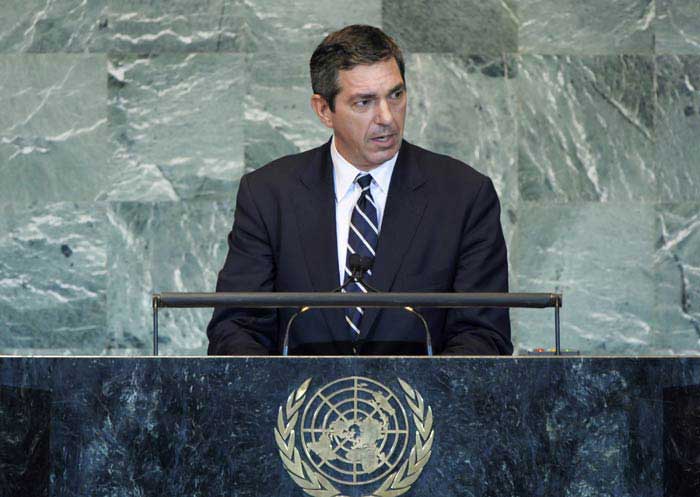
Stavros Lambrinidis, the European Union's permanent observer to the United Nations, recognized during the General Assembly the extraterritorial effect of the economic, commercial, and financial blockade imposed by the United States against Cuba.
In his address, the European diplomat noted that the extraterritorial sanctions applied by Washington for nearly seven decades disrupt the bloc's economic interests and violate generally accepted international trade norms. Lambrinidis recalled that EU legislation prohibits member states from applying the Helms-Burton Act, although he acknowledged that some governments apply U.S. blockade regulations within their jurisdictions.
He emphasized that the EU reaffirms its support for political dialogue between the United States and Cuba based on international law, and stressed that the UN Charter should serve as a guiding framework amid growing difficulties for the Cuban population. The European representative highlighted that the asphyxiation measures have negative humanitarian effects, causing blackouts, shortages of medicines and food, and affecting essential public services such as health and transportation.
He added that millions of Cubans face adverse conditions and expressed that the EU will continue constructive contacts to support the island's institutional, economic, social, and political modernization. Lambrinidis stated that the bloc is willing to share experiences and maintain humanitarian assistance in response to the urgent needs of the Cuban population.
The General Assembly approved the debate on the blockade by a wide majority, with the support of 136 countries, despite attempts by the U.S. delegation to block the discussion, which received nine votes against and 30 abstentions. The draft resolution calling for an end to the blockade —which has been approved on 33 previous occasions with broad international backing— will be put to a vote later this year. (CubaSí)