


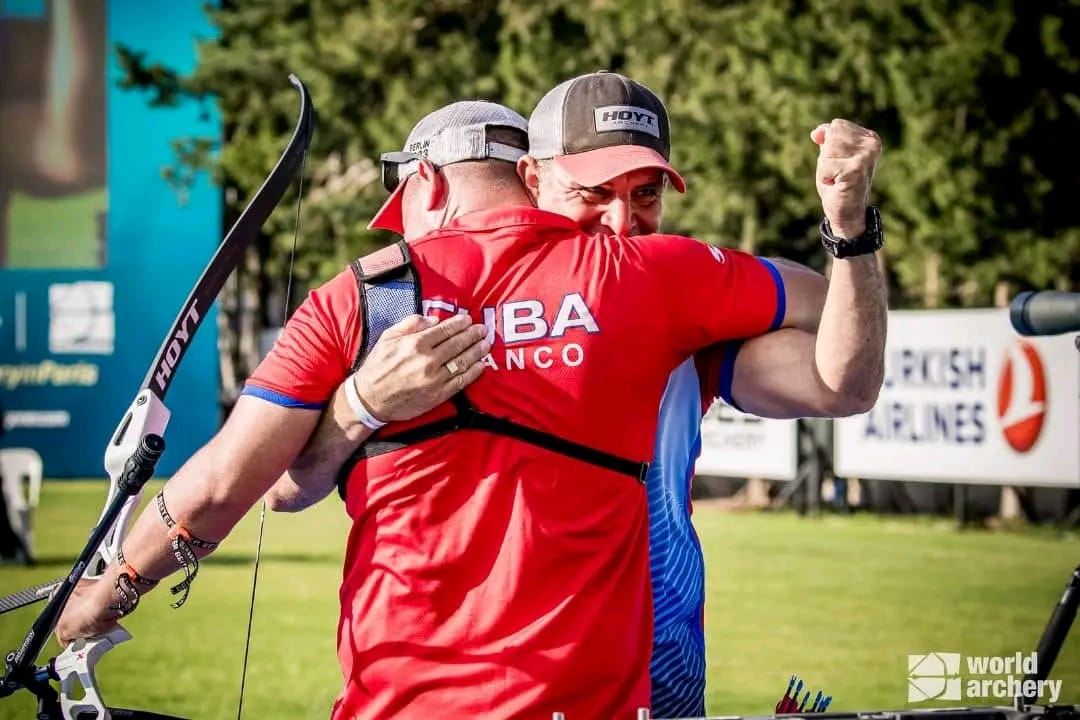
In the world of sports, some paths are straight, and others take unexpected turns to reach their ultimate goal. The story of Reiter Téllez Velázquez is that of an athlete who traded the map and compass for the bow and arrow and has continued to bring victories to Cuba.
It all began two blocks from the Julio Antonio Mella Stadium, the place where this journalist's recorder crossed paths with one of the best archery coaches in our country.
At just 12 years old, sports became the natural landscape of Reiter's life. "That's why I love baseball, coming here when I'm in Las Tunas, and there's a game. My athletic career has been broad and diverse. I practiced fencing and wrestling until I found my path in orienteering, a discipline that combines the endurance of cross-country running with the skill of map and compass.
“I was a member of the national team for five years and a three-time Cuban champion until, in 1994, the sport was eliminated from the Cuban system because it wasn't Olympic. Luckily, a friend dared to invite me to be an archery coach. I arrived at the Higher School of Athletic Improvement (ESPA) in Las Tunas like a complete novice, he says jokingly, because neither my students nor I had a deep understanding of the discipline. But we didn't give up."
His first experience as a coach at a national competition, in 1995, showed him the way. "I realized that what I saw with the kids here in the province had nothing to do with what was really happening. That was my impetus to start asking questions, to care, and to take an interest truly .”
He rejected offers to move to other disciplines or positions. “My thing was working; I wanted to train athletes.” With that idea in mind, he started from scratch with the school category, then moved to the youth. He studied in a training course in Havana and, with patience, began to see the results.
“In 1996, with athlete Julieta González Botello, I achieved, for the first time, a goal by having a woman from Las Tunas place among the eight finalists in archery at the national level. In 1998, the first medals arrived: a silver and a bronze at the School Games. The following year, 11 medals. That same year, we had a national champion, and I was recognized as the Best Coach in Cuba.”
In 2002, his team reached the podium for the first time at the national youth event, as runners-up in Cuba. “We were just one point away from first place. It was a wonderful experience. Those successes had a bittersweet taste, achieved against all odds, because we didn't have arrows; we didn't have bows. Luis Daniel del Risco was one of the key figures in securing the first resources for archery in Las Tunas.”
His talent as a leader transcended Cuban borders. From 2002 to 2004, he worked in Mexico, in a state that ranked among the worst. Under his direction, the team climbed to eighth place in the Mexican National Olympiad, winning its first medals.
In 2007, the first major call: to coach the national youth team in Sancti Spíritus. “There, I began to shape Hugo Franco's career, with whom I won three youth titles and three national records, qualifying for the Pan American Games in Guadalajara. It was a beautiful time with a dedicated athlete.”
“After returning to Las Tunas due to personal issues, in 2011, I took on a new challenge with the senior women's national team, with which I won three medals —one silver and two bronze— at the 2018 Central American Games, in Barranquilla.
“Since 2022, I have been coaching the senior men's national team. It has been a wonderful experience, but the work is difficult, and the resources we have obtained have been through sheer hard work.”
“A vivid example of this struggle was the bronze medal at the 2023 Central American Games in San Salvador, because before we even got to compete for the medals, our bow broke. The solution came from sporting solidarity; an athlete from Colombia lent us a set of equipment. We started competing for the medal, but the equipment wasn't properly adjusted. Hugo didn't even have the sight right until he finally got his hands on it; we hadn't had enough time to adjust it. That medal, won against all odds, felt like gold.”
“The journey hasn't been without pain. We've mourned the loss of family members just minutes before a competition, we've cried, but we continue with our mission, which is always to aspire to bring a medal home.”
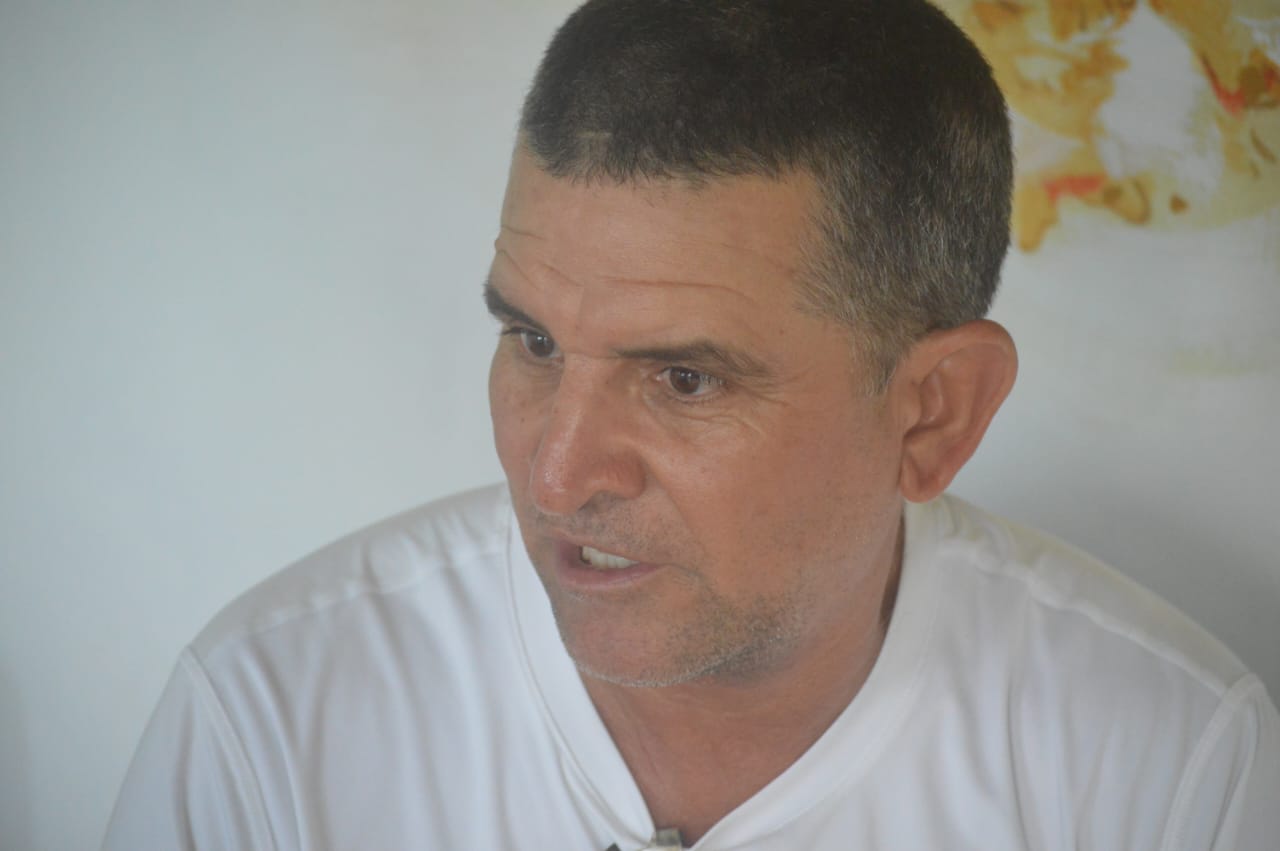
HOW DOES IT FEEL TO RETURN HOME?
Reiter loves his roots. “I really like being here. My wife, my brother, and my neighborhood are still here. I love baseball; they know that. I carry the Las Tunas sports movement in my heart. I took my first steps as an athlete; later, as a coach, and I think there's still a lot to do. Perhaps there isn't much of a journey left for me as a coach, but the desire to return home remains. I, at least, am deeply rooted in Las Tunas.”
"My competitive dreams remain intact. I long for an Olympic medal, a world medal, a Pan American medal that I haven't yet achieved with the team, but I believe we're going to achieve it in this next cycle. I have athletes with the potential for it," he affirms with the same faith that led him, decades ago, to transform hardship into opportunity.