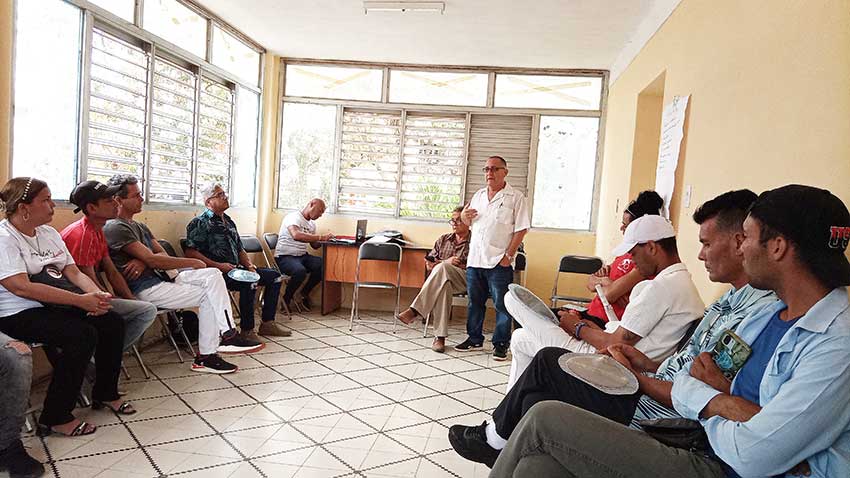
Adherence to treatment, prevention strategies, and the adoption of healthy habits are essential for people diagnosed with HIV. These conclusions emerged at the close of the First Training Workshop for Managers of Adherence to Antiretroviral Treatment, in which rights managers, peer educators, members of the Cuba+ Network, and healthcare professionals analyzed the keys to strengthening care in the face of the virus.
Las Tunas, Cuba.– Dr. Aldo Cortés González, deputy director of the Provincial Center for Hygiene, Epidemiology, and Microbiology, called for multisectoral collaboration and pointed out that adolescents and young adults, considered vulnerable populations due to their low perception of risk regarding this phenomenon, unprotected sexual behavior, and experimentation as part of their development, must be educated. "It is necessary to offer and make available all the information that facilitates the education of different populations, but also to be transmitters of experience," said Cortés González.
For her part, the provincial educator for STIs/HIV/AIDS and Hepatitis, Elena del Carmen González Rey, specified that since the beginning, this epidemic has been concentrated among males, with a higher incidence in men who have sex with men.
"We are always at risk; we never think about HIV, we don't seek information about it, and sadly, we arrive at a late diagnosis, even though it could be a preventable disease with the available resources and tests."
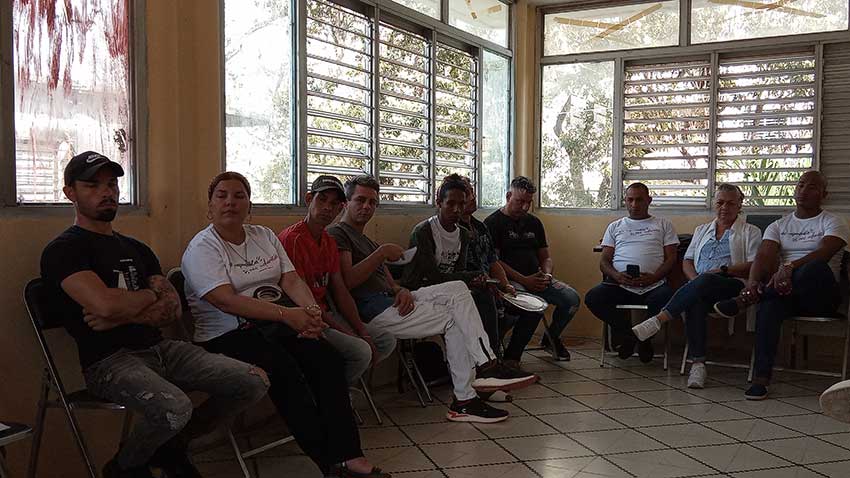
After an update on the epidemiological situation, the participants valued the importance of the support network for key populations, the monitoring of risky sexual behaviors, and education and prevention to reduce the clinical onset of the condition.
The provincial coordinator of the Cuba+ Network, Edel Luis Tellez Milanés, emphasized the opportunity they have as peer educators to work on combined prevention with healthy and HIV-positive individuals. "It is vital to consolidate a support network alongside the technical team, the survey nurse, pharmacy services, and adherence promoters, to foster the right to health and inclusiveness, and in defense of those who experience the full force of the virus firsthand."
Psychology specialist Raydel Bejerano, coordinator of the Network of Youth and Adolescents for Life, highlighted the inclusion of those who manage programs to intervene and prevent severe health deterioration, as well as the identification of the early stages of the disease and the country's efforts to study the highest-risk population.
He added that access to counseling, rights management services, and specialized and free PrEP are available, with high impact and effectiveness in protecting key populations and people who feel exposed to the virus, to reduce the barriers of gender, stigma, and discrimination that affect access to the comprehensive response against HIV and other sexually transmitted infections.
As part of the meeting, participants also discussed the effects of adherence to treatment based on the systematic nature of care, while professionals in the field explained the guarantees of the highly expensive tests provided by the country, and delved into coinfections and opportunistic ailments that impair life quality.
The workshop is thus part of the strategies for the prevention and control of HIV infection and the goals of the 2030 Agenda to eradicate this disease.