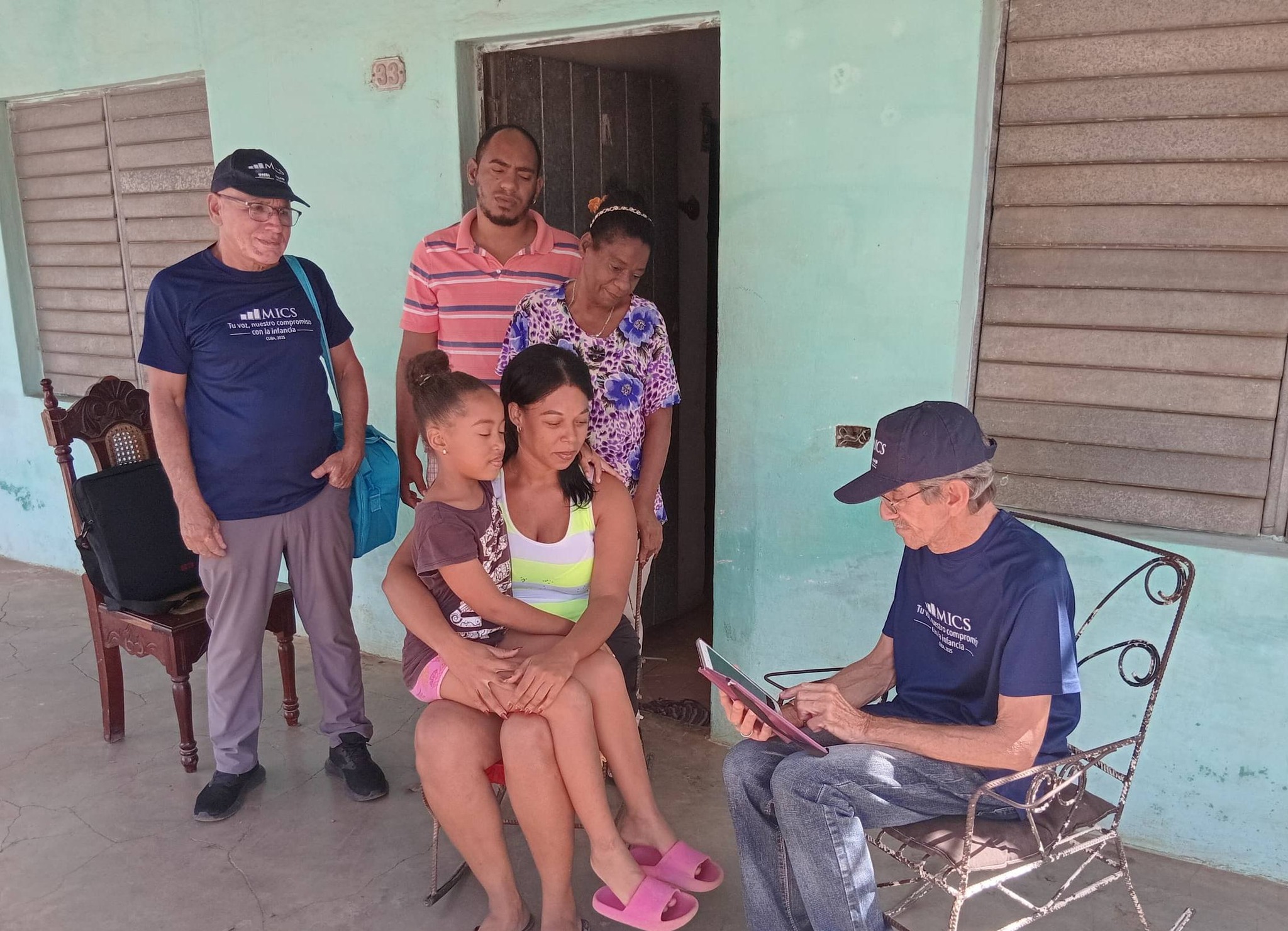
A new edition of the Multiple Indicator Cluster Survey (MICS) recently began in the province, considered one of the most comprehensive and specialized sources on the situation of children worldwide.
Las Tunas, Cuba.- This research focuses on children and adolescents and the protection of their rights, offering an updated diagnosis of their growth and development based on indicators aligned with the Convention on the Rights of the Child.
María Isabel Leyva Martínez, head of the Department of Demography, Census, and Surveys at the Provincial Office of Statistics and Information, explained that the survey is being conducted throughout Cuba, in both urban and rural areas, and that the operation is being carried out in collaboration with the United Nations Children's Fund (UNICEF).
 “We set up a provincial group, made up of seven people and a supervisor. In our territory, the work began on December 19 and continued until the 23rd; after a break, we will resume work on January 6 to cover the entire province of Las Tunas.”
MICS differs from other similar systems in its household survey methodology, which allows it to capture aspects of daily life that do not appear in administrative records and to combine multiple variables at the population level with a clear focus on equity. The data collected in households provide a comprehensive view of living conditions, health practices, education, and child care.
Leyva Martínez explained that this is a probabilistic sample: they select warehouses in the eight municipalities, and based on the information they provide, they choose the homes where children and adolescents mainly live, and that is where the team goes.
“In each neighborhood, they choose seven households, where they will work with four age groups: 0 to 2 years, 3 to 4, 5 to 17, and 18 to 49 years. In the homes, they weigh and measure children up to 9 years of age, and in two homes, they conduct water quality tests.”
To carry out this survey, the pollsters wear properly identified sweaters, the specialist said, to avoid any confusion when approaching the residences. And it will be done following international standards of ethics and reliability.
The survey is recorded with mobile capture devices, which speeds up the collection and processing of information.
The campaign is presented under the slogan “Your voice, our commitment to children.” Its results will be fundamental for evaluating progress, detecting gaps, and guiding public policies aimed at guaranteeing the well-being and opportunities of every girl and boy in the Greater Antilles, as well as monitoring progress toward the Sustainable Development Goals (SDGs) and other commitments agreed upon at the global level.
Since 2000, our nation has welcomed these experiences; now in its seventh round, it aims to reach 12,000 households.