
For four days, the Eastern Zone Chess Tournament transformed the Pepito Tey campus of the Las Tunas University into the epicenter of chess in this Cuban region. The event, which awarded four spots in the 2026 national finals, signified much more than a sporting victory: it reaffirmed the region's ambition to become a strong chess center at the national level.
Alfredo Aguilera Rodríguez, a FIDE Master from Las Tunas with an ELO rating of 2348, and Leannet Mariah Bosch Valls, a FIDE Master from Santiago de Cuba with a rating of 2091, dominated the open and women's groups, respectively.
Along with them, Jeorling Batista and Karen Torres, both from Granma, also qualified for the national tournaments. The competition concluded with a fast-paced Blitz tournament and the awards ceremony at the Las Tunas Hotel, sealing a chapter that the organizers describe as a "starting point."
THE HOME CHAMPION: PRESSURE AND MATURITY
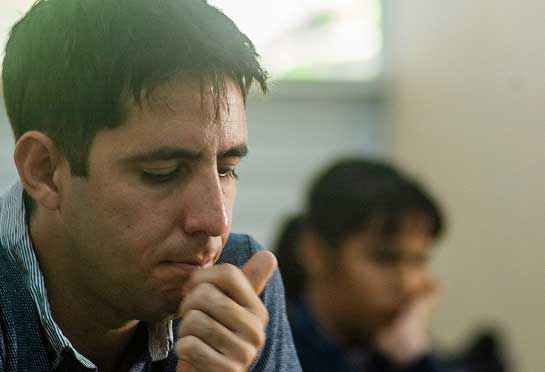 For Alfredo Aguilera, this victory has a special flavor. Not only does it guarantee his return to a national championship, but he does so representing a province that hadn't achieved first place in a competition of this magnitude for years. "Having the event at home was quite emotional, but it also added extra pressure," confessed the provincial coach. "All my family and friends were watching. I had a double commitment," he expressed.
When asked about his performance, Aguilera highlighted his "mature" chess, which allowed him to navigate the tournament without major setbacks, not underestimating its difficulty. "It wasn't easy, but I could stay strong," he affirmed. His sight is already set on the Archipelago final, where he anticipates a leap in quality: “There, the approach must be different. We have to increase the rigor, the training pace, and the hours at the board to withstand players rated 2500 ELO.”
His life, he acknowledges, revolves almost entirely around the 64 squares. “I’ve created an environment where chess is the only thing on the table, which has contributed to my results and those of my students.” From his role as coach of the youth category, Aguilera perceives a rebirth: “Right now, we are trying to make chess flourish again in Las Tunas. We had a difficult decade, but now, Commissioner César Pérez is working hard. Players like me are cooperating in every way we can.”
THE QUEEN FROM SANTIAGO: OVERCOMING LABELS
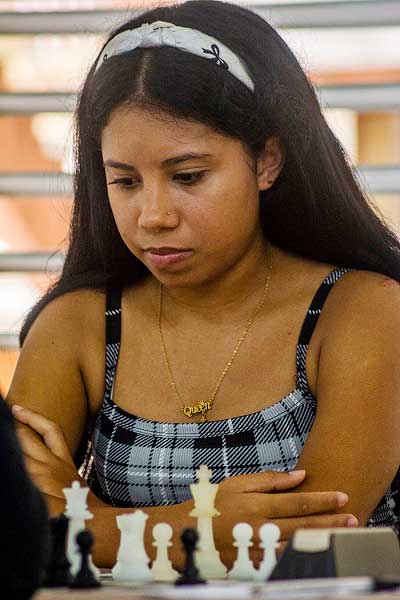 In the women’s sector, Leannet's victory was an act of consistency and personal growth. “Because of my personality, I always had difficulty beating lower-rated players. In this tournament, I could win the games by demonstrating superiority, and that makes me very happy,” shared the Telecommunications student at the University of Oriente.
She is a self-taught player who admires the style of male grandmasters such as Garry Kasparov, “whose sacrifices were amazing.” She spoke about the pressure of being the favorite. “It’s complicated because you have the pressure to win, but you have to learn to play the position, regardless of the opponent.” Her most complex game was precisely against the runner-up, Karen Torres, where a tense endgame tested her nerves.
Off the board, she describes herself as “a normal young woman” who enjoys the gym and music. Achieving a balance between her demanding Engineering degree and high-performance chess has been a challenge. “My parents always supported me, but they never stopped pushing me in school; it doubles the work, a tremendous effort,” she recalled.
With a maturity she attributes to growth, Bosch views the future of women's chess in Cuba with optimism and embraces her inspirational role. “Yes, of course, we can advance. I teach girls and try to ensure they don't make the same mistakes I did.” She acknowledges, however, the particular challenges: “For us, it's a bit more difficult because we have many things going on in life; it's not like men who sometimes focus on just one thing. However, we can make it,” she maintained.
LAS TUNAS, A CHESS HUB
The organizational success of the zonal qualifier was no accident. A titanic effort lies behind it, as explained by César Alejandro Pérez Rodríguez, provincial chess commissioner. “We were a worthy host, and we proved it with our champion,” he declared proudly. “A team dared to step forward, to take on the challenge, sometimes with their own resources and with little time. The motivation of the people of Las Tunas is different today: chess is being revived,” he affirmed.
Pérez Rodríguez outlined an ambitious roadmap that goes beyond competition. One of its pillars is strengthening the Specialized Chess Classroom at the University of Las Tunas. “We are seeking its international expansion, through agreements with clubs and universities in other countries, especially Mexico,” he explained. The goal is to achieve self-financing to organize international events that award International Master, FIDE Arbiter, and FIDE Instructor norms —titles with global recognition.
“Las Tunas can attract alternative university or sports tourism,” he argued. “We have the logistics, a university hotel, and we can offer attractive packages. We are already working on a national event with international invitations for March,” he explained.
WOMEN'S CHESS: A PRIORITY TASK
One of the most recurring themes in the statements of sports leaders was the need to revitalize women's participation; the provincial chess commissioner was emphatic: “We are trying to encourage recruitment, to rescue women's chess.”
The commissioner directly linked the province's rise to the performance of the girls. “Women are a fundamental pillar. In school chess, if we had had a top-level women's team, Las Tunas would be among the top eight provinces. It is a fundamental task of INDER (National Institute of Sports, Physical Education and Recreation) to rescue women's chess and promote it,” he maintained.
This call to action resonates in the words of champion Bosch and the presence of young talents at the zonal tournament. The combination of experience and youth, with almost teenage girls competing at the highest level, was highlighted by Pérez as “a positive added value” and the seed for a more balanced and promising future.
FOOTPRINT IN 64 SQUARES
The 2025 Eastern Zone Chess Tournament concluded, leaving behind more than just qualified players. It confirmed a local champion who carries the dreams of his province, consolidated the dominance of a “Santiago Queen” who breaks down mental barriers, and laid the groundwork for a strategy that aims to transform Las Tunas into a dynamic hub for chess in Cuba.
As Alfredo Aguilera aptly summarized, “chess is in the air.” And that atmosphere, now blowing with renewed force from the Balcony of Eastern Cuba, promises to carry not only the pawns and bishops far, but also a generation of Las Tunas residents, especially women, determined to write their best move on the chessboard of the national sport.