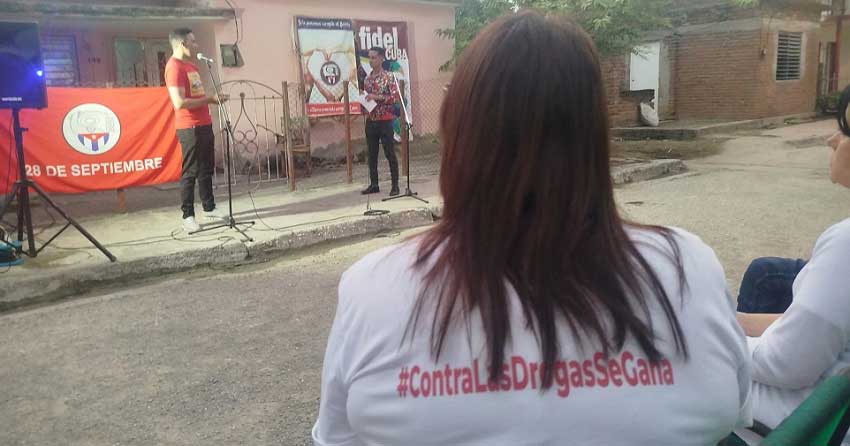
Drug use is a silent threat that destroys physical and mental health, life plans, disintegrates families, and devastates the social environment. Far from being an abstract problem, its devastating consequences materialize in neighborhoods, demanding a coordinated response and a strong collective awareness.
Las Tunas, Cuba.– In this battle for the well-being of the population, especially young people, the community stands as the first line of defense. In this effort, Josué País Street, in the Santo Domingo neighborhood of the Las Tunas municipality, was the site of a key meeting.
Representatives of mass organizations and agencies such as the Ministry of Culture, INDER (National Institute of Sports, Physical Education and Recreation), the Public Prosecutor's Office, and the Ministry of Public Health met to discuss and develop strategies to combat the scourge of drug use.
The meeting, held in Zone 27 of District 19, was attended by Juana Yamilka Viñals Suárez, a member of the Council of State and provincial vice-governor, who emphasized the leading role of local structures. “The provincial subcommittee on combating drugs plays a fundamental role in the activities carried out through its ongoing connection with our communities,” she stated.
Viñals Suárez explained the working methodology: “Through the actions we design during the week dedicated to combating drug use, we can reach our neighborhoods and engage with our delegates and community working groups to identify areas that may have a tendency toward drug use.”
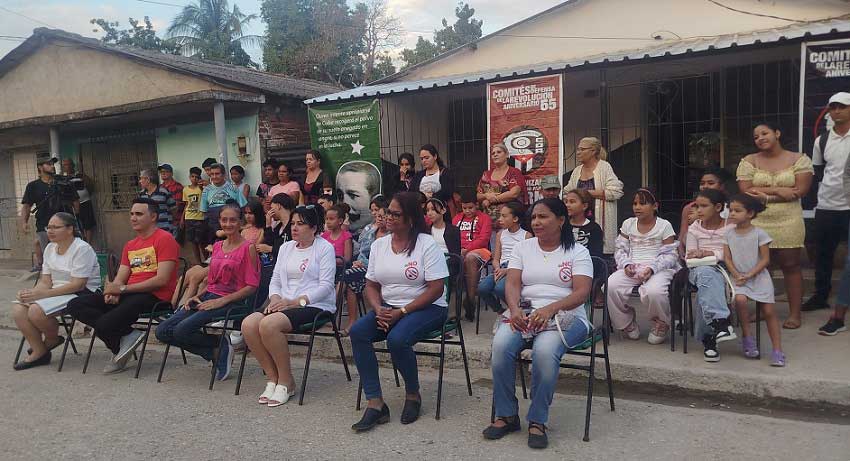
Furthermore, Dr. Alejandro Mestre Barroso, a toxicology specialist, starkly described the severe damage that drugs cause to human health. He focused his concern on an alarming statistic: “The age group with the highest consumption is 14 to 25 years old. All the neurophysiological conditions of these patients must be considered, along with the complications they will develop and the difficulties they will face from an addiction perspective.”
Faced with this situation, Mestre Barroso called for multifactorial action: “The implications and how we can help from the community, from the neighborhood, from the school, from that fundamental nucleus of society which is the home, is precisely by creating a culture of rejection.”
The message is clear: drugs irreversibly alter the developing brain, generate a fierce dependence, and throw young people into an abyss of medical and social complications.
The meeting in the Santo Domingo community underscored that, beyond institutional strategies, it is within each family, in each classroom, and on each block where a culture of life and rejection of these substances must germinate and strengthen. Protecting future generations from this profound harm to their health is not just the responsibility of the authorities; it is a moral duty of all of society, a commitment undertaken through vigilance, dialogue, and setting a good example in the daily life of the neighborhood. The real battle is won through prevention, and the first line of defense is the conscience of every citizen.