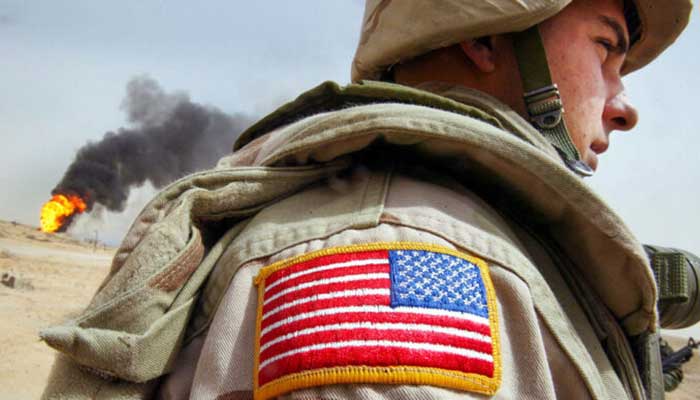
U.S. troops, both active-duty and reservists, have voiced doubts and disillusionment regarding President Donald Trump's strategy in the war against Iran, now entering its fourth week, fearing they are being used as "political pawns" and reporting thirteen deaths and 232 wounded across the Middle East, according to an investigation published by HuffPost.
The report highlighted that growing concern among military personnel has intensified as thousands of additional sailors and Marines are deployed to the Middle East. An officer treating evacuees at Landstuhl Regional Medical Center in Germany revealed that troops are suffering from "inadequate force protection and planning."
A veteran and reservist who advises junior officers, speaking under the condition of anonymity, stated that her contacts are expressing an unprecedented "loss of faith," saying: "We don't want to die for Israel. We don't want to be political pawns."
A second reservist in contact with currently serving troops corroborated having heard similar remarks, further underscoring the widespread disillusionment within the ranks.
The Center on Conscience and War, led by Mike Prysner, has recorded a 1,000 percent increase in conscientious objector applications during March, receiving at least one such communication daily.
Similarly, Matt Howard, co-director of About Face: Veterans Against The War, reported that he is assisting a growing number of active-duty service members in understanding their options for dissent, including the formal path toward conscientious objector status.
A second reservist issued a cautionary note regarding what he described as a deeply troubling trajectory in foreign and military policy. Despite having pledged to avoid foreign conflicts during his presidential campaign, Trump has demonstrated a clear willingness to act forcefully against Iran, Venezuela, and potentially Cuba.
"We are watching where this is going," the reservist stated, advising those who do not share these professional objectives to consider leaving military service. This aggressive posture toward nations of the Global South has only deepened concerns over the potential for broader regional escalation.
These accounts —drawn from both academic circles and the military establishment itself— paint a portrait of a U.S. administration that prioritizes control and confrontation. The apparent pursuit of an authoritarian domestic agenda, combined with external military actions that call international law into question, reinforces the urgent need for rigorous monitoring on the part of the international community. (CubaSí)