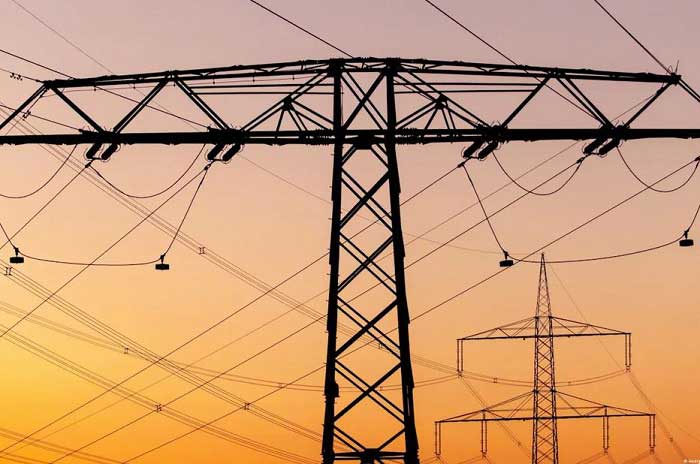
At the end of June 2026, a heat wave in France left nearly 70,000 households without electricity after a transformer failed due to high temperatures. For about 24 hours, as thermometers hovered around 40°C, residents in parts of Brittany endured sweltering, potentially deadly heat without fans or air conditioning.
A few days later, as the United States suffered extreme temperatures on the eve of its 250th independence anniversary celebrations, authorities issued warnings about possible power outages. Grid operators ordered large energy consumers, such as data centers, to rely on backup generators to ensure supply to homes and essential services like hospitals.
Power grids worldwide are struggling to cope with intense heat waves and other extreme weather events. In the United States, blackouts are on the rise. According to data from the nonprofit Climate Central, power outages during the hot season increased by about 60 percent in the last decade compared to the 2000s. This trend is expected to continue as human-caused climate change generates longer, more frequent, and more intense heat waves, making grid adaptation increasingly necessary.
"As heat increases, things stop working well," explains Iain Staffell, associate professor of Sustainable Energy at Imperial College London. "It is to be expected that failures will become more frequent when very high temperatures are reached," he adds.
Why are heat waves a problem for power grids?
When heat waves occur, electricity demand soars as people turn to air conditioning, fans, and other devices to cool down. At the same time, power supply infrastructure—from power plants to transformers—is also vulnerable to thermal stress. Transmission lines, which carry electricity over long distances, expand as temperatures rise. As a result, they sag and, in some cases, come into contact with trees or other obstacles, increasing the risk of short circuits and outages.
Heat and line deformation were contributing factors in the great 2003 blackout, when around 50 million people in the northeastern U.S. and parts of Canada lost power amid peak temperatures—the largest blackout in North American history.
Thermal power plants also suffer from this problem. In extreme heat, the cooling systems of coal, gas, and nuclear plants lose efficiency, so operators are sometimes forced to reduce output.
"The efficiency of coal, gas, and nuclear plants decreases by about 1 percent for every degree the temperature rises," Staffell notes. "That means at 35°C, they are about 10 percent less efficient than at 25°C."
During the heat wave that affected Europe in June 2026, several nuclear plants in France and Switzerland had to reduce output or temporarily halt operations because the rivers they use for cooling had reached excessively high temperatures. Regulations require these facilities to limit the temperature of water returned to rivers to protect ecosystems and aquatic life.
WHEN THE ENTIRE GRID IS UNDER STRESS
Renewable energy sources do not escape these effects either. Low water levels, for example, can reduce hydroelectric generation. Additionally, solar panels lose slight efficiency at very high temperatures, and during heat waves, wind often diminishes, reducing wind power output.
These factors can increase grid instability, forcing operators to seek electricity from other sources when the margin between supply and demand becomes too narrow. If, at those critical moments, there is not enough solar or wind power—usually the cheapest option—grid operators must resort to more expensive backup sources to meet demand. And those sources are often fossil fuels, which contribute to global warming.
Heat can drive up wholesale electricity prices—an increase that, depending on the market and contract, may ultimately be passed on to consumers. During the recent heat wave in Europe, electricity prices spiked in several countries, including France and Germany, especially during peak afternoon and evening hours. (CubaSí)