

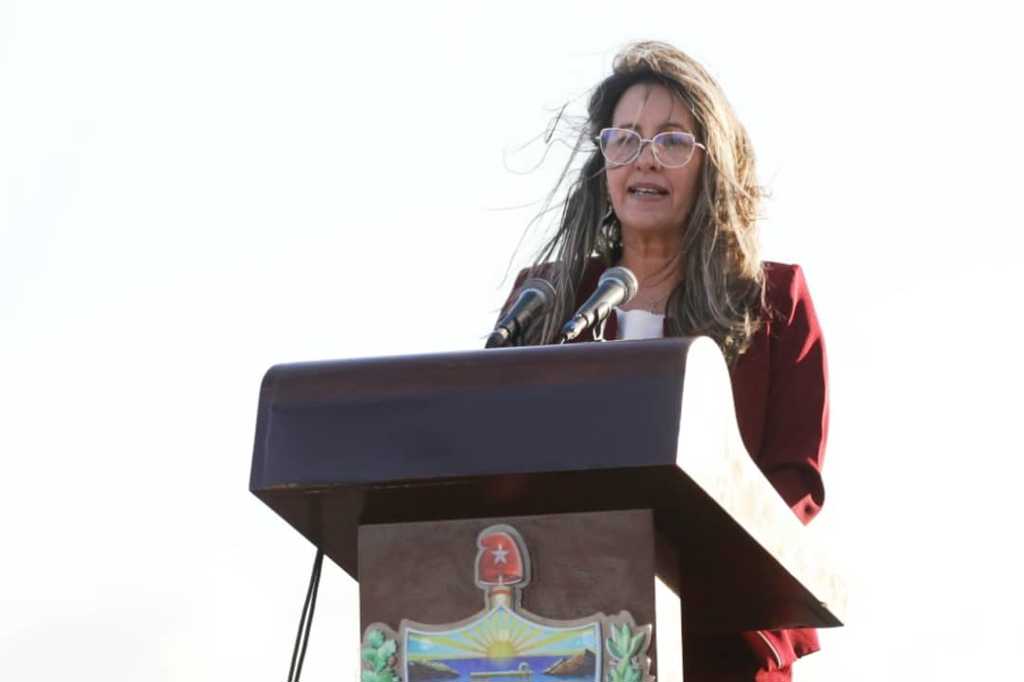
Cuban teachers play a decisive role today in realizing the country's project, especially in the implementation of social policies that directly impact the lives of communities, the Minister of Education (MINED), Naima Trujillo, stated.
Havana, Cuba.- The head of the sector paid tribute to all educators of the Caribbean nation during the main event for Teachers’ Day, held at the José Martí Anti-Imperialist Tribune and presided over by President Miguel Díaz-Canel, Prime Minister Manuel Marrero Cruz, and other high-ranking government and Communist Party officials.
Also present were members of the pedagogical detachment, teachers from the brigade that completed its mission in Honduras, representatives of all training models, retirees, reinstated teachers, certified teachers, and emerging teachers. Trujillo emphasized that these days —marked by Teachers’ Day, the anniversary of the Revolution’s triumph, and the beginning of a new year— call for both remembrance and critical evaluation of the educational system’s progress.
The minister recalled the historic proclamation of September 26, 1960, when Fidel Castro announced before the UN that Cuba would be the first country in the Americas free of illiteracy.
“That promise was a display of revolutionary audacity that materialized in a bold campaign, in which the people taught the people, and young people assumed the greatest responsibility,” she asserted.
CUBAN MINISTER HIGHLIGHTS EDUCATION’S IMPACT ON THE WORLD
The Cuban education system, free and inclusive, continues to have an impact in Latin America and the world, Education Minister Naima Trujillo, on the occasion of Teacher's Day in the Caribbean nation, stated.
In statements made yesterday on national television, the head of the sector highlighted the daily heroism of teachers and the legacy of the 1961 Literacy Campaign, conceived and led by the historical leader of the Revolution, Fidel Castro.
Trujillo emphasized that the greatest challenge for Cuban teachers today is “maintaining this educational achievement” amidst the complex circumstances the country is experiencing.
“Every day, in the epic journey of being a Cuban teacher, they are not immune to the emotional world of each person who, in their classroom, in their school, and also in other social activities, contributes to the formation of the new generation of Cubans,” she noted.
She emphasized that education in Cuba, declared from its inception as the responsibility of the State, remains inclusive, universal, and free, and has managed to project its influence beyond national borders through cooperation programs that have helped other nations overcome illiteracy with methods inspired by the revolutionary experience of 1961.
In her message to educators on their day, the minister thanked them for their tireless work “in these very difficult circumstances in which they carry out their pedagogical work today,” urging them to “continue reflecting on the extraordinary nature of their social value and to continue supporting us in every challenge.” (PL)