


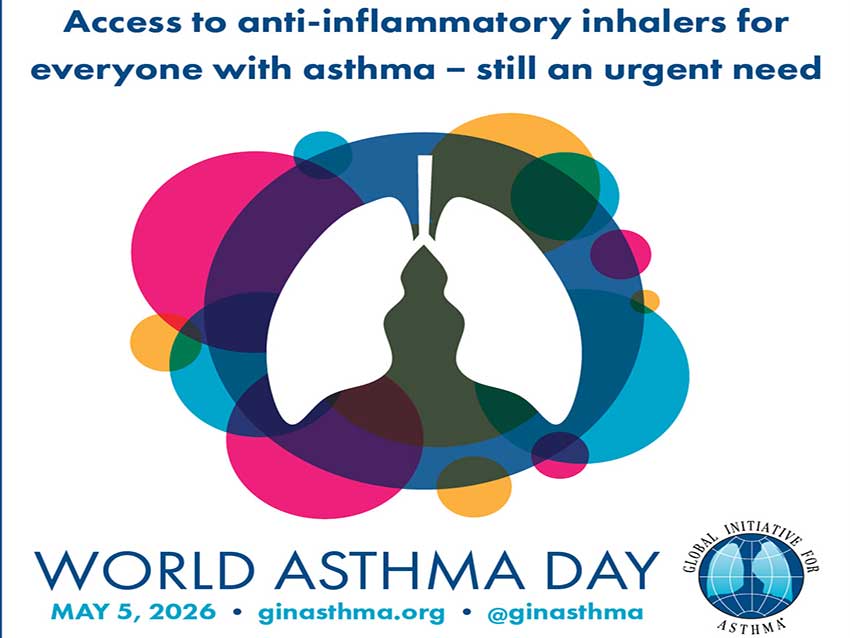
• In honor of World Asthma Day, 26 spoke with one of the leading experts on this disease that affects the lives of the Las Tunas residents.
Carlitos had just turned five when he was diagnosed with asthma. He had shown signs of it from a very young age; he had even been given medication at the emergency room of his local clinic. But that morning, his mother returned home with a definitive diagnosis and a long list of recommendations for caring for the child's health.
In the days and weeks that followed, she returned to the pediatric hospital time and again. Her little boy's condition worsened very easily, and she could no longer sleep, constantly worried about his labored breathing. Outside, the smoke from makeshift stoves created an unbreathable atmosphere at any time. She had no way to protect her son.
A HIGH-RISK ILLNESS
 Dr. Yuditza Pupo Pérez, a specialist in Pediatrics and Master's in Comprehensive Child Care, speaks with 26 about her work in the Respiratory Ward of the Mártires de Las Tunas Pediatric Hospital, where many children like Carlitos come together. There, in addition to providing relief, they teach how to live with this condition.
“One of the illnesses that we see most often in the Emergency Room is bronchial asthma. People know that it is a chronic, hereditary condition that can be controlled with regular treatment and that it must be done properly.”
“Children come in with symptoms of decompensation. Generally, after dealing with the condition for a while, they already know the warning signs, and the parents learn how to manage them. Even so, in many cases, they lack knowledge about how to implement the necessary measures at home and how to properly administer the medication.”
“For example, in these patients, when the disease worsens, or they experience many episodes of decompensation per year, they need a specific treatment with inhaled steroids, that is, in a spray. And many families don't know how to use it. This depends on the child's age. Sometimes it can't be applied directly to the mouth because their age doesn't allow them to do it with the proper technique.”
“In other cases, children are given the same doses of medication as in previous years without taking into account that they have grown or that their weight has changed. We see this daily in the ward; they come in with inadequate treatment. The doses they've been given are generally insufficient because they aren't calculated correctly, they aren't properly regulated, and they aren't given at the right time or on the right days.”
“It's very important to keep in mind that steroids are necessary, but they also have adverse effects. They can't be overused, and sometimes they are.” In general, the population lacks a great deal of knowledge about managing the disease.”
LIFE LESSONS
 With a furrowed brow, the doctor urges a greater awareness of the risks of this complex disease, one that must be learned to live with for life.
“We need to reinstate consultations for these children at polyclinics, which can even be provided by a Family Medicine specialist—or a pediatrician—to teach them how to manage the condition, how to adjust their daily routine, because this is the guarantee that they don't become unstable.”
“We're not talking about something minor. Unstable disease has adverse consequences, such as sleep disorders, because patients will experience many nighttime symptoms. The child may not develop as others normally do because their lung capacity or function decreases as their condition worsens.”
“It will limit their physical capacity for daily activities, and their school performance is also affected because they have to stop attending school regularly due to the disease itself. And what we see most often is that when an asthmatic arrives with a decompensated episode, it's due to mismanagement of their underlying treatment; something we must avoid.”
From her vast experience, the specialist warns that some children haven't been diagnosed, and their parents aren't sure they have asthma. Sometimes they come to the health institutions, and the mother says they've been to the Emergency Room three or four times a year, they've been given treatments consistent with the disease: steroids, salbutamol inhalers; they improve and go home, but no one registers them.”
“This affects us greatly because if they aren't registered, they don't have regular treatment. At home, we need to raise the alarm and understand that asthma is hereditary, has a first-degree family history, and, of course, the child must have some underlying allergic condition, such as atopic dermatitis or allergic rhinitis.”
For the doctor, asthmatics must have a place to go where their condition is monitored and where they are educated on how to follow their treatment plan. This is the best way to ensure they do not seek emergency care regularly.
KEY POINTS ON THE TABLE
 According to the expert, ideally, any child with suspected asthma and a family history of the disease, who has experienced symptoms several times, should see their family doctor. The doctor has the resources to consult with the pediatrician, so that the criteria each child, including those under 5, must meet to be registered for asthma can be established.
"Once asthma is diagnosed, the child is prescribed their baseline treatment and referred to secondary care when needed, for adjustments or follow-up. I emphasize, they should have a check-up at least every 3 months."
“At the hospital, we have a clinic for difficult-to-control cases, which, despite regular treatment, continue to worsen because they have certain triggering factors, such as an associated chronic illness that isn't necessarily asthma.”
- Does smoke affect it?
“Yes, among the triggering factors described in the literature and in the lifetime studies of this disease, inhaled ones are the most prominent, and these are related, for example, to cigarette smoke. Many mothers are smokers and have asthmatic children at home. No matter how much you educate them, they don't break this habit.”
“Now, we have the complex energy situation and the smoke from coal, oil, and the micro-landfills that are regularly set on fire…; all of that has an impact, as does the air polluted by the strong odors of some substances.”
“We are in a difficult situation, and I insist that we must take precautions. At home, products like chlorine or descaling agents should not be used, as they can trigger an attack. Temperature changes must also be taken into account, so we know how to react.”
…
At the largest healthcare institution dedicated to children's care in Las Tunas, bronchial asthma is a subject of ongoing study and is included in their academic research. They will soon host an update workshop, focusing particularly on the management of treatments with medications used in developed countries.
The lack of a stable supply of medications required by asthmatics in the pharmacy network is another issue that is currently causing higher rates of asthma exacerbations, according to some interviewees. Currently, bronchodilators are unavailable; salbutamol and steroids are being sold at very high prices on the black market.
Given these limitations, families must take extra precautions and care for the health of their children. Seeking medical services promptly makes a difference in helping to better manage air trapped in the lungs.