


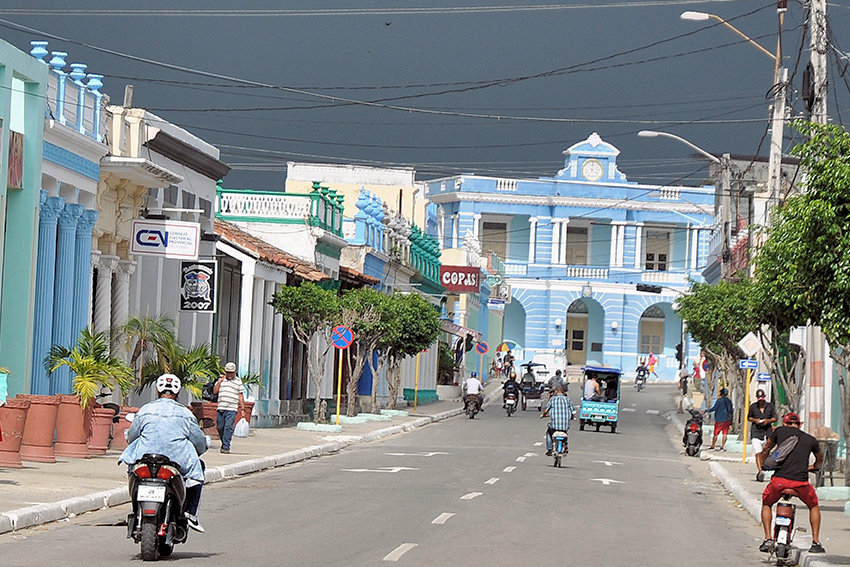
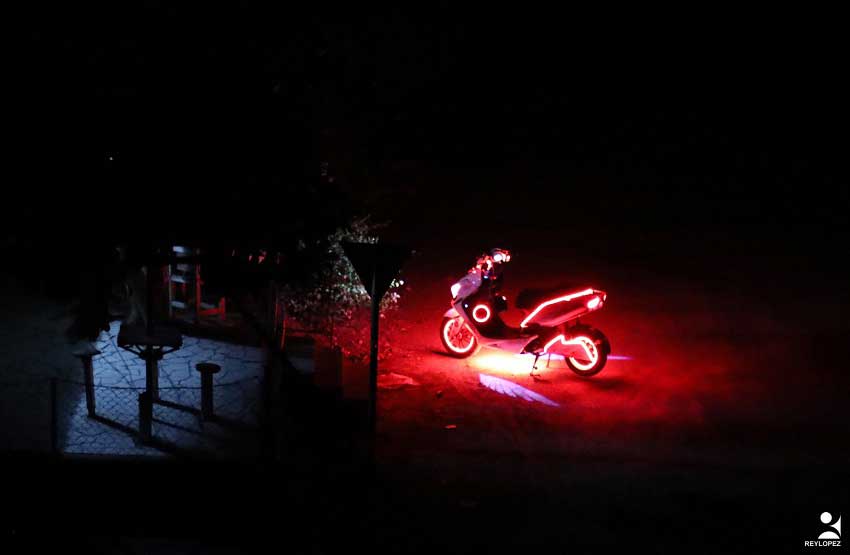
A wave of noise sweeps through the streets of Las Tunas, and it's not the wind. The proliferation of electric motorcycles converted into mobile discos and motorcycles with modified exhaust pipes, which roar, is testing the patience of quite a few people.
The results of a survey conducted by this newspaper and the hundreds of comments from our readers on social media paint a clear picture: the majority of citizens perceive this phenomenon as a serious problem that erodes community life and demands a forceful and effective institutional response.
FATIGUE, CONCERN, AND ACTION?
The results of the survey, published on our digital platforms and offering six positions on the issue, speak for themselves. The option advocating “severe fines” received a resounding 75 percent of the votes on our Telegram channel and 27 percent on our Facebook profile.
Almost at the same level, with 68 percent, were the perceptions that we are facing a “serious problem of social indiscipline” and a violation of environmental and traffic laws. In unison, four out of 10 of those who responded on Telegram and two out of 10 on Facebook added that “it is no longer possible to live” with this noise that disrupts neighborhood coexistence.
Through our WhatsApp and Messenger channels, survey participants reached an overwhelming consensus: such noise is a transgression that damages the social fabric, violates existing rules, and requires punishment. It is a collective cry to restore peace in neighborhoods.
Individualistic justifications received minimal support, but that does not mean they should be disregarded. Agreeing that “everyone has the right” to set the volume they want represents, for example, the view of the individual who prioritizes their personal expression or taste over the collective well-being and does not recognize noise as a problem. Its existence, even secondary, underscores the cultural dilemma at stake: the right to tranquility versus a very liberal conception of individual freedom in public spaces.
Another idea that emerges is mistrust of institutional action by omission. We did not ask explicitly about this, but the outcry in the comments points to a perception of inaction or inefficiency on the part of those who are supposed to enforce the law. By overwhelmingly advocating for fines and pointing out legal violations, the public is indicating that the rules exist but are not being enforced with the necessary rigor.
“ENFORCE THE LAWS”
Our Facebook wall became a digital public square, where dozens of readers expanded on the cold percentage data with their testimonies. The dominant sentiment was one of exasperation and a direct call to authority.
Moraima Del Pilar Acosta Figueroa said conclusively, “I don't think this survey will solve the situation. I think those responsible for maintaining order need to take action... the law must be enforced. Disrespect has already exceeded all limits.”
That idea resonated like a refrain. Ridelsa Carmenates asked, “Why do we pass laws that we don't enforce?” María Álvarez Pérez simply posed the question that many share: “What I can't understand is why the laws aren't enforced.”
The complaint goes beyond vehicles. Several internet users, such as Anaid Maria and Alejandro LC (we respect the spelling of users' names on social media), broadened the focus to constant neighborhood noise, pointing out that the conflict is widespread “noise pollution” that affects the sick, the elderly, and workers. Doreyies Peña summed it up with a basic principle of coexistence: “Your rights end where mine begin.”
Concerns about health and safety also emerged in the opinions expressed. Janet Escalona warned that noise isolates drivers from ambient sound, putting them at risk of accidents. Martha Salgado and Ángel Velázquez Diéguez mentioned the aggravating factor of a “sick” or convalescent population that needs rest. Moraima González Yero brought the concern to the level of civic education, highlighting the alarming prominence of “minors” in these practices, sometimes driving, she said, under the influence of alcohol.
There were also voices, such as Laura Báez González and Adrián Lloveras, that questioned the priority of the issue given "greater" dilemmas such as public health, wages, or services. However, even in their disagreement, their message reinforced a common idea: the demand that institutions take action. Others, like Alix MBordón, called for a deeper look: “Loud music isn’t the problem; it’s just the effect of a decline in values.”
LEGAL FRAMEWORK AND THE CULTURAL ISSUE
Faced with the recurring question, “What does the law say?” The answer is precise. Cuban legislation does indeed penalize these practices. Road safety regulations prohibit unauthorized modifications to vehicles and sound levels that generate noise pollution or diminish driver attention. For its part, the Environmental Law and other legal provisions establish the maximum permissible noise limits for different types of transportation. Penalties range from fines and vehicle impoundment to failing the technical inspection and, in cases of recidivism, the possible revocation of the driver's license.
The logical question that arises, as readers pointed out, is whether these technical inspections are rigorous enough with modified exhaust systems when issuing or renewing these permits. However, this does not appear to be a phenomenon that emerged in a vacuum. Analysts identify it as a practice of urban culture, a form of appropriation of public space, and an expression of identity in a context where leisure alternatives may be limited. The motorcycle with music blasting is self-conceived as a kind of "mobile club." Making your motorcycle sound like A tone closer to classic American models of the mid-20th century could be associated with a questionable attempt to display power and audacity.
They constitute complex cultural symptoms: while being both a creative expression and a bothersome intrusion, they represent a generational affirmation and a provocation to neighbors. Their persistence brings into conflict values such as the individual versus the community, and the tendency toward boisterous sociability versus the right to peace.
NOISE AS A SYMPTOM, THE LAW AS A DEMAND
The response of our institutions, so far, seems to navigate ambivalence. A clear regulatory framework exists, but its application is frequently described by citizens as sporadic, reactive to specific complaints, and lacking systematicity. Factors such as other police priorities and the social complexity of the issue probably explain, in part, this gap.
The discursive approach we have seen so far tends to appeal to “civic awareness” and culture, preferring the educational path to pure coercion.
Our survey and the torrent of opinions seen have brought to the forefront a deep and widespread citizen discontent. It's not just about the annoyance of a specific noise, but about the perception of a breakdown in social discipline and a sense of powerlessness in the face of non-compliance with rules that should protect the common good.
The citizens of Las Tunas, through their votes and comments, spoke clearly. "We should cut off those speakers right there in the street so they learn their lesson," my barber told me exasperatedly when I mentioned this issue. His suggestion may sound extreme —in fact, it is— however, it reflects the common recognition that we have a serious problem, considering it, moreover, a form of social indiscipline and a legal violation that affects health, road safety, and peaceful coexistence.
I believe a decisive institutional solution based on the application of severe fines and the strict enforcement of existing legislation is urgently needed. The noise from motorcycles and exhaust is only the most visible part of a broader problem of noise pollution, and it demands a comprehensive response. The skepticism is painful, though, that we note regarding the current effectiveness of institutional action.
The challenge for the authorities is complex. It involves balancing the necessary application of the law, demanded by the majority, with an understanding of the cultural roots of the phenomenon to design strategies that not only repress but also educate, offer recreational alternatives, and restore respect for existing traffic safety regulations.
Above all, it involves closing the gap between written law and its effective implementation on the streets, to regain public confidence that they can fully exercise their right to rest and tranquility.