


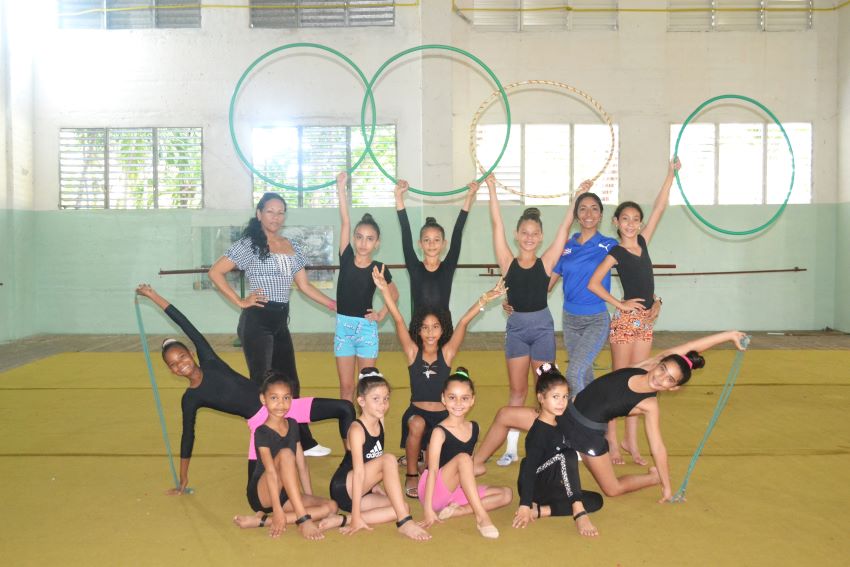
The girls stand in a line, backs straight, eyes fixed ahead. Some are barely eight years old. Others are nearing twelve. But they all share a distinctive feature: they seem older than they are. Not because of their age. Because of their discipline.
At the Leonardo McKenzie Multipurpose Sports Hall, something is noticeable even before the music starts. It's not the silence. It's not the order. It's the elegant posture. Rhythmic gymnastics is not just a sport. It's a way of growing.
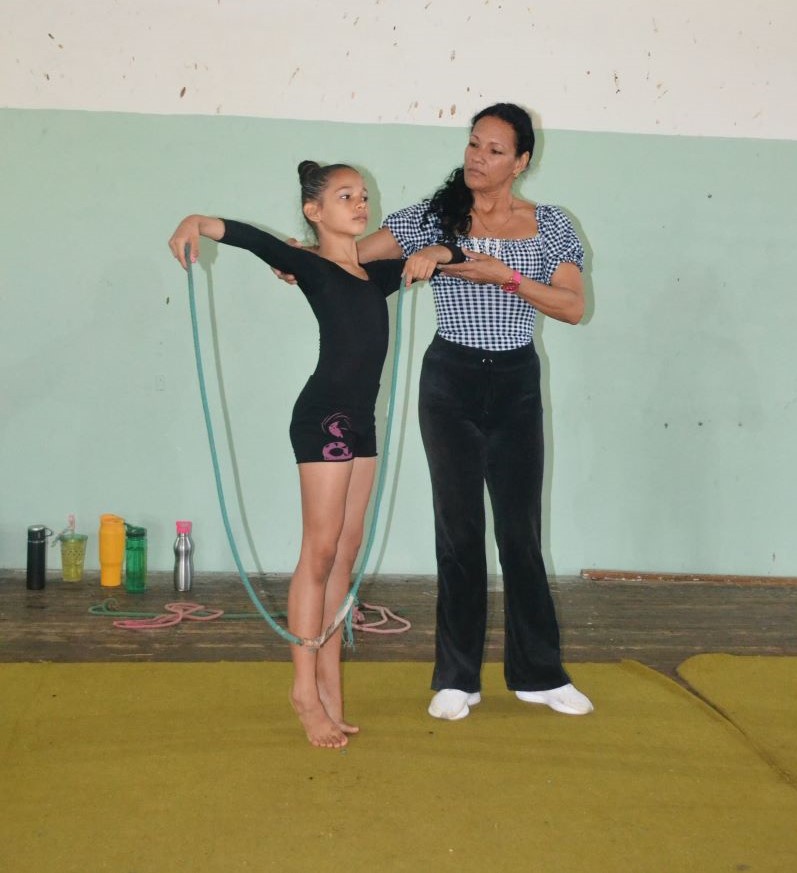 Dacha Rojas López has witnessed this same scene repeat itself for over 20 years, and yet she never loses her sense of wonder. She coaches the girls.
"They arrive here very young… but little by little they transform," she says. "This is a sport that begins at five or six years old." When they arrive here, at nine years old, they already have a foundation.”
That foundation isn’t just physical. It’s character. Not just anyone gets in. The selection process is demanding: flexibility, physical condition, intelligence, and coordination. But also something that can’t be measured in tests: the ability to sustain effort. Because rhythmic gymnastics isn’t easy, even though it may seem so.
The routines combine music, movement, apparatus, and expression. All at the same time. All with precision. All with elegance.
“They have to think and feel at the same time,” Dacha explains. “It’s not just about execution.” “They have to transmit it.”
And therein lies one of the keys to this sport: it’s not enough to do it well. You have to do it beautifully.
Daniela Reina Pueyo knows this firsthand. She’s 27 years old, but her life has always been intertwined with this world. She was a gymnast from the age of six, a national champion for four years, and amassed more than twenty medals. Today, her greatest satisfaction isn’t competing, but teaching.
“What I want is for them to be brave,” she says. “Brave enough to train. Brave enough to make mistakes. Brave enough to go out and compete. It’s a sport of sacrifice. Of discipline.” “You have to work hard every day.”
And in that daily effort, not only are athletes built, but people.
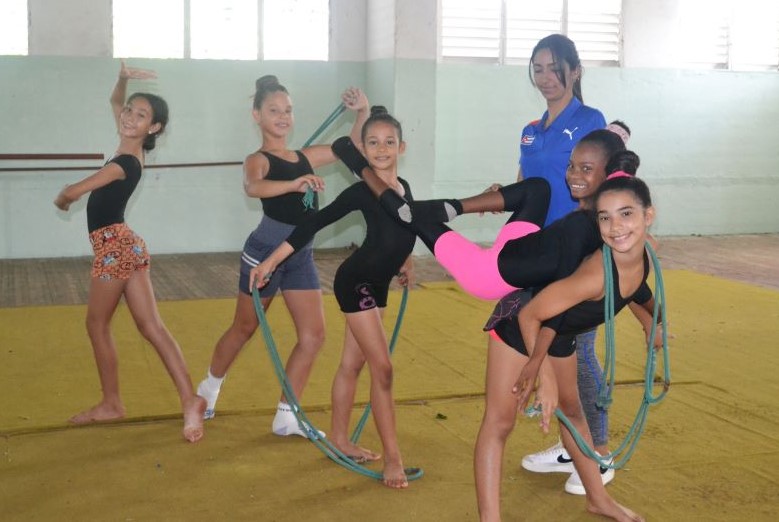
Dilara María Díaz Castro is eight years old and has a clear goal. “I want first place.” She says it softly, shyly, but without hesitation. She has just started, but she already trains with rope, hoop, and ball. She already does exercises that require coordination, balance, and concentration.
Beside her, Betza—the team captain, eleven years old—speaks with confidence. She has been training for four years. She has competed outside her province. She has medals. She remembers her first competition: nerves, fear, uncertainty.
“Then you start to gain confidence, she says. It hasn’t all been easy. I’ve made mistakes. There have been times when it seemed like I wouldn’t make it. You have to strive to do your best.” And she says it naturally, like someone who grasped an important truth far too early.
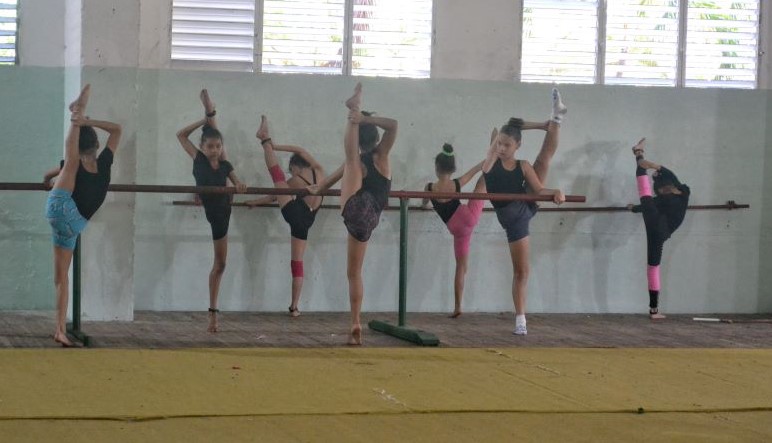
Life within the world of gymnastics has its own rules. Demanding training. Strict diets. Routines repeated over and over. Fewer sweets. More discipline. But there's also something they themselves recognize: it's worth it.
Because this sport isn't just about the mat. “It educates them,” Dacha affirms. It teaches them to walk upright. To sit correctly. To behave. To take care of themselves. It makes them different.
Time, however, flies. In rhythmic gymnastics, careers are short. Many finish their competitive stage in high school. Some continue to higher levels. Others take different paths. But they all take something with them. Something that isn't lost.
In the middle of training, when the music plays, and the apparatuses fly through the air, it's easy to forget they're children. Because what they do demands concentration, control, and maturity. But when they stop, when they laugh, when they look at each other, childhood disappears. They return. And then everything makes more sense.
They are learning, from a very young age, to be strong without losing their beauty. To fall and get back up. To push themselves. To dream. To fly.