

National Electoral Council (CNE) councilors Ana Paola Hall García and Cossette Alejandra López Osorio consummated an electoral coup on Wednesday, December 24, declaring Nasry Juan Asfura Zablah of the National Party as president-elect for the period from January 27, 2026, to January 27, 2030.
The recognition of Asfura, a candidate publicly endorsed by Donald Trump, comes amid serious allegations of irregularities during the vote-counting process, severe foreign interference, and a plot orchestrated before the November 30 elections.
These allegations have been upheld by the ruling Liberty and Refoundation Party (Libre), the Liberal Party, and CNE councilor Marlon Ochoa. Among other objections, they criticized the councilors' refusal to conduct a vote-by-vote recount.
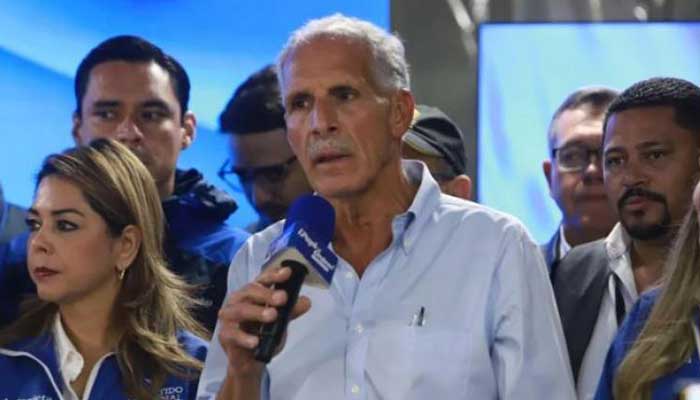
Earlier, Liberal Party presidential candidate Salvador Nasralla rejected the eventual proclamation of election results being pushed by the CNE. Nasralla strongly questioned the body's decision, asserting that a vast majority of citizens do not support the course the process is taking.
In a message directed at councilors Ana Paola Hall and Cossette López, Nasralla stated that the electoral institution is serving interests foreign to the popular will and argued that the system favors figures linked to corruption. He insisted that his candidacy represents a break from these practices and reiterated that the population rejects the manner in which the electoral process is being forced to a close.
Meanwhile, former Foreign Minister Enrique Reina warned on Wednesday, December 24, about the CNE's intent to declare a "de facto president-elect" in Honduras without concluding the actual vote count, thereby consolidating the electoral coup. Reina posted on social media: "This is how Honduras awakens, with an electoral coup d'état in process and a CNE with an illegal quorum of two moving to declare a de facto president-elect."
Reina's complaint follows a CNE plenary session held on Tuesday, December 23, where magistrates Ana Hall (Liberal Party) and Cossette López (National Party) rejected reviewing approximately 10,000 tally sheets with inconsistencies, thus dismissing challenges to the results.
For his part, CNE councilor Marlon Ochoa labeled the move an electoral coup d'état, arguing that the declaration was made without concluding the special scrutiny process and without resolving nearly 288 formal challenges, in addition to approximately 10,000 tally sheets with inconsistencies pending a vote-by-vote count.
Ochoa filed a formal complaint with the Public Ministry in Tegucigalpa against the CNE for its intent to declare results without finishing the count. As part of his complaint, Ochoa presented 10 new audio recordings that "evidence the electoral fraud orchestrated by the bipartisan sector." These recordings, he indicated, contain the voices of a former president, a former Liberal Party presidential candidate, a foreign presidential advisor—Argentine Fernando Cerimedo—and other unidentified voices.
The CNE councilor emphasized the "most vulgar and brazen foreign interference in the country's history," directly pointing to the United States government. Ochoa denounced a campaign of threats by the U.S. to influence the elections, specifically in favor of the candidacy of Nasry Juan Asfura Zablah.
Ochoa highlighted "the litany of actions by the United States government," including threats of economic sanctions if its preferred candidate, Nasry Juan Asfura Zablah, did not win. He also referred to the sending of millions of text messages to remittance recipients warning of the loss of these funds if the candidate endorsed by then-U.S. President Donald Trump did not prevail—actions Ochoa concluded constitute a "violation of respect for the sovereign will of the people."
Marlon Ochoa reiterated that it is a "crime" to declare a president with hundreds of tally sheets still unprocessed and with evidence of inconsistencies. Upon leaving the Public Ministry, he detailed the illegal scheme seeking to sabotage the electoral result, stating: "What is even more serious is that when one analyzes the universe of tally sheets where the number of voters in the record matches the number of voters registered in the biometric device, the winner of the elections is not the person they now intend to declare as president of the Republic." (CubaSí)