


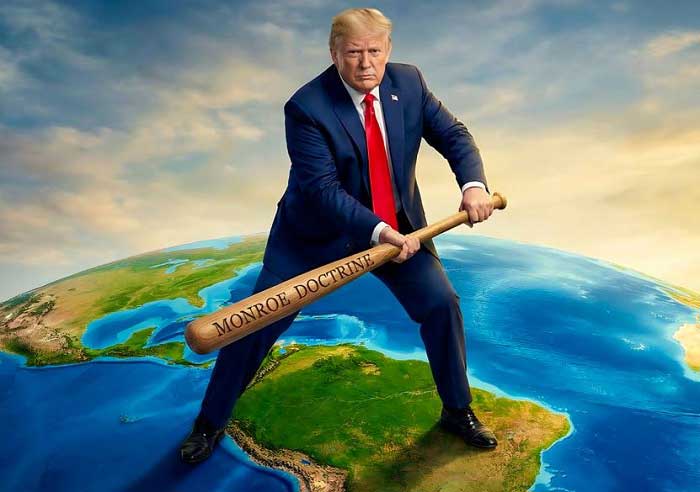
 By conventional Washington standards, and according to scholars of official corruption, Trump's second term — with only one year — is already a candidate for the most blatant abuse of government office in US history.
The United States government, through a provision published in the Federal Register, has decided to extend for another year an executive measure authorizing the interception and inspection of vessels, both domestic and those flying other flags, destined for Cuba.
The official justification states that Havana "has not offered sufficient guarantees that it will refrain from using excessive force against U.S. vessels or aircraft carrying out peaceful demonstrations or commemorative acts in waters near northern Cuba."
Likewise, the text warns that unauthorized entry of any U.S.-flagged vessel into Cuban maritime jurisdiction is a destabilizing factor for Washington's foreign interests, as such access "could lead to an uncontrolled migratory flow from the Caribbean nation."
"The United States' criteria remain firm that a massive exodus from Cuba would constitute a threat to national security, generating a significant alteration in the balance of the country's international relations," the official document states.
President Donald Trump justified this extension as part of the continuity of the "national emergency declared with respect to Cuba," a status that authorizes the detention of ships heading to the republic.
This prerogative originated in 1996, when then-President Bill Clinton established it following the shootdown of two aircraft belonging to the Miami-based organization Brothers to the Rescue.
Over time, the scope of the order has been expanded. In 2004, restrictions on the sending of financial resources and materials were incorporated. These limitations were reinforced in 2016 and again in 2018, and have been periodically renewed since then.
Just last January 29, the Trump administration signed a new decree enabling the imposition of tariffs on nations that supply oil to Cuba, formalizing a "state of emergency" due to the alleged threat posed by the largest of the Antilles.
In response, Cuba's Minister of Foreign Affairs, Bruno Rodríguez Parrilla, firmly rejected these actions. He denounced that they seek to impose a "total siege on fuel supply," which he characterized as a violation of the basic principles of global commerce and a strategy that subjects the Cuban population to extreme living conditions. (CubaSí)