


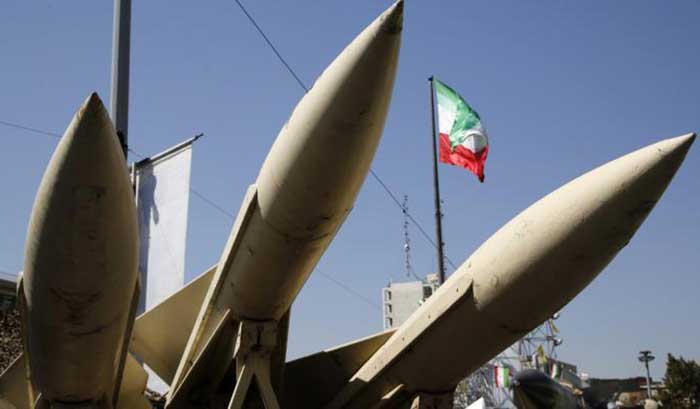
 U.S. and Israeli forces have systematically attacked Iranian nuclear facilities since the beginning of the war.
More than five weeks have passed since the start of the U.S. and Israeli war of aggression against Iran on February 28, 2026. The initial assessments that indicated a "low" risk of escalation now raise serious doubts.
The systematic destruction of Iran's civilian and energy infrastructure, and the growing desperation of the aggressors in the face of the increasingly effective resistance of the Iranian people, have raised the probability of a nuclear event to levels never before seen in the Middle East.
Cuban leader Fidel Castro Ruz repeatedly warned of the dangers of nuclear war, particularly in the context of a potential conflict in the region involving aggression by the United States and Israel against Iran. Fidel Castro did not doubt that a coordinated attack by both nations against the Islamic Republic could escalate to the use of atomic weapons, with catastrophic consequences for life on the planet.
The question is no longer whether the risk exists, but under what conditions it would materialize and what form it would take. The Zionist-American blitzkrieg plan failed. The assassination of the country's top leadership, far from intimidating and dividing the Iranian people, has united them even more.
There are no protests against the government. Many of those who once took to the streets are now fighting in defense of their homeland. Citizens who lived abroad, even opposition members, have returned to join the fight against aggression.
For decades, Iranian doctrine was based on so-called "strategic patience": enriching uranium without crossing the threshold. The fatwa issued by the Supreme Leader of the Islamic Republic of Iran, Ayatollah Ali Khamenei, against nuclear weapons was the cornerstone of that restraint, but one must wonder: did that fatwa die with him on February 28?
Iran has been bombed twice amid negotiations between two nuclear-armed states. It's important to remember that, before the war, Iran possessed 400 kg of uranium enriched to 60%, enough material to manufacture between 10 and 12 nuclear devices.
Meanwhile, the Zionist entity officially maintains a policy of "nuclear secrecy," but possesses an estimated arsenal of between 90 and 400 nuclear warheads, deployed in a triad: air-launched (F-35s and F-15s), sea-launched (Dolphin-class submarines), and land-based (Jericho missiles).
U.S. and Israeli forces have systematically attacked Iranian nuclear facilities since the start of the war, so the risk of a nuclear accident is extremely worrying: a missile hitting the Dimona facilities or an Iranian power plant could generate a large radiological explosion, unleashing an uncontrollable escalation.
The clock is ticking; the fifth week of the war has shown that Washington and Tel Aviv lack a clear exit strategy. The United States has stated that the war will end in two or three weeks, but threats to attack civilian infrastructure—bridges, power plants, refineries—indicate otherwise.
The war has already killed thousands of people; a nuclear explosion, even an accidental one, would mark a point of no return for human civilization. (Granma)